Analisi esperta di The Lute Player di Gerard Terborch
Stile: Baroque · Genere: genre painting
Expert Analysis: "The Lute Player" by Gerard Terborch
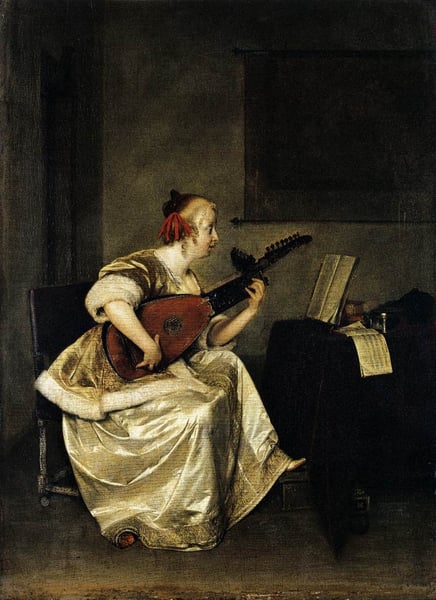
As a masterpiece of Dutch Baroque genre painting, Gerard Terborch’s The Lute Player achieves significance through its exquisite synthesis of technical virtuosity, psychological nuance, and the quiet dignity of everyday life. Terborch, a leading figure of the Dutch Golden Age, elevated genre scenes from mere anecdote to refined, almost portrait-like studies of interiority.
Technical Mastery and Baroque Sensibility Terborch’s handling of texture—particularly the sheen of satin and the softness of velvet—is unsurpassed. In The Lute Player, the play of light across the woman’s gown and the polished wood of the lute demonstrates the Baroque fascination with material realism and chiaroscuro. Yet unlike the dramatic theatricality of Caravaggio or Rubens, Terborch’s light is diffused, intimate, and domestic, directing the viewer’s gaze to the silent narrative of the moment.
Psychological Resonance within Genre Painting The painting’s true significance lies in its restrained storytelling. The lute, a common symbol of harmony and courtly love, is held but not played; the woman’s gaze is directed outward, perhaps at an unseen listener. This deliberate ambiguity—is she tuning, pausing, or lost in thought?—creates a sense of suspended time, inviting the viewer to construct the unseen interaction. Terborch’s ability to convey emotion through posture and subtle facial expression rather than overt action marks a high point in Baroque genre painting, distinguishing him from contemporaries like Jan Steen or Frans van Mieris.
Placement within the Period In the context of the Dutch Baroque, The Lute Player exemplifies the shift toward refined, morally neutral scenes of leisured life, often suggesting themes of love, music, and transience without moralizing. Terborch’s influence can be seen in later artists such as Johannes Vermeer, who similarly explored the poetry of light and domestic silence. The work’s significance is thus twofold: it is a technical tour de force of texture and light, and a quiet, enduring meditation on the spaces between sound and stillness, performer and listener.
Genere
Stile
Visivamente simili
20 opere con composizione e palette affini
Woman Tuning a Lute
Giuseppe Maria Crespi
Elegant Interior Scene, depicting a lady in satin dress playing a mandolin, and a King Charles Spaniel by her side
Alexis Van Hamme
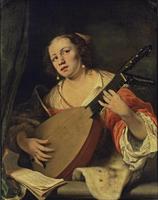
A Lady Playing the Lute
Ferdinand Bol

La Leçon De Luth Interrompu
Michiel van Musscher

The Cittern Player
Gabriel Metsu
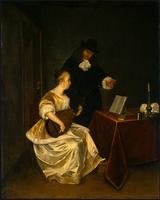
The music lesson
Gerard Terborch
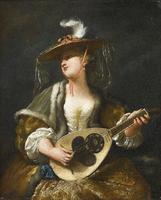
A Lady Playing a Mandolin
Jean Barbault
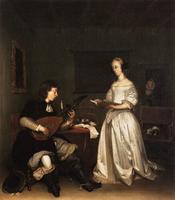
The Duet: Singer and Theorbo Player
Gerard Terborch
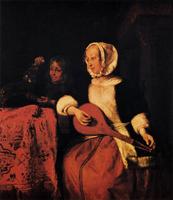
Woman Playing a Mandolin
Gabriel Metsu
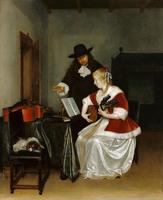
The Music Lesson
Gerard Terborch
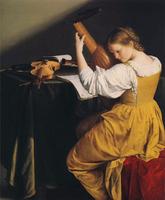
The Lute Player
Orazio Gentileschi
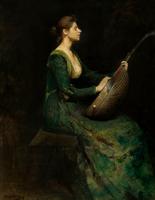
Lady with a Lute
Thomas Dewing
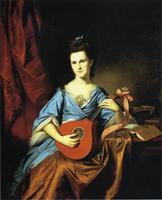
Julia Stockton (Mrs. Benjamin) Rush
Charles Willson Peale
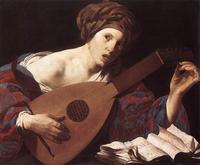
Woman Playing the Lute
Hendrick Terbrugghen
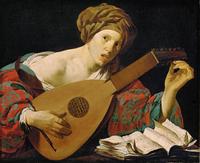
Woman Playing the Lute
Hendrick Terbrugghen
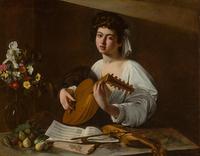
The Lute Player
Caravaggio
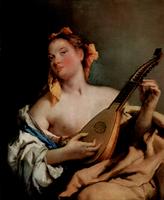
Girl with a Mandolin
Giovanni Battista Tiepolo
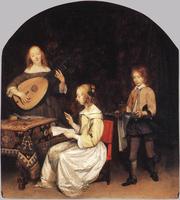
The Concert: Singer and Theorbo Player
Gerard Terborch

Portrait of a Lady Playing a Lute
Michiel van Musscher

Woman with Lute
Gerard van Honthorst