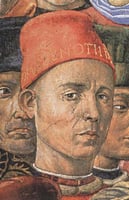
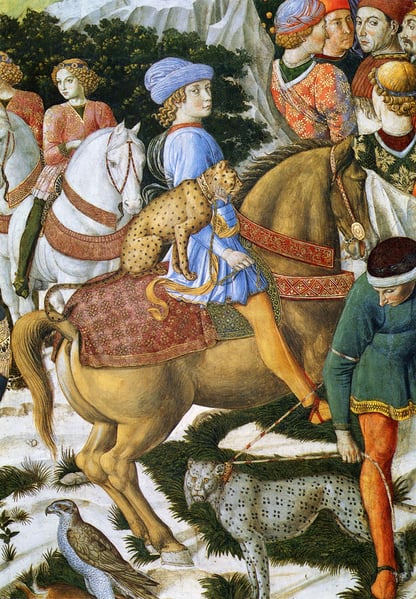
Portrait Of Giuliano De Medici. Procession of the Magus Caspar (detail)
Dettagli
Analisi esperta di Portrait Of Giuliano De Medici. Procession of the Magus Caspar (detail) di Benozzo Gozzoli
Stile: Early Renaissance · Genere: religious painting
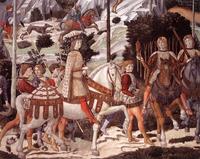
This detail from Benozzo Gozzoli's fresco cycle, created for the private chapel of the Medici Palace in Florence, is a prime example of the Early Renaissance's innovative fusion of sacred narrative with contemporary political portraiture. The work depicts Giuliano de' Medici as a participant in the "Procession of the Magi," a biblical scene that symbolically glorifies the Medici family.
Significance within the Early Renaissance and religious painting:
-
Secular-sacred synthesis: Gozzoli integrates the real, living Medici family members into the biblical story of the Three Kings, reflecting the humanist belief that the divine and the earthly coexist. This merging of the contemporary with the timeless was a radical departure from medieval religious art, which kept holy figures separate from modern individuals.
-
Political and dynastic propaganda: The fresco serves as a visual assertion of Medici power and piety. By placing Giuliano—a young, handsome, and princely figure—among the Magi, Gozzoli elevates the family's status to that of Christian kingship. The detail’s focus on Giuliano’s refined features and rich costume emphasizes the family’s wealth, taste, and divinely sanctioned rule.
-
Decorative richness and naturalism: Gozzoli’s style, with its elaborate details, vibrant colors, and gold accents, typifies the Early Renaissance love for opulent surface beauty. Yet, within this decorative framework, he also shows a new attention to naturalistic observation: the facial features of Giuliano are individualized, and the rendering of fabrics and textures displays a growing mastery of illusionistic space.
-
Link to Florentine identity: The Magi procession was particularly beloved in Florence, and the fresco updates the theme to include the city’s actual rulers. In this way, the artwork is not merely a biblical scene but a celebration of contemporary Florence as a new Jerusalem, with the Medici as its guiding princes.
This detail thus encapsulates the Early Renaissance’s defining achievement: the use of a traditional religious genre to project human grandeur, political ambition, and artistic sophistication.
Visivamente simili
20 opere con composizione e palette affini
Procession of the Magus Caspar (detail)
Benozzo Gozzoli
Procession of the Magus Caspar (Portrait Of Giuliano De Medici, detail)
Benozzo Gozzoli
Procession of the Magus Balthazar (detail)
Benozzo Gozzoli
Procession of the Magus Balthazar (detail)
Benozzo Gozzoli
Procession of the Magus Caspar (detail)
Benozzo Gozzoli
Procession of the Oldest King
Benozzo Gozzoli
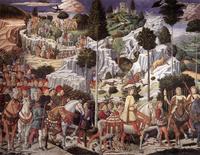
Procession of the Magus Balthazar (detail)
Benozzo Gozzoli
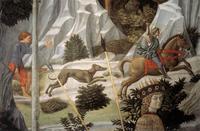
Procession of the Magus Balthazar (detail)
Benozzo Gozzoli
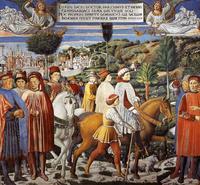
St. Augustine Departing for Milan
Benozzo Gozzoli
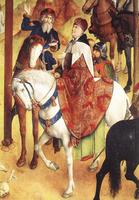
Calvary Triptych (detail)
Justus van Gent
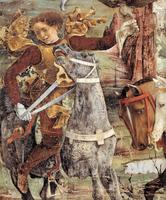
Allegory of March – Triumph of Minerva and Sign of Aries. Frescos in Palazzo Schifanoia (detail)
Francesco del Cossa
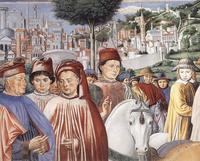
St. Augustine Departing for Milan (detail)
Benozzo Gozzoli
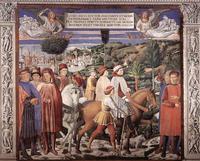
St. Augustine Departing for Milan
Benozzo Gozzoli
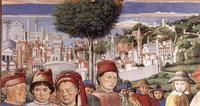
St. Augustine Departing for Milan (detail)
Benozzo Gozzoli
April. Fresco in Palazzo Schifanoia (detail) - Triumph of Venus
Francesco del Cossa
Roman soldiers and Jewish judges (left wing from the Triptych of the Crucifixion)
Gerard David
The Ghent Altar (detail)
Jan van Eyck
Procession of the Magi (detail)
Benozzo Gozzoli
The Adoration of the Magi
Domenico Veneziano
The Vision of Saint Eustace
Pisanello