Analisi esperta di Mrs. Robert Gwillym di Joseph Wright
Stile: Rococo · Genere: portrait
Expert Analysis of Mrs. Robert Gwillym by Joseph Wright
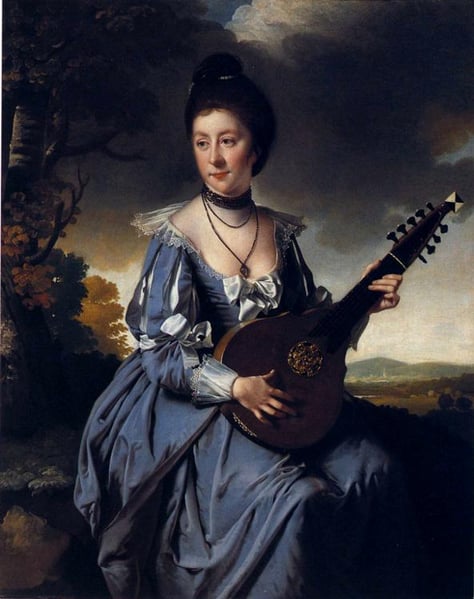
As a Rococo portrait, this work by Joseph Wright both exemplifies and subtly challenges the conventions of its period. While Rococo portraiture typically prized airy pastel palettes, graceful frivolity, and decorative charm, Wright infuses the genre with a characteristically Enlightenment emphasis on psychological presence and naturalistic light—hallmarks that would later align him with the Romantic movement.
Significance within the Rococo Style:
- The composition retains Rococo elegance: the sitter is presented in a refined, half-length pose, likely adorned in soft silks or lace (as was standard for aristocratic portraiture of the mid-18th century). The absence of extravagant allegorical props or pastoral playfulness, however, marks a shift away from the typical Rococo emphasis on carefree leisure.
- Wright’s handling of light is crucial: instead of the diffused, rosy glow common to Rococo painters like Boucher or Fragonard, he employs a cooler, more directed illumination that models Mrs. Gwillym’s features with stark clarity. This attention to chiaroscuro hints at the emerging scientific curiosity of the age—a signature of Wright’s broader oeuvre, even within the confines of a traditional portrait.
Genre and Period Innovation:
- The painting’s significance lies in its bridge between Rococo ornamentation and the sober, introspective portraiture of the later 18th century. Mrs. Gwillym is not merely a decorative surface; her expression suggests self-possession and individuality, qualities that would define the Grand Manner portraits of Reynolds and the moralizing naturalism of Gainsborough.
- Wright, known for his iconic “candlelight” scenes of scientific and industrial subjects, here applies a similar observational rigor to a human subject. The result is a portrait that feels both intimately modern and resolutely Rococo in its graceful line and refined taste—a quiet but telling departure from the period’s usual frivolity.
Conclusion:
Mrs. Robert Gwillym is significant as a Rococo portrait that anticipates the psychological depth and naturalistic lighting of later 18th-century art. It demonstrates Wright’s ability to merge the decorative elegance of his era with a penetrating, almost documentary attention to character, marking a pivotal moment in the evolution of British portraiture.
Museum / Gallery
Visivamente simili
20 opere con composizione e palette affini
Julia Stockton (Mrs. Benjamin) Rush
Charles Willson Peale
Lady Margaret Hay (c.1657–1753), Countess of Roxburghe
Gilbert Soest
Portrait of Eleonore Louise Albertine, Comtesse von Schlieben-Sanditten, Freifrau von Keyserlingk, wife of Dietrich Cesarion
Antoine Pesne
PORTRAIT EINER JUNGEN DAME MIT LAUTE
Jacopo Amigoni
A Lady Playing a Mandolin
Jean Barbault
Portrait of a Lady Playing a Lute
Michiel van Musscher
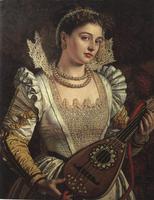
Bianca
William Holman Hunt
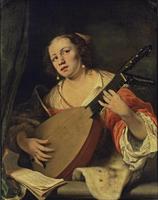
A Lady Playing the Lute
Ferdinand Bol
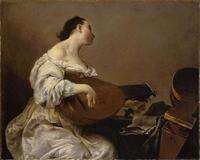
Woman Tuning a Lute
Giuseppe Maria Crespi
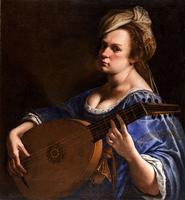
Self Portrait as a Lute Player
Artemisia Gentileschi
Lute player
Vito d'Ancona
The Joy of Playing
Pieter Codde
Woman in a Toque with a Mandolin
Camille Corot
The Lute Player
Caravaggio
Lute Player
Bernardo Strozzi
Femme Acoordant Son Luth
Gerard van Honthorst
La Leçon De Luth Interrompu
Michiel van Musscher
Saint Cecilia as a Lute Player
Artemisia Gentileschi
A young Woman playing the Guitar with a Songbird on her Hand
Louis Leopold Boilly
Woman with a Viola De Gamba
Michiel van Musscher