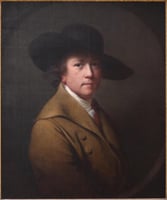
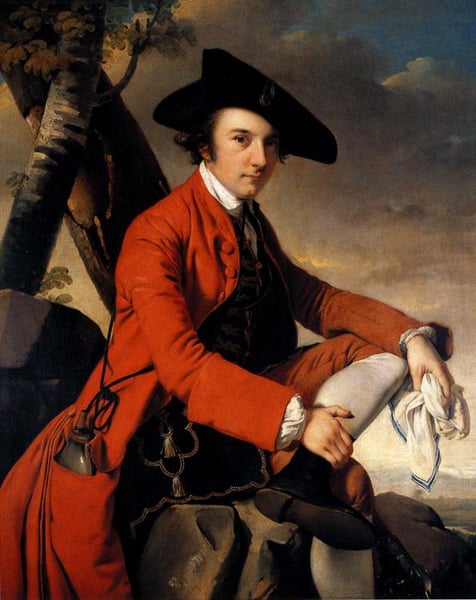
Expertenanalyse zu Joseph Wrights Portrait of Fleetwood Hesketh
Stil: Rococo · Genre: portrait
Expert Analysis: "Portrait of Fleetwood Hesketh" by Joseph Wright
Style & Context
Although Joseph Wright is most widely celebrated for his later Enlightenment-era paintings of scientific experiments and candlelit scenes, "Portrait of Fleetwood Hesketh" belongs firmly within the Rococo tradition—a style that flourished in the early to mid-18th century. Rococo portraiture is characterized by elegance, lightness, and an air of aristocratic leisure, often emphasizing soft pastel tones, delicate brushwork, and a sense of playful intimacy rather than formal grandeur.
Significance within Rococo Portraiture
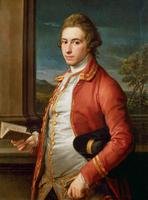
What makes this work significant is its embodiment of Rococo’s shift toward personal, naturalistic representation. Wright portrays Fleetwood Hesketh not as a stiff, allegorical figure but as a refined gentleman in a moment of relaxed poise. The composition likely employs the Rococo preference for trompe-l'œil effects and asymmetrical, serpentine lines (the rocaille), guiding the viewer’s eye through a harmonious interplay of fabric, flesh, and background. The sitter’s expression and posture would have conveyed the doux naturel (sweet naturalness) prized by Rococo aesthetics—an ideal of cultivated ease that distinguished the British aristocracy from the more rigid court portraiture of earlier periods.
Wright’s Unique Contribution
Even within Rococo conventions, Wright brings a proto-Realist attention to texture and light—a hint of the dramatic chiaroscuro that would define his later work. In this portrait, the soft modeling of the face and the subtle sheen of silk or velvet capture both the material luxury of the sitter’s status and the fleeting, human quality of the moment. This blend of Rococo grace with emerging naturalism marks the work as a transitional piece, reflecting how British portraiture evolved from continental Rococo toward the more sober, individualized style of the late 18th century.
Conclusion
"Portrait of Fleetwood Hesketh" stands as a refined example of Rococo portraiture, notable for its intimate, elegant depiction of a gentleman and for Wright’s ability to infuse a conventional genre with a sense of living presence. It reminds us that Rococo was not merely decorative—it was also a vehicle for celebrating the personality and social grace of its subjects, a quality Wright captures with exceptional delicacy.
Museum / Gallery
Visuell ähnlich
20 Werke mit ähnlicher Komposition und Farbpalette
Edward Becher Leacroft
Joseph Wright
John Plampin
Thomas Gainsborough
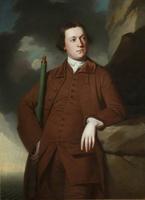
Abraham Rawlinson (1738–1803), MP, of Ellel Hall, near Lancaster
George Romney
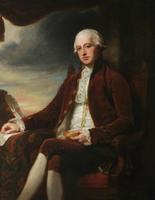
Charles Jenkinson (1727–1808), 1st Lord Hawkesbury (1780), afterwards Created 1st Earl of Liverpool (1796)
George Romney
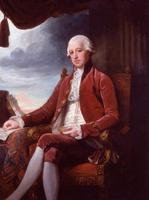
Charles Jenkinson, 1st Earl of Liverpool
George Romney
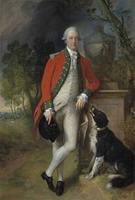
Portrait Of Colonel John Bullock
Thomas Gainsborough
Portrait of General Thomas Gage
John Singleton Copley
Francis Noel Clarke Mundy
Joseph Wright
John Manners, Marquess of Granby
Allan Ramsay
George Harry Grey, 5th Earl of Stamford
Anton Raphael Mengs
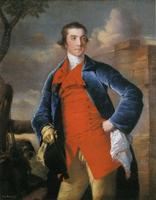
Harry Peckham
Joseph Wright
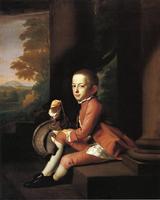
Daniel Crommelin Verplanck
John Singleton Copley
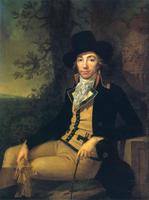
The Man in the Riding Habit
Pierre-Paul Prud'hon
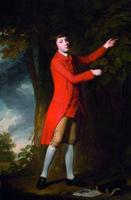
Thomas Rackett the Younger (1756–1840)
George Romney
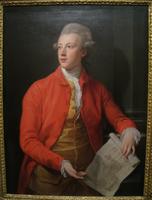
Portrait of John Corbet of Sundorne Castle, Shrewsbury
Pompeo Batoni
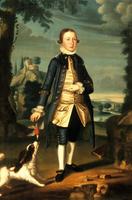
David Hall
William Williams
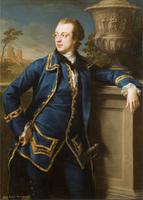
Portrait of John Wodehouse
Pompeo Batoni
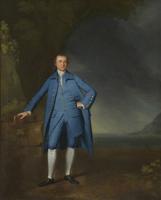
Captain Robert Banks (b.1734)
George Romney
Tissington Hall
Pompeo Batoni
Jacob Morland of Capplethwaite
George Romney