Expert analysis of Joseph Wright’s Richard Cheslyn
Style: Baroque, Romanticism · Genre: portrait
Expert Analysis: "Richard Cheslyn" by Joseph Wright
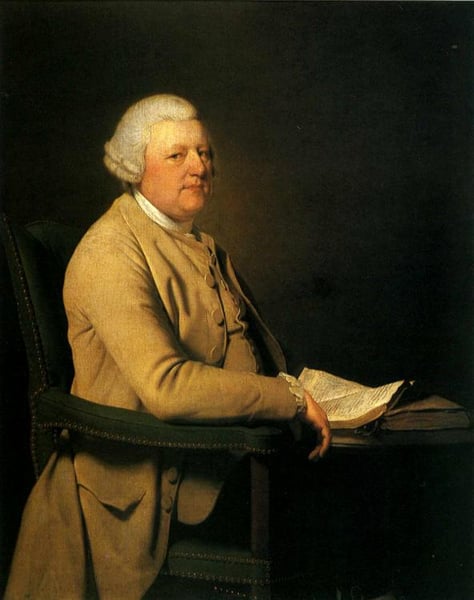
Joseph Wright’s Richard Cheslyn stands at a fascinating stylistic crossroads, merging the dramatic light of the Baroque with the introspective sensibility of early Romanticism. This fusion is precisely what makes the portrait significant within Wright’s oeuvre and the broader history of portraiture.
Wright, often called “Wright of Derby,” was a master of chiaroscuro—a technique inherited from Baroque artists like Caravaggio and Rembrandt. In Richard Cheslyn, this manifests as a powerful, controlled beam of light that models the sitter’s face and hands against a deeply shadowed, nearly black background. The effect is not merely decorative but psychological: the light isolates Cheslyn, forcing the viewer to focus on the sitter’s expression, posture, and inner life.
It is in this inward focus that the Romantic element emerges. Unlike many Baroque portraits that emphasized status, wealth, or narrative action, Wright’s portrait prioritizes individual character and emotional resonance. The sitter is not performing for an audience; he seems caught in a moment of quiet contemplation. Wright imbues the subject with a sense of self-aware dignity and intellectual presence, aligning with the Romantic ideal of the unique, feeling individual.
The significance of Richard Cheslyn lies in this synthesis. Wright takes the theatrical, sculptural lighting of Baroque portraiture and repurposes it to reveal not just the sitter’s external likeness but the complexities of his inner world—a distinctly Romantic project. The work thus bridges two major artistic periods, demonstrating how a traditional formal language can be harnessed to express new ideas about subjectivity and human experience. In doing so, it elevates the portrait from a record of identity to a meditation on character itself.
Museum / Gallery
Visually similar
20 works with related composition and palette
Samuel Crompton
Joseph Wright
Isaac Smith
John Singleton Copley
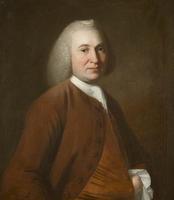
Hugh Holme, Deputy Recorder of Kendal
George Romney
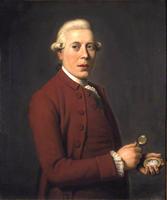
James Tassie, Sculptor and Gem Engraver
David Allan
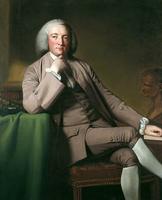
James Ainslie
George Romney
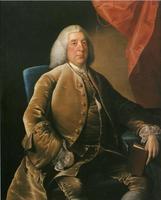
William Brooke
Joseph Wright
Portrait of director of Capella Mark Fedorovich Poltoratsky
Dmitry Levitzky
Epes Sargent II
John Singleton Copley
Portrait of a Gentleman
Joseph Wright
John Spooner
John Singleton Copley
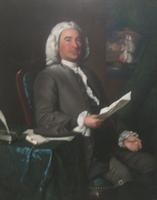
Thomas Greene
John Singleton Copley
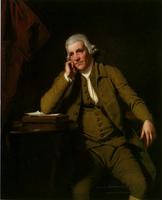
Jedediah Strutt
Joseph Wright
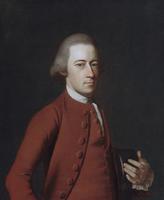
Samuel Verplanck
John Singleton Copley
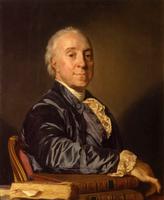
Portrait De Joseph De Lassone
Joseph Duplessis
Abraham Rawlinson (1709–1780)
George Romney
John Campbell, 4th Earl of Loudoun
Allan Ramsay
Reverend Oliver Marton, Vicar of Lancaster (1767–1794)
George Romney
Portrait of Charles-Pierre Pecoul
Jacques-Louis David
Thomas Holme, Mayor of Kendal (1741–1742 & 1755–1756)
George Romney
Ezekiel Goldthwait
John Singleton Copley