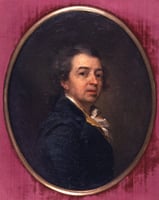
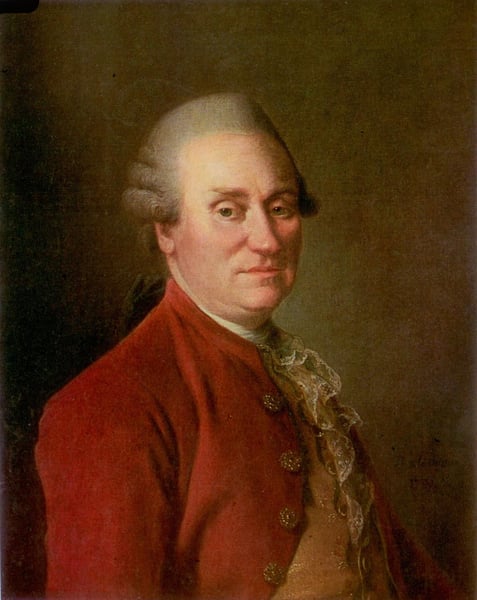
Portrait of director of Capella Mark Fedorovich Poltoratsky
Details
Expert analysis of Dmitry Levitzky’s Portrait of director of Capella Mark Fedorovich Poltoratsky
Style: Rococo · Genre: portrait
As an expert art historian, I will analyze Dmitry Levitzky’s Portrait of Director of Capella Mark Fedorovich Poltoratsky using only the structured facts provided: the artist is Dmitry Levitzky, the style is Rococo, the genre is a portrait, and the sitter was the director of the Capella (the imperial court choir in Russia).
This portrait holds significance within the Rococo period for several reasons. First, it exemplifies how Levitzky—one of the leading portraitists of Catherine the Great’s Russia—adapted the light, elegant, and intimate spirit of Rococo to capture the character of a prominent cultural figure. The Rococo style, known for its graceful lines, soft palette, and refined sensibility, is here applied to a subject who was not a courtier or aristocrat by birth, but a distinguished musician and administrator. By depicting Poltoratsky, the director of the Capella, Levitzky elevates a figure of the arts to the same level of sophistication and prestige typically reserved for the nobility—a hallmark of the Enlightenment-era Rococo portrait, which celebrated individual achievement and cultivated taste.
Second, the work is significant for its delicate balance between Rococo charm and psychological realism. Levitzky’s portraits often combine the decorative elegance of the style—seen in the subtle handling of textures and the soft modulation of light on the sitter’s face—with a keen observation of the sitter’s inner life. Here, Poltoratsky is presented as both a dignified public servant (his role as director of the imperial choir implying authority and musical erudition) and a man of personal refinement, likely shown with an air of relaxed confidence. This fusion of decorative grace and individual character made Levitzky’s Rococo portraits uniquely compelling within Imperial Russian art.
Finally, the portrait underscores the Rococo genre’s shift toward more direct, less formal representations of the sitter. Rather than a grandiose allegorical or mythological depiction, Levitzky offers a quiet, focused portrait that prioritizes the subject’s identity and social role. The choice to portray the director of the Capella—a key figure in Russia’s musical and ecclesiastical life—also reflects the Rococo period’s growing interest in commemorating cultural leaders, not just monarchs or aristocrats. In this way, Levitzky’s work stands as a refined example of how Rococo portraiture could serve both as a celebration of the individual and as a document of Russia’s vibrant court culture.
Visually similar
20 works with related composition and palette
Alexander Khrapovitsky
Dmitry Levitzky
Portrait Of Boris Vladimirovich Sheremetyevo Konnogvardeisky
Ivan Argunov
Retrato de Friedrich Justin Bertuch (1747–1822)
Johann Friedrich August Tischbein
Portrait of a Gentleman
Joseph Wright
Eustathius Palmenbah
Dmitry Levitzky
Portrait Of Peter Vladimirovich Sheremeteva
Ivan Argunov
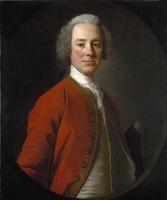
John Campbell, 4th Earl of Loudoun
Allan Ramsay
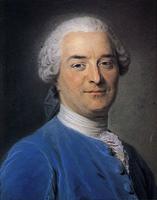
Charles Pinot Duclos, novelist and historian
Maurice Quentin de La Tour
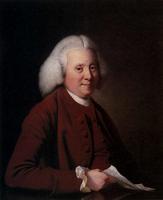
Samuel Crompton
Joseph Wright
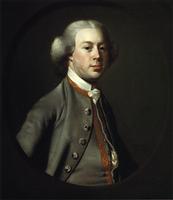
John Spooner
John Singleton Copley
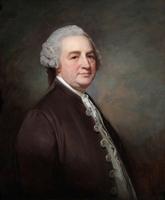
Anthony Todd, Postmaster General
George Romney
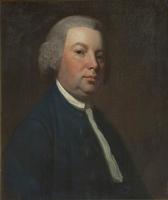
Reverend Oliver Marton, Vicar of Lancaster (1767–1794)
George Romney
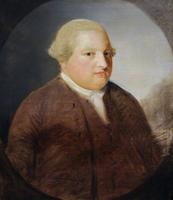
Charles Strickland (1734–1770)
George Romney
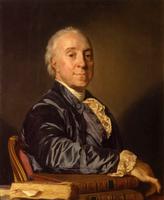
Portrait De Joseph De Lassone
Joseph Duplessis
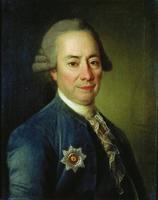
Portrait of P. V. Bakunin
Dmitry Levitzky
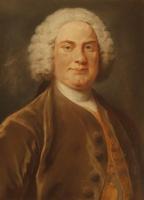
Simon Fanshawe (1716–1777)
William Hoare
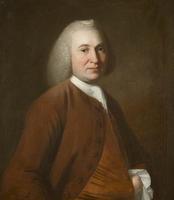
Hugh Holme, Deputy Recorder of Kendal
George Romney
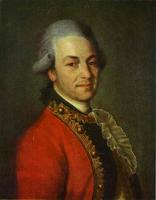
Portrait of an Unknown Man
Dmitry Levitzky
Self-Portrait
Jean-Baptiste Greuze
Jean Monnet, Director of the Opera Comique in Paris
Maurice Quentin de La Tour