Analisi esperta di The Concert di Gino Severini
Stile: Cubism · Genere: genre painting
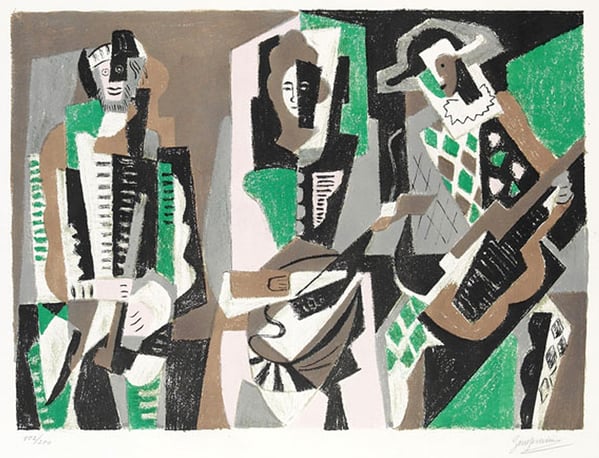
"The Concert" by Gino Severini stands as a pivotal work within the Cubist movement, demonstrating how the artist uniquely fused the analytical fragmentation of Cubism with the dynamic energy of his own Futurist background. As a genre painting depicting a musical performance, Severini transforms the static scene into a vibrant, rhythmic composition that visualizes sound and movement—a hallmark of his significance.
Synthesis of Cubist and Futurist Principles
While Cubism often favored muted, earthy tones and a tempered, almost intellectual dissection of form, Severini injects a chromatic vibrancy and a sense of kinetic flux into "The Concert." The fractured planes and overlapping geometries typical of Cubism are here animated by a Futurist emphasis on speed, simultaneity, and the sensory experience of modern life. The painting captures not just the appearance of musicians and instruments, but the very sensation of listening: notes seem to materialize as colored shards, and the spatial recession is collapsed to convey the overlapping wash of sound in a concert hall.
Visualizing Music Through Cubist Language
A central achievement of the work is its attempt to translate auditory rhythms into visual terms. Severini uses repeated, intersecting arcs and angular facets to suggest sound waves, the motions of a conductor’s baton, or the vibration of strings. The result is a genre scene that becomes an abstract symphony of form and color. This approach anticipates later Cubist and abstract explorations of synesthesia, highlighting Severini’s role in pushing Cubism beyond still life and portraiture into the realm of pure perceptual experience.
Bridging Italian and French Avant-Gardes
Severini was a crucial link between the Parisian Cubists (Picasso, Braque) and the Italian Futurists. "The Concert" exemplifies this bridge: it retains Cubism’s structural discipline while embracing the Futurist obsession with the vitality of modern urban entertainment. The work thus marks a significant moment when Cubism was reimagined as a vehicle for depicting the modern world in motion, rather than a static analysis of form. Its importance lies in demonstrating that Cubism could be both intellectually rigorous and emotionally charged—a synthesis that broadened the movement’s expressive range.
Genere
Stile
Visivamente simili
20 opere con composizione e palette affini
El Laudista
Maria Blanchard
Sadness of Young Women
George Stefanescu
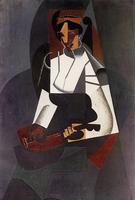
Woman with a Mandolin (after Corot)
Juan Gris
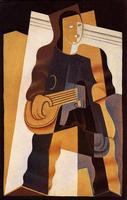
Pierrot
Juan Gris
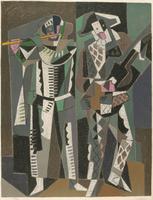
Commedia dell'Arte
Gino Severini
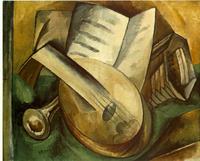
Musical Instruments
Georges Braque
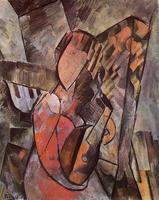
Woman with mandolin
Pablo Picasso
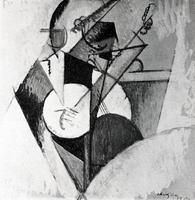
Composition (For Jazz)
Albert Gleizes
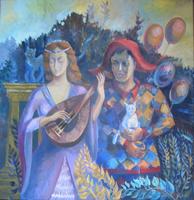
Stacy Pace Karnival
Stacy Pace
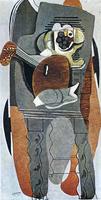
The Gray Table
Georges Braque
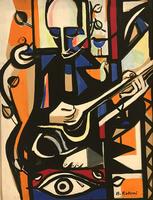
Asik Veysel
Bedri Rahmi Eyuboglu
Mujer Y Mandolina
Antonia Eiriz
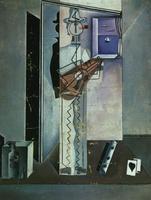
Pierrot Playing the Guitar
Salvador Dali
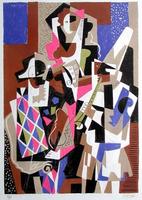
The musicians
Gino Severini
Cossak Mamay
Alla Horska
Musicians with masks
Pablo Picasso
Guitarrista
Maria Blanchard
Clam Diggers
Karl Knaths
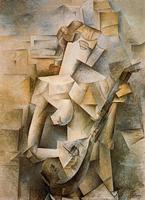
Girl with mandolin (Fanny Tellier)
Pablo Picasso
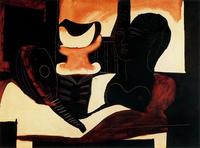
Still life with antique bust
Pablo Picasso