Expertenanalyse zu Pierre Puvis de Chavanness Christian Inspiration
Stil: Symbolism · Genre: genre painting
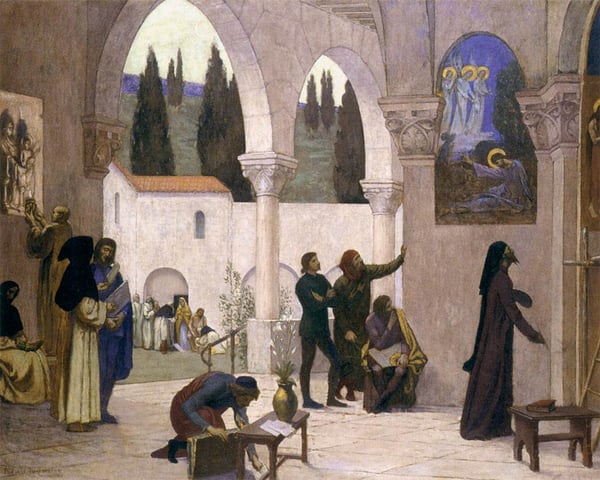
Expert Analysis of "Christian Inspiration" by Pierre Puvis de Chavannes
As a Symbolist genre painting, Christian Inspiration exemplifies Puvis de Chavannes’s revolutionary approach to narrative and spirituality. The work is significant for its radical simplification of form and composition—a deliberate move away from the detailed naturalism of academic painting toward a flattened, dreamlike stillness. Figures are rendered with muted, almost fresco-like tones, arranged in a frieze-like manner that evokes classical fresco cycles yet serves a modern, introspective vision.
Within the Symbolist movement, Puvis stands apart for his ability to merge allegory with everyday, genre-like scenes. Here, the title “Christian Inspiration” suggests a moment of divine revelation or contemplation, but the artist avoids overt religious iconography, instead infusing the ordinary with the eternal through solemn poses, quiet gestures, and a hazy, atmospheric light. This ambiguity—inviting personal interpretation rather than didactic storytelling—is a hallmark of Symbolist art.
The painting’s significance also lies in its influence: Puvis’s reduction of depth, emphasis on decorative surface, and meditative mood directly inspired later Post-Impressionists and Symbolists, including Gauguin and Seurat. Christian Inspiration thus serves as a bridge between the classical tradition and the introspective, anti-naturalist currents that would define modern art at the turn of the century.
Visuell ähnlich
20 Werke mit ähnlicher Komposition und Farbpalette
Assassínio de Dona Inês de Castro
Columbano Bordalo Pinheiro
The Education of the Children of Clovis
Sir Lawrence Alma-Tadema
Tuscan Novelists (Storytellers) of the Fourteenth Century
Vincenzo Cabianca
Cristo Sanando a Los Enfermos
Pedro Lira
Cimabue's Celebrated Madonna Carried in Procession Through the Streets of Florence
Frederic Leighton
Ecce Homo!
Mihaly Munkacsy
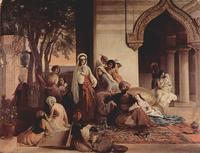
The new favorite (Harem scene)
Francesco Hayez
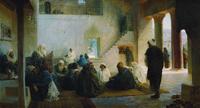
Among the teachers
Vasily Polenov
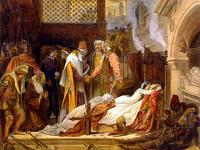
The Reconciliation of the Montagues and Capulets
Frederic Leighton
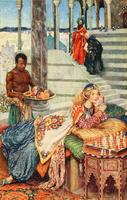
Nor saw she save the King, who wrought the charm
Eleanor Fortescue-Brickdale
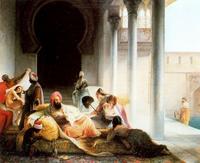
Inside the Harem
Francesco Hayez
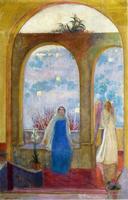
The Annunciation under the Arch with Lilies
Maurice Denis
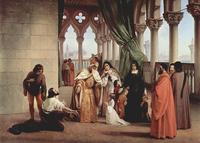
The two Foscari
Francesco Hayez
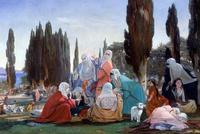
Souvenir of Scutari
Edward Armitage
Dancer and favorites
Alfred Dehodencq
Episodes from the life of Joan of Arc
Albert Maignan
A scandal
Jehan Georges Vibert
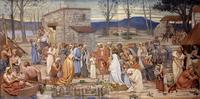
The Childhood of Saint Genevieve
Pierre Puvis de Chavannes
The Finding of the Saviour in the Temple
William Holman Hunt
Joseph recognized by his brothers
Peter von Cornelius