Expert analysis of Adriaen Brouwer’s The Drinker
Style: Baroque · Genre: genre painting
Expert Analysis of "The Drinker" by Adriaen Brouwer
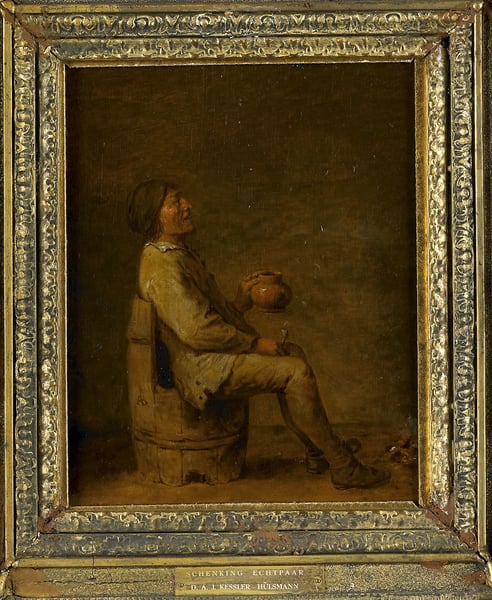
Adriaen Brouwer’s The Drinker stands as a quintessential example of Baroque genre painting, yet its significance lies in how it subverts the period’s grandiose tendencies to focus on raw, unidealized human experience. Within the Baroque—an era marked by dramatic intensity, emotional dynamism, and a keen interest in the everyday—Brouwer carved a niche that elevated the low-life tavern scene to a profound study of character and mood.
Stylistic Significance:
Brouwer’s work exemplifies the Baroque fascination with momentary, unguarded expression. Unlike the polished, heroic figures often seen in religious or mythological Baroque works, The Drinker captures a fleeting, candid moment of intoxication. The subject’s flushed face, half-closed eyes, and slightly parted lips convey a palpable sense of physical and psychological vulnerability. Brouwer’s brushwork is deliberately loose and sketch-like, a technique associated with the Baroque’s pittura di tocco (painting of touch), which prioritizes spontaneity over meticulous detail. This approach aligns with the Baroque’s embrace of realism and movement, but it also anticipates later genre painters like the Dutch fijnschilders and even the Impressionists in its focus on light, texture, and momentary sensation.
Genre Painting in the Baroque Context:
As a genre painting—a scene of everyday life—The Drinker reflects the burgeoning interest in depicting the common person with dignity and directness. In the Baroque period, genre scenes often carried moral or allegorical undertones (e.g., warnings against excess). However, Brouwer transcends mere cautionary tale. His treatment is neither overtly moralizing nor comedic; instead, it offers a remarkably empathetic, almost clinical observation of human indulgence. The cramped, dim interior typical of Brouwer’s tavern scenes intensifies the subject’s isolation, making the viewer a silent witness to a private, universal moment.
Why It Matters:
The Drinker is significant because it epitomizes Brouwer’s ability to find profound truth in the marginal and the mundane. At a time when Baroque art in Flanders and Holland was dominated by monumental history painting and opulent still lifes, Brouwer’s small-scale, intimate works—often dismissed as “low” subjects—were admired by peers like Rubens and Rembrandt for their psychological depth and painterly freedom. This painting, in particular, demonstrates how the Baroque could embrace the profane as a mirror for the human condition, foreshadowing the later 17th-century Dutch genre tradition and cementing Brouwer’s role as a master of emotional authenticity within the Baroque idiom.
Museum / Gallery
Visually similar
20 works with related composition and palette
Smoker
David Teniers the Younger
The Smoker
Adriaen Brouwer
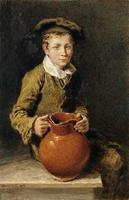
A boy seated on a bench with a pitcher
William Henry Hunt
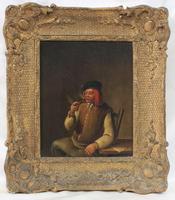
A Peasant Smoking at a Table
Cornelis Pietersz. Bega
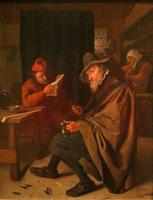
Drinker
Jan Steen
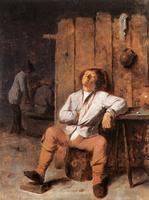
A Boor Asleep
Adriaen Brouwer
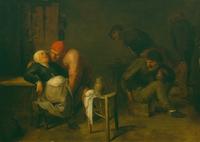
Peasant Inn
Adriaen Brouwer
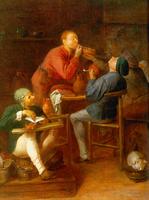
The Smokers or The Peasants of Moerdijk
Adriaen Brouwer
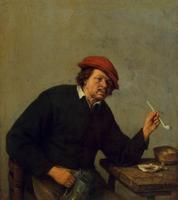
Smoker
Adriaen van Ostade
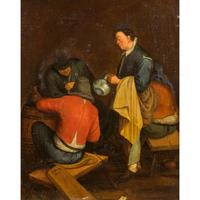
In der Schenke
Cornelis Pietersz. Bega
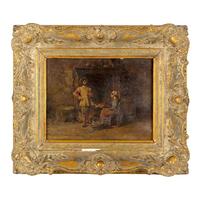
A charming scene
Eugene Lepoittevin
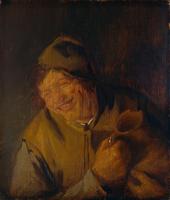
The Merry Peasant
Adriaen van Ostade
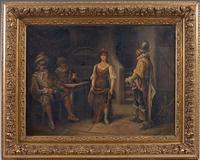
Tavern Scene
Joseph-Noël Sylvestre
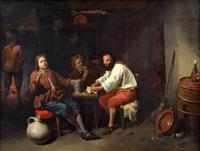
Scène d'auberge
David Rijckaert III
Smokers in an Inn
Adriaen Brouwer
Two Peasants
Adriaen Brouwer
Tavern Scene
David Teniers the Younger
Smoker
Jan Steen
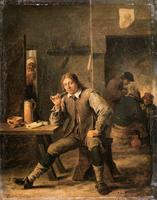
A Smoker Leaning on a Table
David Teniers the Younger
Conversation
Cesare Agostino Detti