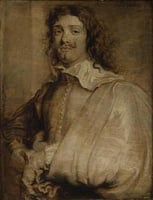
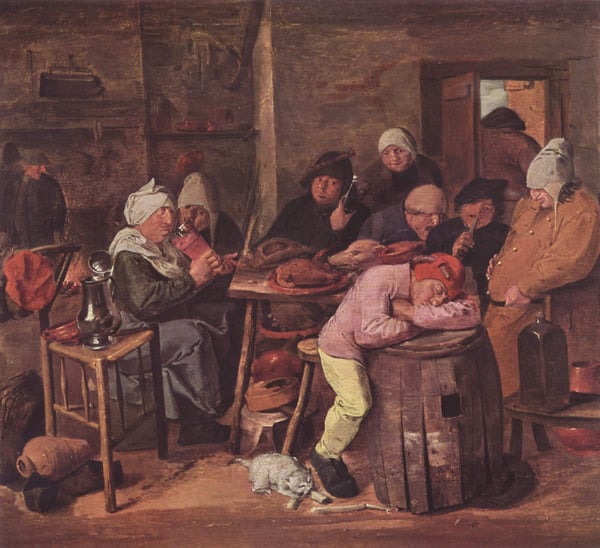
Expert analysis of Adriaen Brouwer’s The Schlachtfest
Style: Baroque · Genre: genre painting
Expert Analysis: "The Schlachtfest" by Adriaen Brouwer (Baroque, Genre Painting)
Adriaen Brouwer’s The Schlachtfest is a quintessential example of the Baroque interest in raw, unidealized everyday life—here capturing a boisterous peasant slaughter festival with unflinching realism. The work’s significance lies in its bold departure from the polished, courtly subjects favored by many Baroque contemporaries, instead embracing the earthy, often chaotic world of the lower classes.
Stylistic and Thematic Significance
- Realism and Emotional Rawness: Brouwer’s figures are not caricatures but closely observed individuals, their faces distorted by exertion, drunkenness, and coarse laughter. This aligns with the Baroque emphasis on capturing fleeting human emotion and physicality, a direct counterpoint to the idealized forms of the Renaissance.
- Dynamic Composition and Light: True to Baroque dynamism, the scene is crowded with overlapping bodies, animals, and implements, creating a sense of controlled chaos. Brouwer uses a muted, tonal palette typical of his Flemish-Dutch style, with pockets of warm light falling on flesh and bloody meat—heightening the visceral, almost theatrical drama of the slaughter.
- Influence on Dutch Genre Painting: Brouwer’s unvarnished depiction of peasant life (often called low-life genres) profoundly shaped later artists like David Teniers the Younger and Jan Steen. His ability to find expressive power in grotesque, everyday moments expanded the scope of genre painting beyond mere anecdote into a vehicle for social commentary and human nature.
Why It Matters
The Schlachtfest is significant not just for its technical mastery—loose, energetic brushwork that suggests motion and decay—but for its audacious subject matter. In an era when art often served to elevate or moralize, Brouwer’s work refuses to prettify; the festival of slaughter is both literal and metaphorical, a blunt reminder of life’s bodily needs and brutish pleasures. This painting stands as a key document of Baroque realism, where the sacred and profane collide in a single, unforgettable feast.
Visually similar
20 works with related composition and palette
Village Tavern with Four Figures
Adriaen van Ostade
Lean Kitchen
Jan Steen
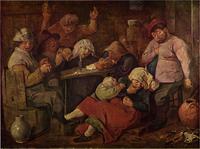
Inn with drunken peasants
Adriaen Brouwer
Figures Gambling in a Tavern
David Teniers the Younger
Interior with Smokers
Adriaen Brouwer
Barber Extracting of Tooth
Adriaen van Ostade
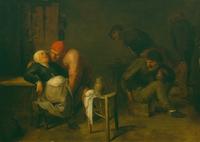
Peasant Inn
Adriaen Brouwer
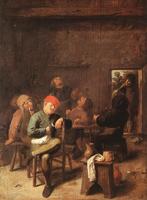
Peasants Smoking And Drinking
Adriaen Brouwer
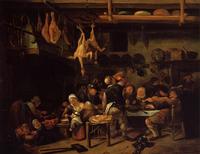
Fat Kitchen
Jan Steen
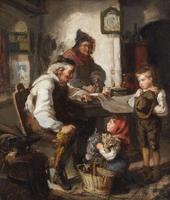
Grandfather and grandchildren
Ludwig Knaus
The Hustle Cap
David Teniers the Younger
Tavern scene
Johann Baptist Pflug
A man and woman smoking a pipe seated in an interior with peasants playing cards on a table
David Teniers the Younger
Village school
Jan Steen
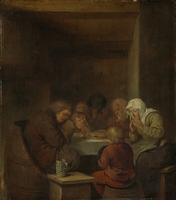
Het Gebed Voor De Maaltijd
Jan Miense Molenaer
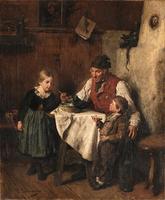
A feathered friend
Felix Schlesinger
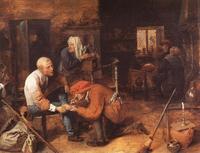
Operation on foot
Adriaen Brouwer
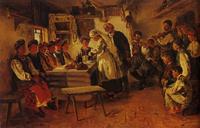
The bachelorette party
Vladimir Makovsky
Peasants playing cards in a tavern
Adriaen Brouwer
The Card Players
Eastman Johnson