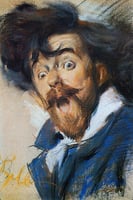
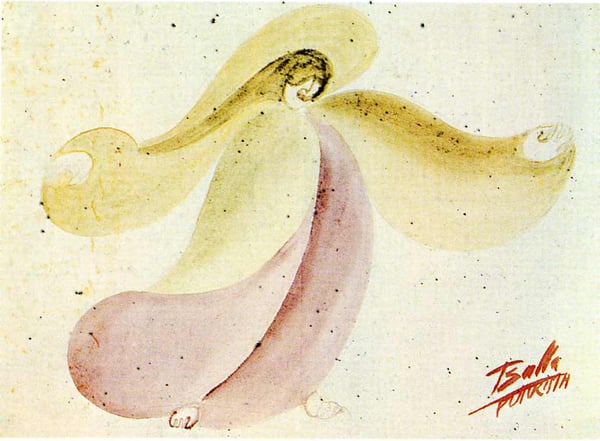
Giacomo Balla sanatçısının Mimicry synoptic': costume design for the Valle eseri hakkında uzman analizi
Tarz: Futurism · Tür: design
Expert Analysis: "Mimicry synoptic': costume design for the Valle" (Giacomo Balla, Futurism)
Giacomo Balla’s "Mimicry synoptic': costume design for the Valle" stands as a paradigmatic example of how Futurism sought to dissolve the boundaries between visual art, performance, and life itself. Created in the context of the early 20th‑century avant‑garde, this costume design embodies the movement’s core obsessions: dynamism, the abstraction of motion, and the rejection of static, representational forms.
Significance within Futurism:
Balla, a signatory of the Futurist Painting Technical Manifesto, was deeply invested in translating speed and energy into visual language. In this design, he applies a synoptic approach—condensing multiple moments of movement into a single, simultaneous image. The costume is not merely a garment but a kinetic sculpture intended to merge with the performer’s body and the stage’s artificial light. The use of bold, intersecting geometric planes and vibrant, clashing colors (likely reds, yellows, blues, and greens) reflects the Futurist fascination with “dynamic sensation”—the idea that art should capture the feeling of motion, not its static record.
Design as Manifesto:
Unlike traditional theatrical costume, which prioritizes character or narrative, Balla’s design is autonomous. It acts as a visual generator of energy, transforming the dancer or actor into a “living mechanism.” The title “Mimicry synoptic” hints at a form of mimicry that is synthetic rather than naturalistic: the costume does not imitate nature but rather constructs a new reality through pure form and color. This aligns with Futurist principles of “anti‑passatism,” actively rejecting historical or sentimental references.
Legacy:
Balla’s costume designs (including this one) were influential in blurring the line between fine art and applied arts, paving the way for modern wearable art and performance pieces. They also prefigure later developments in Op Art and kinetic art by using optical patterns to create the illusion of vibration and movement. In “Mimicry synoptic,” we see a radical redefinition of the human figure as an element within a abstract, energetic field—a vision that remains central to understanding Futurism’s radical break with tradition.
Görsel olarak benzer
İlişkili kompozisyon ve renk paletine sahip 20 eser
Design sketches: 'Mimicry synoptic' or 'Spring'
Giacomo Balla
Anna Margit, Bohóc
Anna Margit
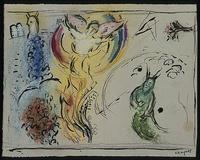
Moses with the Burning Bush
Marc Chagall
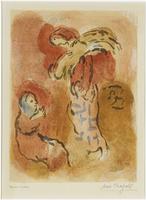
Ruth gleaning
Marc Chagall
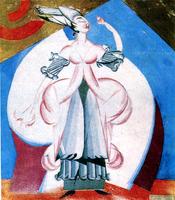
Costume Design
Vadym Meller
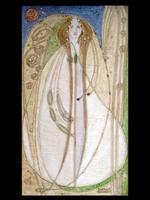
Décor de la salle à manger (House for an art lover, Glasgow)
Charles Rennie Mackintosh
Assumpta Canaveral
Salvador Dali
Volkhova, the sea princess (Costume design for the opera "Sadko")
Mikhail Vrubel
Two Female Figures
Hryhorii Havrylenko
The selfish giant
Charles Robinson
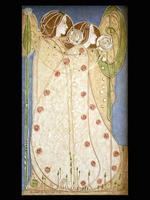
Décor de la salle à manger (House for an art lover, Glasgow)
Charles Rennie Mackintosh
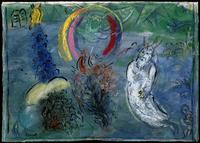
Moses with the Burning Bush
Marc Chagall
On Holiday
Raphael Kirchner
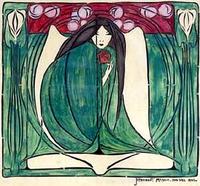
Floral Design
Frances Macdonald
Moses receiving the Tablets of Law
Marc Chagall
Scheiber Hugó, Táncosnő
Scheiber Hugó
The angel
Mikalojus Konstantinas Ciurlionis
Garden of Eden
Nicholas Roerich
The Red Cape
Maurice Prendergast
Décor de la salle à manger (House for an art lover, Glasgow)
Charles Rennie Mackintosh