Expert analysis of Umberto Boccioni’s Figure
Style: Futurism · Genre: figurative
Expert Analysis of Figure by Umberto Boccioni
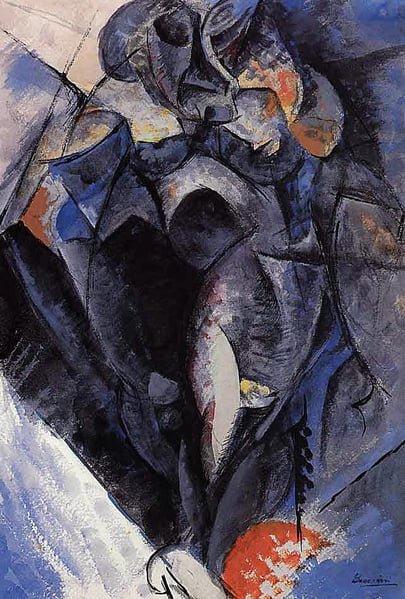
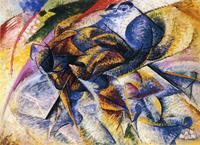
As a work of Futurism, Umberto Boccioni’s Figure exemplifies the movement’s radical break from static, classical representation. Though figurative in genre, the painting rejects naturalistic portraiture in favor of capturing dynamic sensation—the core Futurist goal of embodying speed, energy, and the modern industrial age.
Significance within the style:
- Boccioni uses fragmented planes, intersecting lines, and blurred contours to depict the figure in motion, not as a fixed moment but as a synthesis of multiple viewpoints and times. This translates the Futurist manifesto’s call to “set the spectator in the center of the picture” by dissolving the distinction between object and environment.
- The human form is reconceived as a force field of energy, no longer bound by anatomy but instead rendered through “lines of force” that radiate and intersect with surrounding space. This technique—pioneered by Boccioni—visually expresses the Futurist belief in the fusion of man and machine, where the body becomes a conduit for modern velocity.
- Unlike traditional figurative art that prioritizes permanence, Figure embraces transience and simultaneity. The subject appears to be in the act of becoming, suggesting the Futurist ideal of perpetual change and the overthrow of past artistic conventions.
Why it matters:
Figure is a landmark in early 20th-century European modernism because it demonstrates how Futurism extended figuration beyond academic boundaries, transforming the human body into a vehicle for expressing the rhythm and roar of modern life. Boccioni’s treatment here directly influenced later developments in abstraction and performance art, cementing his role as a key theorist and practitioner of dynamic form.
Visually similar
20 works with related composition and palette
Donna + ambiente
Enrico Prampolini
Dynamism of a Human Body
Umberto Boccioni
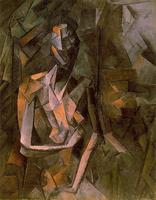
Seated female nude
Pablo Picasso
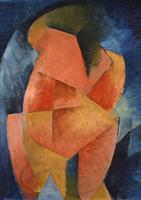
Figure A (Geometrical Patterns)
Morton Schamberg
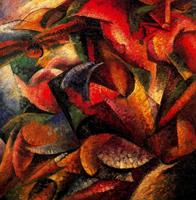
Dynamism of a Human Body
Umberto Boccioni
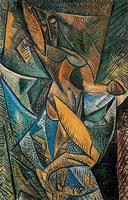
Dance of the Veils
Pablo Picasso
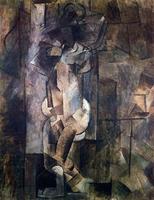
Nude figure
Pablo Picasso
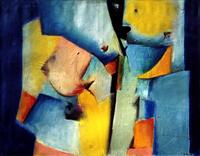
Orgy
Alexander Bogen
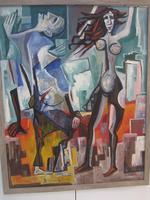
Untitled
Gogi Khutsishvili
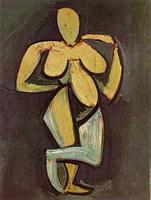
Standing female nude
Pablo Picasso
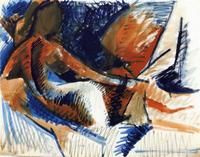
The Great Odalisque (after Ingres)
Pablo Picasso
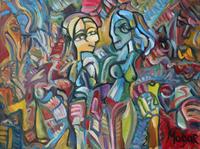
Times
Evan Magar
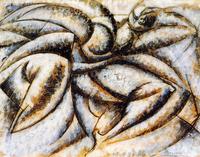
Dynamism of the Human Body
Umberto Boccioni
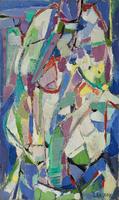
Ni moi ni toi
Andre Lanskoy
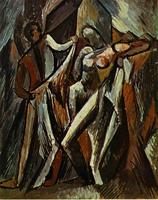
Bathers Drying Themselves
Pablo Picasso
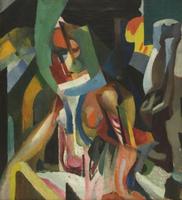
Composition (Seated Nude)
Arthur Beecher Carles
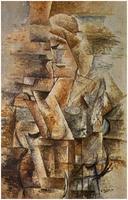
Portrait of a Woman
Georges Braque
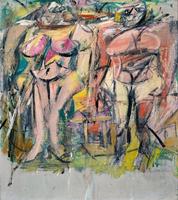
Two Women in the Country
Willem de Kooning
Crouching female nude
Pablo Picasso
Dynamism of a Cyclist
Umberto Boccioni