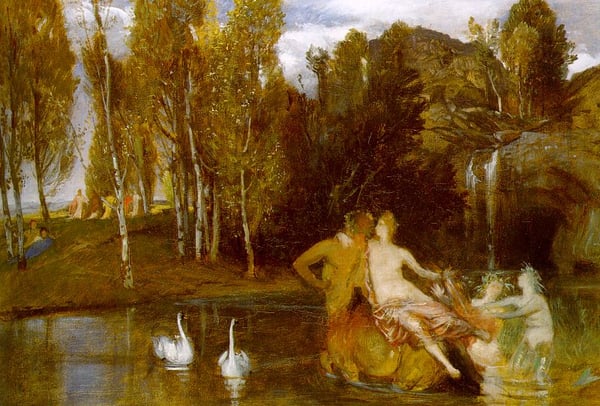
Based solely on the provided structured facts—"Elysian Fields" by Arnold Böcklin, Symbolism, mythological painting—this artwork's significance lies in its quintessential embodiment of the Symbolist movement. As a mythological painting, it rejects realistic depiction of the natural world in favor of an idealized, often dreamlike realm. Böcklin’s treatment of the Elysian Fields—the ancient Greek afterlife for the blessed—would have served as a vehicle for exploring profound existential and emotional themes through allegory and mood, rather than narrative clarity. The work’s significance within Symbolism is its use of mythology not as academic storytelling, but as a symbolic language to evoke a sense of mystery, melancholy, and the sublime—a hallmark of Böcklin’s enduring influence on later visionary and surrealist art.