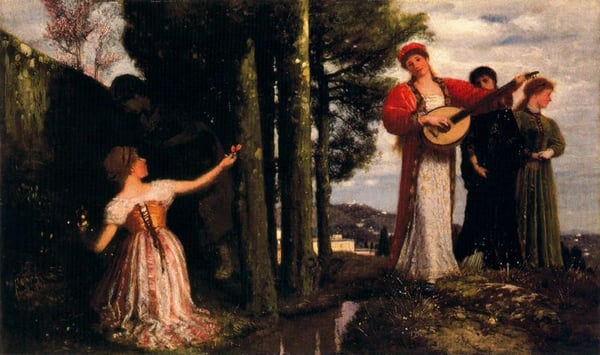
Look any laughs to the plains
Analisi esperta di Look any laughs to the plains di Arnold Böcklin
Stile: Symbolism · Genere: genre painting
Expert Analysis: "Look any laughs to the plains" by Arnold Böcklin
Arnold Böcklin, a central figure of the Symbolist movement, creates in this genre painting a deceptively simple scene that resonates with deeper, often unsettling meaning. The title itself—fragmentary and almost nonsensical—hints at the Symbolist impulse to privilege emotional and psychological truth over literal narrative. The work’s significance lies in how it subverts the conventions of genre painting (traditionally scenes of everyday life) by infusing a commonplace moment with an eerie, timeless ambiguity.
As a genre painting, "Look any laughs to the plains" might initially appear to depict a rustic or pastoral interaction: figures laughing, perhaps gesturing toward an open landscape. Yet Böcklin transforms this ordinary event into a meditation on human existence, nature’s indifference, or the absurdity of joy in a transient world. The “plains” could symbolize the vast, unfeeling expanse of the natural world, while the laughter becomes a brittle, almost defiant human response—a theme echoed in Böcklin’s more famous mythological works.
What makes this piece significant within Symbolism is its refusal to explain. Böcklin avoids explicit allegory or mythic reference, instead distilling his vision into a mysterious, genre-based vignette. This approach anticipates the psychological realism and fractured narratives of later modernists. The painting’s power lies not in what is shown, but in the unresolved tension between the title’s odd phrasing, the mundane setting, and the uncanny emotional charge. It remains a compelling example of how Symbolism could transform even the most humble subject into a vessel for the ineffable.
Visivamente simili
20 opere con composizione e palette affini
Ideal spring landscape
Arnold Böcklin
A Tale from the Decameron
John William Waterhouse
Fair Is My Love
Edwin Austin Abbey
Rescue of Moses from the waters of the Nile
Paolo Veronese
Music
Elisabeth Sonrel
Country concert
Camille Corot
Woman with Garland
Gustave Courbet
Harmonie du soir
Michel Simonidy
Olivia's proposal
William Hamilton
The Bower Meadow
Dante Gabriel Rossetti
Landscape with Figures
Camille Corot
Chivalry
Frank Dicksee
Apollo and the Muses (Parnassus)
Lavinia Fontana
Three Girls at the edge of the river
Joan Brull
Woman of Frankfurt
Gustave Courbet
Three Children under a Tree
William Collins
Elysian Fields
Arnold Böcklin
Apollo and the Muse
Bartholomeus Spranger
The Mystic Wood
John William Waterhouse
FIAMMETTA SINGING
Marie Spartali Stillman