Analisi esperta di Trees di Konstantin Bogaevsky
Stile: Symbolism · Genere: landscape
Artwork Analysis: "Trees" by Konstantin Bogaevsky
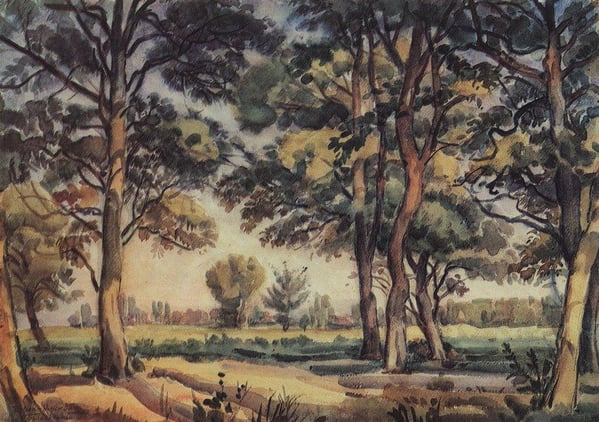
This work stands as a quintessential example of Symbolist landscape painting, a genre that transcends mere topographical representation to explore inner emotional and metaphysical states. In "Trees," Bogaevsky transforms a natural motif into a vehicle for symbolic meaning, aligning with the core tenets of the Symbolist movement that flourished in the late 19th and early 20th centuries.
Significance within Symbolism and Landscape:
-
Nature as a Symbolic Language: Unlike Realist or Impressionist landscapes that emphasize optical fidelity or atmospheric effect, Symbolist landscapes treat nature as a repository of hidden meanings. Bogaevsky’s trees are not simply botanical subjects; they become archetypal forms—perhaps representing endurance, solitude, or the cycle of life and death. The composition likely strips away anecdotal detail, focusing on the stark, almost architectural silhouettes of the trees against a muted or dramatic sky, inviting the viewer into a contemplative, dreamlike space.
-
Mood and Atmosphere: The significance of "Trees" lies in its ability to evoke a profound sense of stillness and mystery. Typical of Symbolist landscapes, the scene may feel timeless or slightly otherworldly, with subdued colors and a careful balancing of light and shadow. This mood prioritizes introspection over narrative, allowing the trees to function as silent witnesses to the unseen or the sublime.
-
Rejection of Literalism: By working within the Symbolist style, Bogaevsky elevates the landscape genre to a philosophical plane. The trees likely serve as metaphors for the human condition—rooted yet reaching upward, isolated yet interconnected. This aligns with Symbolism’s rejection of direct representation in favor of suggestion, making "Trees" significant as a pure expression of inner vision through external nature.
In summary, "Trees" is significant as a Symbolist landscape that uses a simple, natural motif to explore complex emotional and spiritual themes. It exemplifies how the movement transformed the genre from documentation into a poetic, symbolic language—one where the trees are not just seen, but felt and interpreted.
Visivamente simili
20 opere con composizione e palette affini
Landscape With Trees
Joan Brull
Forest Vista
Stefan Popescu
Avenue in the country
Anthony van Dyck
Study of Trees
George Harvey
Landscape with Wagon
Robert Julian Onderdonk
The oak tree crashed into the forest of Fontainebleau
Theodore Rousseau
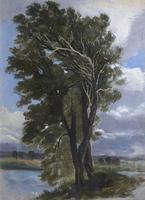
Trees in a Wind
George Harvey
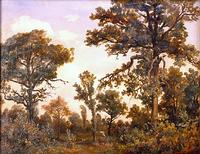
The Large Oak Tree, Forest of Fontainebleau
Theodore Rousseau
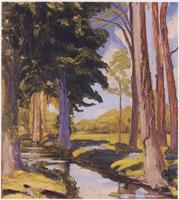
Moat at Breccles
Winston Churchill
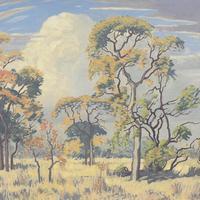
Bushveld Game Reserve
Jacobus Hendrik Pierneef
Untitled
Hoca Ali Riza
Natives on the Ouse River, Van Diemen's Land
John Glover
Landscape of Cascine
Giorgio de Chirico
Mogoșoaia Forest Path
Lucian Grigorescu
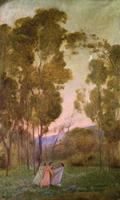
Landscape With Figures
Joan Brull
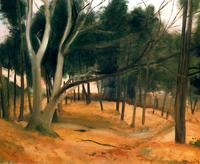
The Path of forest
Andre Derain
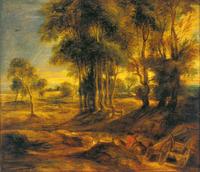
Landscape with the Carriage at the Sunset
Peter Paul Rubens
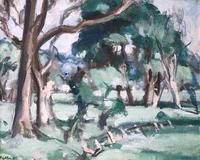
Landscape
Samuel Peploe
View of the Villa Borthese
Gustave Moreau
Spanish landscape
Ferdinand Hodler