
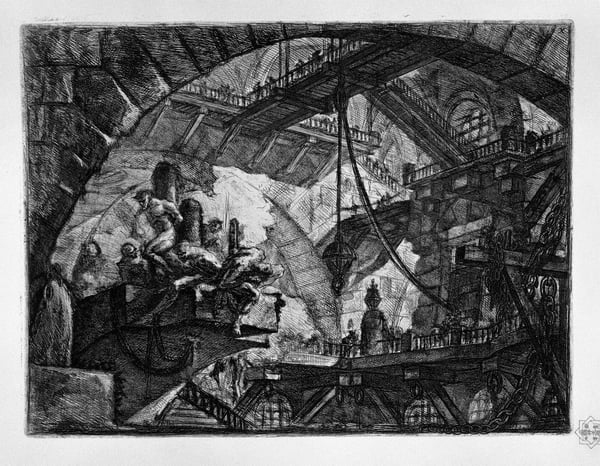
Analisi esperta di Prisoners on a Projecting Platform di Giovanni Battista Piranesi
Stile: Neoclassicism · Genere: genre painting
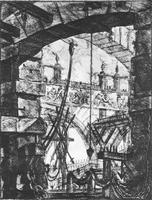
Expert Analysis of "Prisoners on a Projecting Platform" (c. 1749–1760) by Giovanni Battista Piranesi
Context & Stylistic Contradiction
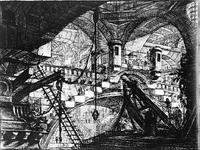
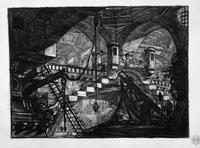
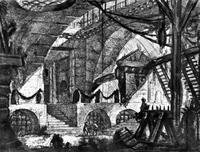
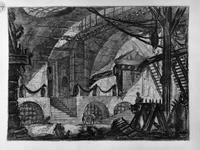
Although classified as Neoclassicism, Piranesi’s etching belongs to his visionary Carceri d’invenzione (Imaginary Prisons) series—a work that simultaneously adheres to and subverts Neoclassical ideals. Neoclassicism prized order, rationality, and archaeological precision, yet Piranesi fills this scene with irrational, nightmarish spatial ambiguity. The “projecting platform” juts into a cavernous hall where colossal arches, chains, and pulleys dwarf the prisoners, creating a sublime tension between human scale and inhuman architecture. This tension marks the work as a bridge between Neoclassical monumentality and the emotional excess of Romanticism.
Genre Painting as Philosophical Allegory
As a genre painting, the artwork depicts an everyday scene of captivity—but Piranesi elevates it into a meditation on power, imprisonment, and the limits of reason. The prisoners are not individualized heroes but anonymous figures, reduced to ciphers in a vast, mechanistic system. The platform itself is a theatrical stage, drawing the viewer’s eye upward toward cruel machinery and downward into shadowy depths. This manipulation of perspective (a hallmark of Piranesi’s architectural training) transforms a simple genre subject into a moral and psychological drama: the prison becomes a metaphor for the Enlightenment’s darker undercurrents—bureaucracy, surveillance, and the irrational sublime.
Significance Within Piranesi’s Oeuvre
This plate exemplifies Piranesi’s mastery of chiaroscuro and intaglio etching. Dense cross-hatching creates oppressive shadows, while stark highlights pick out chains, ropes, and the prisoners’ straining bodies. The composition deliberately echoes the grand visionary architecture of Giovanni Battista’s earlier Vedute di Roma, but here it is corrupted: classical columns become prison bars; vaults become traps. “Prisoners on a Projecting Platform” is therefore significant as a critique of Neoclassical order from within, foreshadowing the dystopian visions of Goya, Kafka, and the Surrealists. It remains one of the most haunting images in Western art precisely because it uses the language of classical order to speak of chaos and confinement.
Visivamente simili
20 opere con composizione e palette affini
Title Plate
Giovanni Battista Piranesi
The Staircase with Trophies
Giovanni Battista Piranesi
The Smoking Fire
Giovanni Battista Piranesi
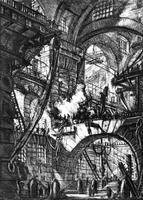
The Prisons (plate V)
Giovanni Battista Piranesi
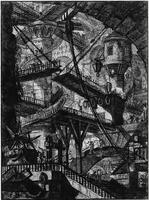
The Prisons
Giovanni Battista Piranesi
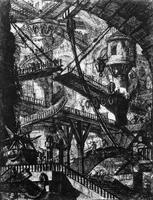
Carceri VII
Giovanni Battista Piranesi
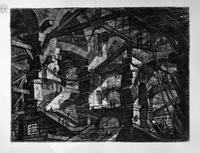
The Gothic Arch
Giovanni Battista Piranesi
The Prisons
Giovanni Battista Piranesi
The Arch with a Shell Ornament
Giovanni Battista Piranesi
The Prisons
Giovanni Battista Piranesi
The Sawhorse
Giovanni Battista Piranesi
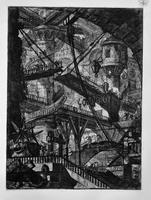
The Drawbridge
Giovanni Battista Piranesi
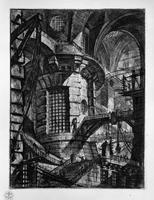
The Round Tower
Giovanni Battista Piranesi
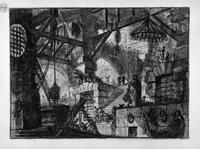
The Well
Giovanni Battista Piranesi
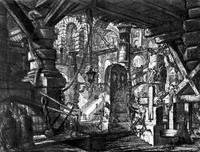
The Prisons (plate VI)
Giovanni Battista Piranesi
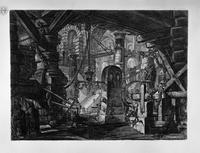
The Pier with Chains
Giovanni Battista Piranesi
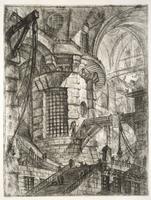
The Round Tower, plate III from `Carceri d`Invenzione`
Giovanni Battista Piranesi
Antenna dark prison
Giovanni Battista Piranesi
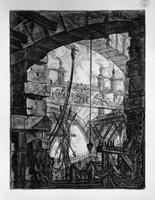
The Grand Piazza
Giovanni Battista Piranesi
The Prisons (plate IV)
Giovanni Battista Piranesi