
Analisi esperta di The Arch with a Shell Ornament di Giovanni Battista Piranesi
Stile: Neoclassicism · Genere: interior
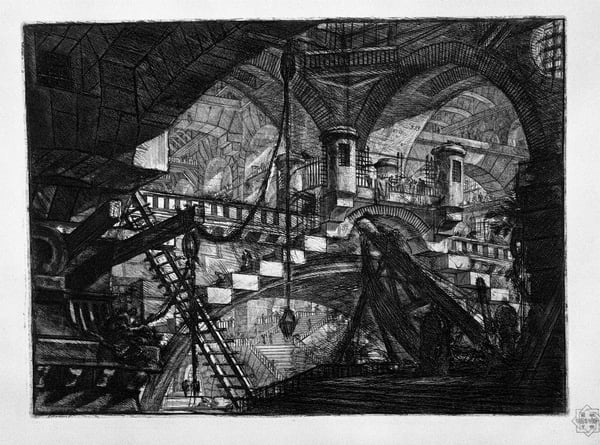
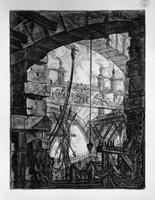
Giovanni Battista Piranesi’s The Arch with a Shell Ornament is a quintessential example of Neoclassical architectural capriccio, yet it pushes beyond mere antiquarian record into a dramatic, almost theatrical vision of Rome’s grandeur. Executed as an etching – likely part of his celebrated Vedute di Roma or Antichità Romane series – the work captures a ruined interior (the "genre" specified here meaning an architectural interior view) with an arch crowned by a prominent shell ornament, a motif drawn from classical Roman and Renaissance vocabulary.
Significance within Neoclassicism and Piranesi’s Oeuvre
-
Sublime Scale and Archaeological Authenticity
Piranesi was a master of combining precise archaeological detail with exaggerated scale and perspective. In this print, the arch soars above human figures (if present in the composition), dwarfing them to emphasize the overwhelming power of ancient Roman engineering. The shell ornament – a symbol of Venus and imperial patronage – is rendered with meticulous attention to its foliate and radiating structure, grounding the fantasy in real, observable ruins. Yet the composition is not a faithful transcription; Piranesi often compressed, manipulated, and amplified architectural elements to create a sense of awe, aligning Neoclassicism’s veneration of antiquity with Romantic sensibility. -
The Interior as a Stage for History
Unlike many Neoclassical painters who focused on pristine, restored temples, Piranesi reveled in decay. The “interior” genre here is not a cozy room but a cavernous, partially collapsed space. The arch, with its intact shell ornament, becomes a poignant symbol of past glory barely surviving the ages. This tension between ruin and resilience is central to Piranesi’s contribution: he transformed the dry study of classical architecture into a dramatic experience, influencing later generations of architects, from Boulée’s visionary projects to the modern sublime. -
Neoclassicism’s Dialectic with the Baroque
While the work is stylistically Neoclassical in its primary allegiance to Roman models, its deep chiaroscuro, intricate shadows, and sweeping diagonals betray Piranesi’s Baroque roots. The shell ornament itself, though classical in origin, is often executed with a swirling, dynamic energy that recalls Bernini’s theatricality. This fusion makes the print significant: it embodies the transition from Baroque illusionism to Neoclassical order, but with a personal, melancholic intensity that foreshadows Romanticism.
The Arch with a Shell Ornament matters because it demonstrates how Piranesi used architectural fantasy to elevate Neoclassicism from academic archaeology into a mythopoetic vision of ancient Rome – a city not only to be studied, but to be felt as both overwhelming and lost.
Visivamente simili
20 opere con composizione e palette affini
The Prisons
Giovanni Battista Piranesi
Prisoners on a Projecting Platform
Giovanni Battista Piranesi
The Gothic Arch
Giovanni Battista Piranesi
The Staircase with Trophies
Giovanni Battista Piranesi
The Prisons
Giovanni Battista Piranesi
The Prisons
Giovanni Battista Piranesi
The Prisons (plate V)
Giovanni Battista Piranesi
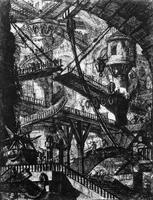
Carceri VII
Giovanni Battista Piranesi
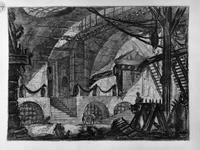
The Sawhorse
Giovanni Battista Piranesi
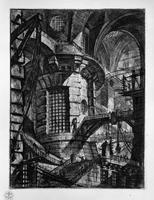
The Round Tower
Giovanni Battista Piranesi
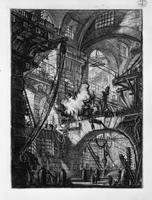
The Smoking Fire
Giovanni Battista Piranesi
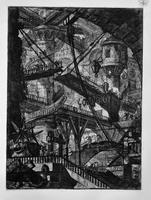
The Drawbridge
Giovanni Battista Piranesi
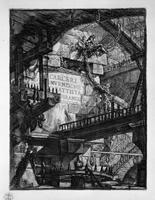
Title Plate
Giovanni Battista Piranesi
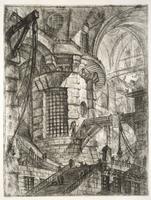
The Round Tower, plate III from `Carceri d`Invenzione`
Giovanni Battista Piranesi
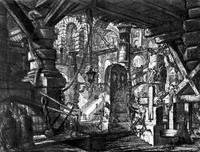
The Prisons (plate VI)
Giovanni Battista Piranesi
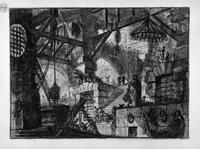
The Well
Giovanni Battista Piranesi
Antenna dark prison
Giovanni Battista Piranesi
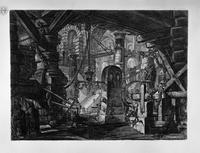
The Pier with Chains
Giovanni Battista Piranesi
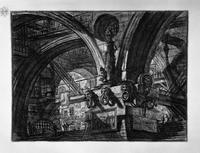
The Pier with a Lamp
Giovanni Battista Piranesi
The Grand Piazza
Giovanni Battista Piranesi