
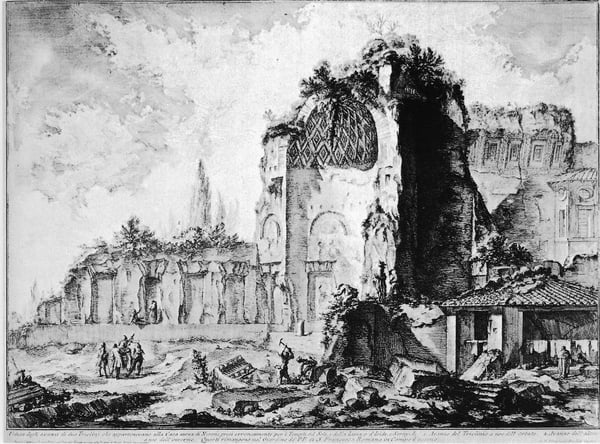
Reconstruction of the column referred to in the preceding tables, and various medals of Antoninus and Faustina
Analisi esperta di Reconstruction of the column referred to in the preceding tables, and various medals of Antoninus and Faustina di Giovanni Battista Piranesi
Stile: Neoclassicism · Genere: capriccio
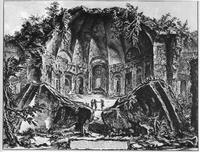
As an expert in art history, I can provide the following analysis of Giovanni Battista Piranesi’s "Reconstruction of the column referred to in the preceding tables, and various medals of Antoninus and Faustina."
This work is a quintessential example of the Neoclassical capriccio, a genre that blends precise archaeological documentation with imaginative arrangement. Piranesi, a master of architectural fantasy and Roman antiquities, here marries two distinct modes of representation: the rigorous, measured reconstruction of a monumental column (likely from the Antonine period) and the numismatic study of medals bearing the portraits of Emperor Antoninus Pius and his wife Faustina the Elder.
Significance within Neoclassicism and Capriccio:
The piece is significant precisely because it straddles the line between scholarly reconstruction and creative liberty. On one hand, Piranesi’s training as an architect and his obsessive study of Roman ruins give the column a convincing, almost scientific solidity—its entasis, fluting, and capital are rendered with the precision of an archaeologist’s field drawing. This aligns with the Neoclassical reverence for the factual remains of antiquity.
Yet the genre of capriccio allows Piranesi to break free from strict fidelity. The combination of a colossal architectural fragment with small, elliptical medal portraits creates an anachronistic and deliberately artificial composition. The medals are not merely decorative; they anchor the column in historical narrative, personifying the imperial patrons (Antoninus and Faustina) while the column itself becomes a symbol of dynastic power. By placing the medals around or in front of the column, Piranesi invents a visual dialogue between sculpted human likeness and architectural structure—a dialogue that never existed in reality.
What Makes It Stand Out:
- Hybridity of scale and perspective: The column is vast, yet the medals are intimate. Piranesi forces the viewer to shift between macro-observation of engineering and micro-analysis of portraiture, mimicking the Neoclassical fascination with both monumentality and detailed surface.
- Didactic and evocative: The work functions as both a teaching tool (reconstructing a lost monument) and a poetic ruin fantasy. It embodies the Enlightenment tension between reason (archaeology) and imagination (capriccio).
- Piranesi’s signature theatricality: The stark chiaroscuro, the dark etching lines, and the emphatic shadows give the column a dramatic, almost sublime presence—a hallmark of his influence on Romantic as well as Neoclassical sensibilities.
In essence, this print is not merely a reconstruction but a re-imagining—one that demonstrates how Neoclassicism could be both faithful to the past and creatively expressive, making it a cornerstone of Piranesi’s legacy as an artist-historian.
Visivamente simili
20 opere con composizione e palette affini
A view of the remains of two Triclinj who belonged to Nero`s Golden House
Giovanni Battista Piranesi
Vedute di Roma
Giovanni Battista Piranesi
View the remains of factories on the second floor of the Baths of Titus
Giovanni Battista Piranesi
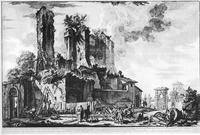
Vedute di Roma
Giovanni Battista Piranesi
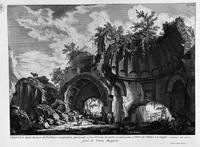
The Roman antiquities, t. 2, Plate LX. A view of the magnificent tomb near the remains of the factory in Torre de `Schiavi outside Porta Maggiore.
Giovanni Battista Piranesi
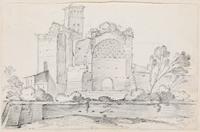
Ruins of the Temple of Venus and Rome in the Forum
Joseph-Marie Vien
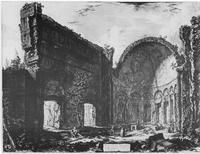
Vedute di Roma
Giovanni Battista Piranesi
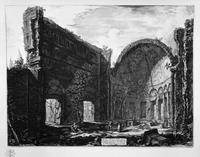
Remains of a hall belonging to the Villa Adriana Castro Pretorio in Tivoli
Giovanni Battista Piranesi
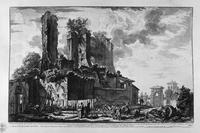
View of the Villa Este in Tivoli
Giovanni Battista Piranesi
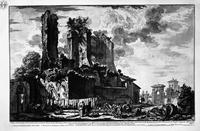
Tomb of Cecilia Metella said Capo di Bove
Giovanni Battista Piranesi
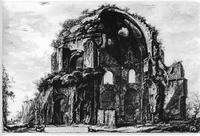
Vedute di Roma
Giovanni Battista Piranesi
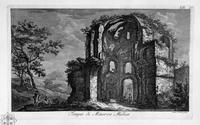
Arch of Trajan in Ancona
Giovanni Battista Piranesi
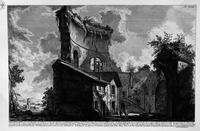
The Roman antiquities, t. 3, Plate XVIII. A view of the same mausoleum.
Giovanni Battista Piranesi
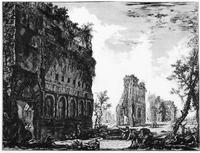
Vedute di Roma
Giovanni Battista Piranesi
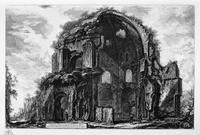
View of the Temple of Minerva Medica
Giovanni Battista Piranesi
Vedute di Roma
Giovanni Battista Piranesi
St. Peter's basilica under construction
Maerten van Heemskerck
The Roman antiquities, t. 2, Plate X. View of the entrance of the burial chamber of L. Arrunzio and his Family
Giovanni Battista Piranesi
Construction of the new St Peter's Basilica in Rome
Maerten van Heemskerck
Vedute di Roma
Giovanni Battista Piranesi