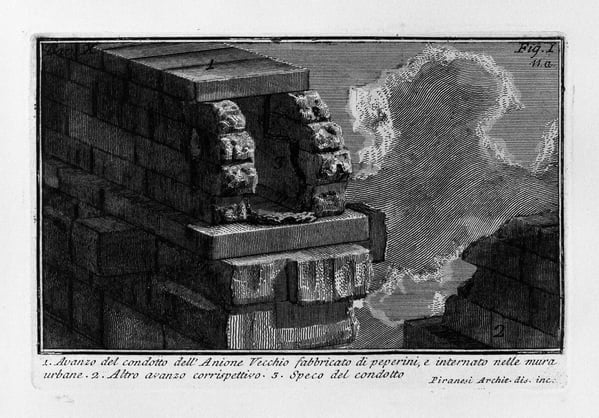
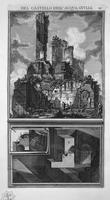
The Roman antiquities, t. 1, Plate XI. Urban Walls.
Details
Expert analysis of Giovanni Battista Piranesi’s The Roman antiquities, t. 1, Plate XI. Urban Walls.
Style: Neoclassicism · Genre: cityscape
Expert Analysis: "The Roman antiquities, t. 1, Plate XI. Urban Walls." by Giovanni Battista Piranesi
Giovanni Battista Piranesi’s "The Roman antiquities, t. 1, Plate XI. Urban Walls." stands as a quintessential example of Neoclassical cityscape, demonstrating how the genre transcends mere topographical documentation to embody the ideological and aesthetic preoccupations of its era. As part of his monumental series Le Antichità Romane (published 1756), this etching serves both as an archaeological record and as a dramatic celebration of ancient Rome’s architectural might.
Significance within Neoclassicism
Piranesi’s work is critical to Neoclassicism not simply for preserving Roman structures, but for interpreting them with a grandeur that shaped the movement’s visual language. In Urban Walls, the artist elevates a functional element of ancient infrastructure—the defensive wall—into a sublime monument. The precise, linear etching technique reflects the Neoclassical commitment to clarity and order, while the exaggerated scale and deep shadows introduce a romantic, even theatrical, tension. This duality—rational structure combined with emotional impact—prefigures the later Romantic fascination with ruins, yet remains firmly rooted in Neoclassical ideals of antiquity as a source of moral and civic virtue.
Relevance to the Cityscape Genre
As a cityscape, this plate goes beyond documenting topography. Piranesi stages the urban walls to dominate the composition, dwarfing any human figures and emphasizing the endurance of Roman engineering. The meticulous rendering of stone courses, arches, and defensive towers conveys archaeological accuracy, while the dramatic perspective—often a low viewpoint—enhances the monumentality. This approach redefined cityscape as a vehicle for historical reflection, influencing generations of artists and architects to see the urban environment as a repository of cultural memory.
Conclusion
The Roman antiquities, t. 1, Plate XI. Urban Walls. is significant because it encapsulates Neoclassicism’s core mission: to revive the grandeur of antiquity through rigorous study and artistic expression. Piranesi’s synthesis of factual documentation with dramatic vision not only advanced the cityscape genre but also established a visual rhetoric of ancient Rome that would inspire everything from Enlightenment archaeology to the architecture of the 18th and 19th centuries.
Visually similar
20 works with related composition and palette
The Roman antiquities, t. 1, Plate IX. Aurelian Walls.
Giovanni Battista Piranesi
The mouth of the Cloaca Maxima
Giovanni Battista Piranesi
The Roman antiquities, t. 2, Plate V
Giovanni Battista Piranesi
The Roman antiquities, t. 1, Plate VIII. Aurelian Walls.
Giovanni Battista Piranesi
Following the above table
Giovanni Battista Piranesi
The Roman antiquities, t. 3, Plate IV. Part of the great Wall, which surrounded the large area of `Ustrine.
Giovanni Battista Piranesi
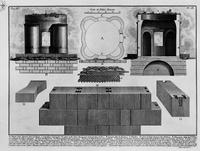
The Roman antiquities, t. 3, Plate IX. Plan of the tomb outside Porta S. Sebastian on the ancient Appian Way in the Vineyard of the Buonamici from Capo di Bove.
Giovanni Battista Piranesi
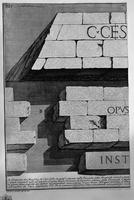
The Roman antiquities, t. 3, Plate XLII. Following the pre-registration.
Giovanni Battista Piranesi
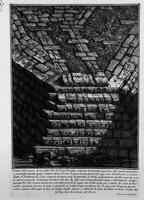
The Roman antiquities, t. 4, Plate XIV. View of Bridge St. Angel, from the Castle towards the road of Banks.
Giovanni Battista Piranesi
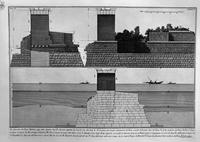
The Roman antiquities, t. 4, Plate XX. Cutaway view of the Bridge of Four Heads.
Giovanni Battista Piranesi
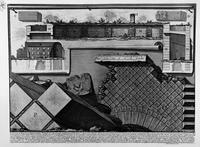
The Roman antiquities, t. 2, Plate LXII. Cutaway view of the Mausoleum of Augustus.
Giovanni Battista Piranesi
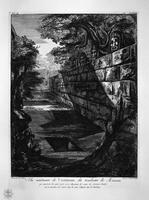
External view of the front door of the tomb aforesaid
Giovanni Battista Piranesi
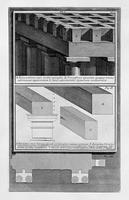
Details
Giovanni Battista Piranesi
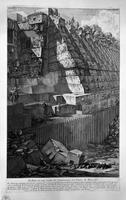
The Roman antiquities, t. 4, Plate XXXII. Following the above table.
Giovanni Battista Piranesi
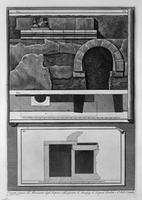
Prospectus outside the Monument of the neck cross-section of the Scipios` Sarcophagus of Scipio Barbato and of Cornelia Hall
Giovanni Battista Piranesi
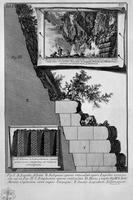
The substructures of the Capitol and the Tarpeian Rock
Giovanni Battista Piranesi
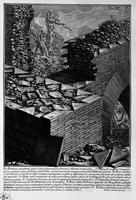
The Roman antiquities, t. 3, Plate V. Construction details of walls Entries Ustrine.
Giovanni Battista Piranesi
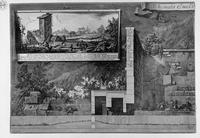
Emissary of Lake Albano (sets and sections)
Giovanni Battista Piranesi
Perspective of one of the sides, and construction details of the five branches of the orifice of the aqueduct
Giovanni Battista Piranesi
The key is here, the gate elsewhere
Victor Hugo