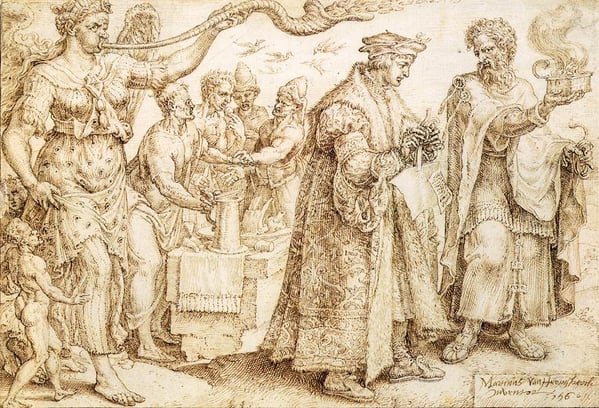
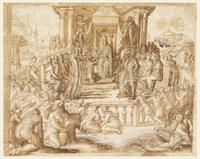
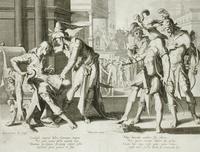
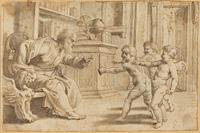
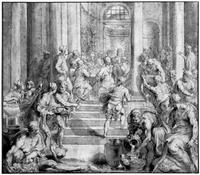
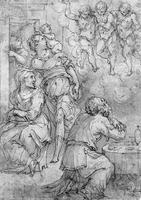
Considered a striking example of Northern Mannerist allegory, Maerten van Heemskerck’s The Unhappy Lot of the Rich (c. 1560) transforms a conventional moral warning into a densely intellectual visual puzzle. Executed in the late phase of the Renaissance, the painting embodies Mannerism’s deliberate departure from High Renaissance naturalism: figures are elongated and contorted into elegant, artificial poses, while a crowded composition and acidic, non-naturalistic colors heighten the sense of unease.
The work’s significance lies in how it uses Mannerist artifice to dramatize a distinctly Counter-Reformation and humanist theme: the spiritual peril of material wealth. Heemskerck stages a didactic allegory where the rich man—surrounded by symbols of luxury and vanity—is visibly tormented by avarice, anxiety, and the looming specter of death. The painting’s compressed space and exaggerated gestures force the viewer to read the scene as a complex emblem rather than a naturalistic moment. This approach aligns with Mannerism’s fascination with learned, often cryptic imagery, and with the period’s moralizing impulse to critique worldly excess.
As a work by one of the most influential Dutch Mannerists, The Unhappy Lot of the Rich demonstrates how Northern artists adapted Italian Mannerist style—with its intellectual complexity and formal tension—to serve an overtly moralizing, allegorical purpose. It stands as a key example of the period’s shift from idealized harmony toward a more anxious, reflective art that questions human ambition.