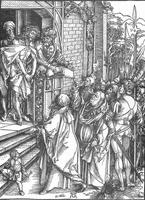
Expert Analysis of "The Adoration of the Wise Men" by Albrecht Dürer
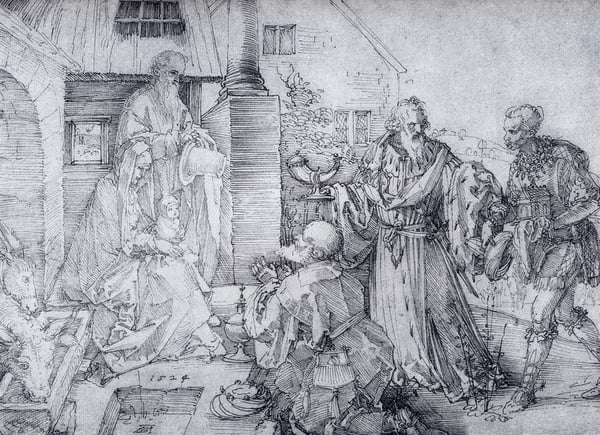
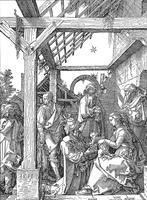
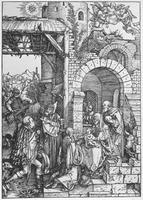
As a defining work of the Northern Renaissance, Albrecht Dürer’s The Adoration of the Wise Men exemplifies the period’s revolutionary fusion of meticulous naturalism with profound religious symbolism. Painted in the genre of religious narrative, this artwork is significant for its demonstration of Dürer’s masterful integration of Northern European attention to surface detail—seen in the intricate fabrics, gleaming gold, and weathered faces—with a compositional clarity influenced by Italian Renaissance perspective. The scene’s intimate, crowded arrangement draws the viewer into the sacred moment, while the wise men’s rich, individualized costumes underscore the universality of Christ’s kingship. Dürer’s use of light not only models forms with near-sculptural volume but also illuminates the spiritual revelation at the center. This work stands as a pinnacle of Northern Renaissance religious painting, where every texture, shadow, and gesture serves both a devotional purpose and a celebration of empirical observation—a hallmark of Dürer’s genius in bridging medieval piety and humanist inquiry.