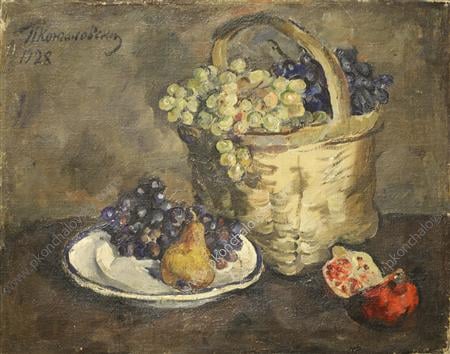
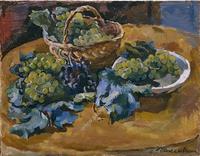
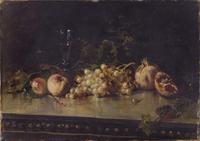
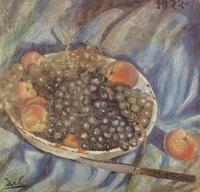
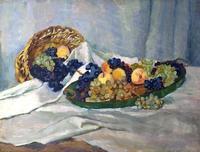
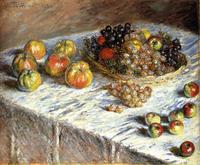
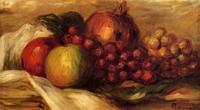
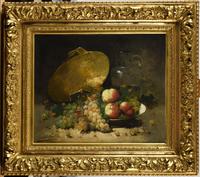
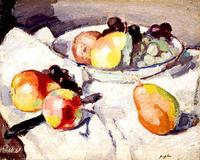
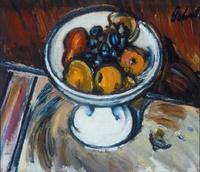
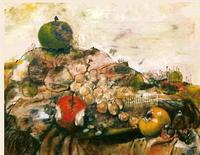
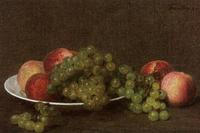
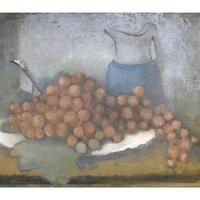
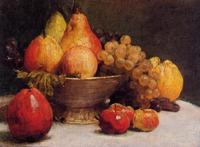
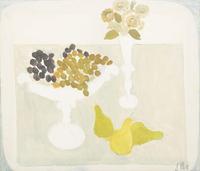
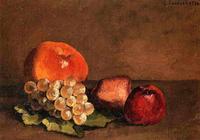
Pyotr Konchalovsky’s Still Life. Grapes and pomegranates. is a masterful example of Realist still life, distinguished by its rigorous attention to the tactile and optical qualities of its subjects. Within the Realist tradition, Konchalovsky elevates the ordinary—fruit arranged on a table—into a study of material presence. The significance lies in his precise handling of light and surface: the translucent sheen of grapes and the leathery, cracked skin of pomegranates are rendered with almost scientific fidelity, yet the composition avoids mere imitation. Instead, Konchalovsky balances dense, shadowed clusters with bright, reflective highlights, creating a sculptural sense of volume. This work is notable for its controlled palette—deep reds, purples, and muted greens—which underscores the Realist commitment to truth in color and form. By focusing on humble produce, Konchalovsky aligns with the Realist ethos of dignifying everyday life, while his compositional rhythm and careful distribution of weight reveal a modern sensibility that bridges academic tradition and emerging modernist concerns. The painting stands as a testament to the enduring power of the still life genre to capture both the physical world and the artist’s disciplined eye.