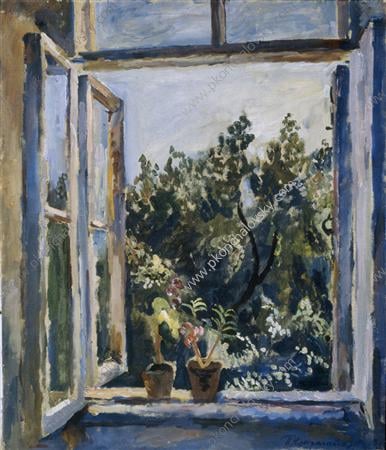
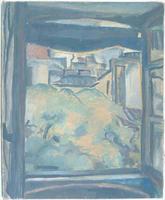
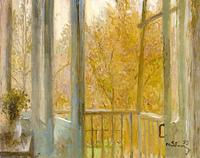
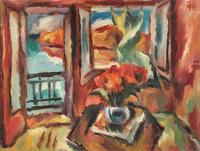
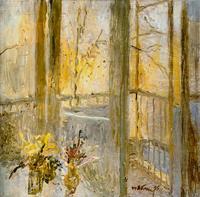
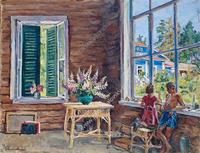
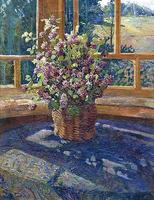
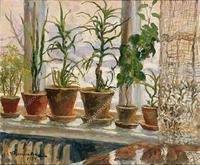
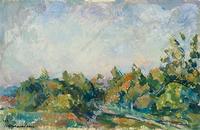
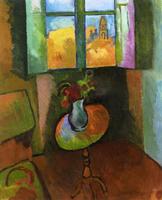
The significance of Pyotr Konchalovsky’s “The window. Balsams.” lies in its masterful fusion of Realism with the landscape genre, capturing a precise, unidealized moment of everyday life. As a landscape, the painting transcends mere view-painting by using the window as a framing device—a common Realist trope that grounds the scene in a specific, observable domestic reality. The inclusion of the balsam plants (likely potted flowers on the windowsill) introduces a still-life element, allowing Konchalovsky to demonstrate Realism’s commitment to rigorous observation of natural forms and light effects. The work is significant for how it balances the intimacy of an interior viewpoint with the expansive character of a landscape, creating a quiet tension between the cultivated space of the home and the natural world beyond the pane. This interplay reflects the Realist movement’s broader goal of portraying contemporary life with sincerity and directness, free from Romantic exaggeration.