Analisi esperta di Yenisei di Pyotr Konchalovsky
Stile: Realism · Genere: landscape
Expert Analysis of "Yenisei" by Pyotr Konchalovsky
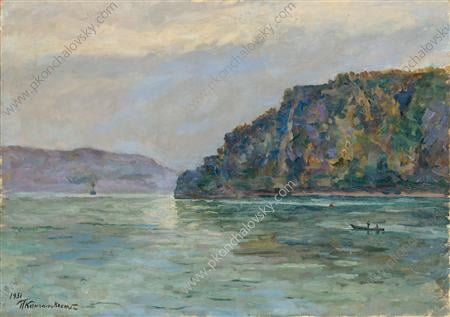
Pyotr Konchalovsky’s Yenisei stands as a compelling example of Russian Realist landscape painting, notable for its synthesis of documentary fidelity with the artist’s own evolving aesthetic sensibilities. Although Konchalovsky began his career as a leading member of the avant-garde “Jack of Diamonds” group—known for its vibrant, Fauvist-inspired palette and Cubist-tinged still lifes—his later work, including Yenisei, represents a deliberate return to a more direct and epic naturalism. This shift makes the painting significant not only as a landscape but as a marker of Konchalovsky’s artistic maturity and his contribution to post-revolutionary Russian realism.
Geographic and Cultural Resonance
The Yenisei River, one of Siberia’s great waterways, is depicted here with a sense of monumental scale and untamed energy. Konchalovsky captures the vastness of the Siberian landscape—the broad expanse of water, the rugged riverbanks, and the muted, atmospheric sky—without resorting to romantic idealization. Instead, he emphasizes the raw, elemental character of the region, which was a subject of growing national importance in Soviet art, symbolizing both the natural wealth of the country and the heroic scale of its geography.
Technical Significance within Realism
While adhering to the Realist emphasis on truthful observation, Konchalovsky infuses the scene with a distinct painterly vitality. His brushwork is confident and textured, especially in rendering the water’s surface and the foliage along the shore. This technique bridges the gap between academic naturalism and the more expressive handling of form he developed in his earlier years. The result is a landscape that feels immediate and alive, avoiding the static quality common in lesser Realist works. The color palette—rich earth tones, deep greens, and cool blues—is restrained yet resonant, steering clear of the decorative excesses of his early style while retaining a sensitivity to light and atmosphere.
Historical and Artistic Context
Painted during the period when Konchalovsky sought to align his art with the principles of Socialist Realism (though before the doctrine became rigidly enforced), Yenisei exemplifies how a former avant-garde artist could adapt his skills to a more accessible, nationally focused idiom. The painting is significant because it demonstrates that Realism need not be a retreat into conservative convention; rather, it can be a platform for bold, honest engagement with the natural world. In this sense, Yenisei helps redefine Russian landscape painting—not as a pastoral escape, but as a serious, almost geological encounter with the land itself.
Legacy
Today, Yenisei is regarded as one of Konchalovsky’s outstanding landscapes, reflecting his ability to synthesize the lessons of modernism with a deep, unsentimental love for the Russian environment. It stands as a testament to the enduring power of Realism when practiced by an artist of technical ambition and emotional restraint—a work that captures not just a river, but the enduring spirit of a vast, demanding landscape.
Visivamente simili
20 opere con composizione e palette affini
Scene on the Loire
J.M.W. Turner
Fourmis Bay Beaulieu
Eugene Boudin
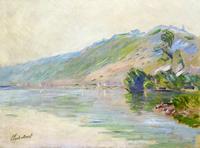
The Seine at Port-Villes, Clear Weather
Claude Monet
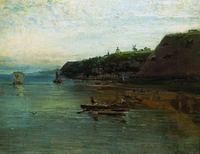
Volga near Gorodets
Aleksey Savrasov
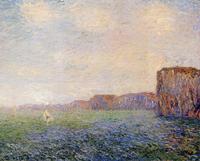
Cliffs by the Sea
Gustave Loiseau
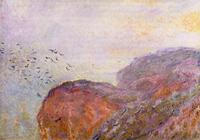
Cliff near Dieppe
Claude Monet
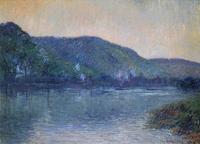
Boats on the Seine at Oissel
Gustave Loiseau
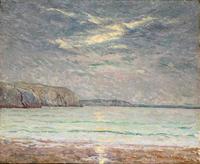
Cliffs at Sunset
Maxime Maufra
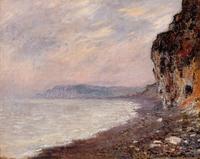
Cliffs at Pourville in the Fog
Claude Monet
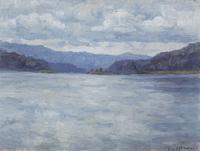
Yenisey
Vasily Surikov
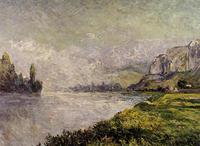
The Retreating Fog, Morning, Les Andelys
Maxime Maufra
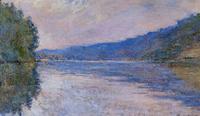
The Seine at Port-Villez
Claude Monet
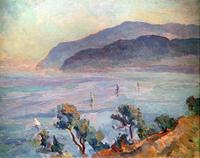
San - Angelo
Pyotr Konchalovsky
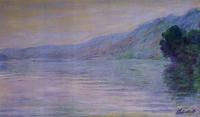
The Seine at Port-Villez, Blue Effect
Claude Monet
Murmansk coast
Konstantin Korovin
Landscape with brother's figure
Vasily Surikov
Cliffs at Pourville, Morning
Claude Monet
On the Hudson, near Dobb's Ferry
Louis Comfort Tiffany
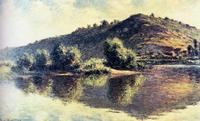
The Seine at Port-Villez
Claude Monet
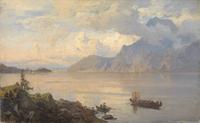
Ansicht Des Traunsees, Signiert
Hans Gude