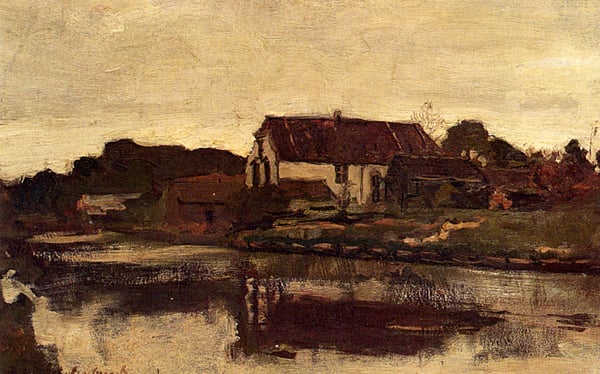
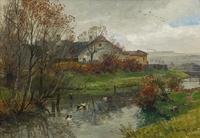
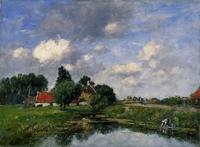
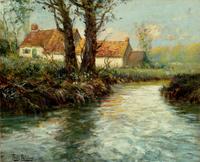
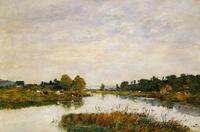
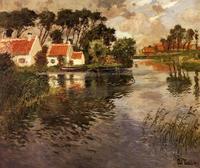
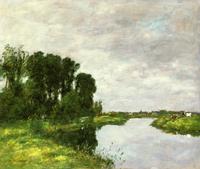
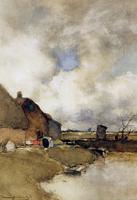
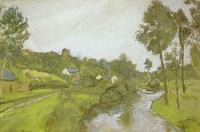
Johan Hendrik Weissenbruch’s A Farm On The Waterfront is a masterful example of Dutch Realism, specifically the Hague School’s preoccupation with atmosphere, light, and the quiet dignity of rural life. What makes this work significant is its subdued yet powerful rendering of the everyday landscape as a subject worthy of serious artistic attention—a hallmark of 19th-century Realism. Weissenbruch eschews dramatic narrative or idealized scenery; instead, he captures a seemingly unremarkable moment: a sturdy farmhouse settled along a still waterway. The true subject here is the interplay of air, water, and earth. The artist’s signature use of a high, expansive sky, filled with layered, moisture-laden clouds, dominates the composition and imbues the scene with a palpable sense of mood and changing weather. Beneath this vast canopy, the farm and its reflection in the dark, glassy waterground the composition in solid, unpretentious form. The significance lies in Weissenbruch’s ability to find profound beauty in the ordinary—the quiet endurance of a farm against the shifting, luminous sky—and to elevate it through meticulous observation of tonal values and atmospheric perspective. It is a quiet manifesto of Realist principles: truth to nature, focus on light and atmosphere, and a deep respect for the unheroic moments of Dutch rural life.