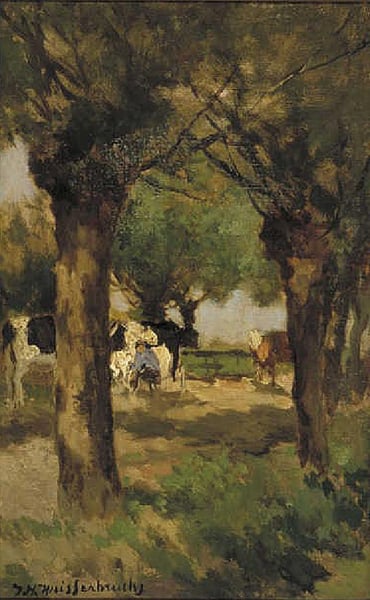
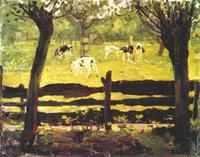
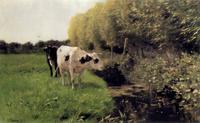
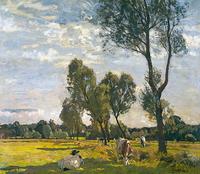
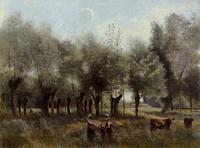
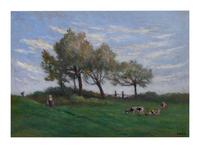
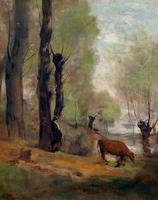
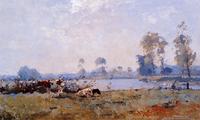
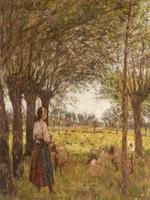
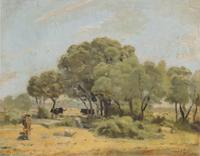
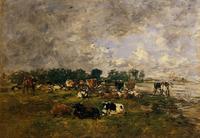
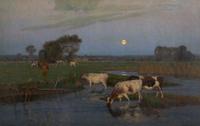
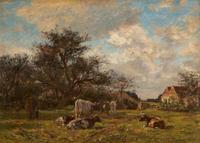
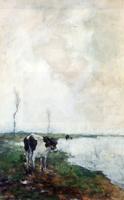
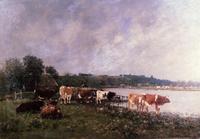
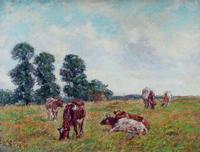
This painting is a quintessential example of Dutch Realist landscape art, emphasizing a truthful, unidealized depiction of rural life. Johan Hendrik Weissenbruch, a key figure in the Hague School, focuses on a humble, everyday scene—milking cows beneath willows—rather than dramatic or romanticized vistas. The work gains significance through its faithful observation of natural light, atmosphere, and the quiet rhythm of agrarian labor, hallmarks of Realism’s commitment to portraying the ordinary with dignity and precision. The composition draws the eye to the interplay between the soft foliage, the cows, and the expansive sky, reflecting the artist’s mastery of tonal values and his ability to capture the transient effects of light over the Dutch polder landscape. This piece stands as a testament to Weissenbruch’s skill in elevating a simple pastoral moment into a timeless meditation on man, nature, and work.