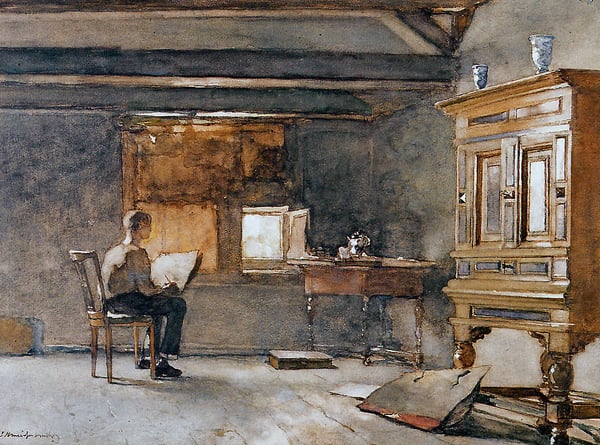
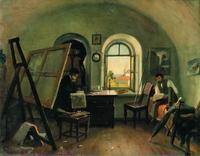
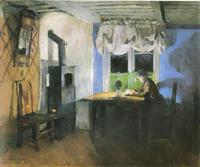
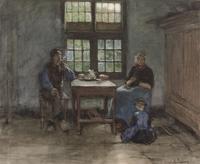
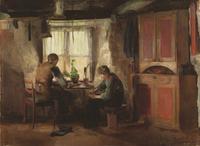
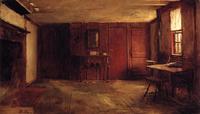
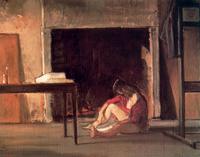
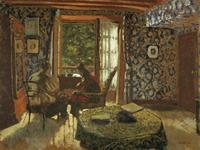
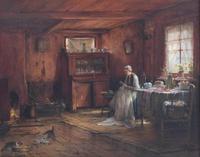
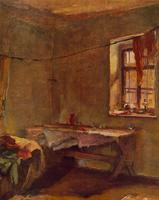
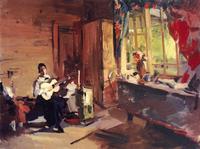
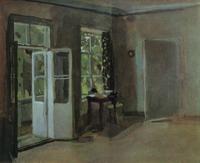
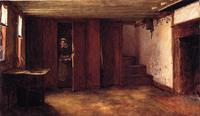
Johan Hendrik Weissenbruch’s The Artist’s Studio is a significant work within the Realist tradition, particularly as a product of the Dutch Hague School. As a self-portrait that places the artist within his working environment, it aligns with the Realist commitment to depicting everyday life and professional identity without idealization. Weissenbruch, best known for his atmospheric landscapes, here turns his gaze inward, offering a candid, unromanticized view of the studio—the very space where Realist observation is practiced. The work’s importance lies in its merging of two Realist preoccupations: the honest portrayal of the artist’s own labor and the documentation of a functional interior. Rather than a flattering or symbolic self-image, Weissenbruch presents himself as a craftsman embedded in a world of tools, canvases, and humble light—a testament to the movement’s belief that truth and dignity reside in the ordinary, even in the act of making art itself.