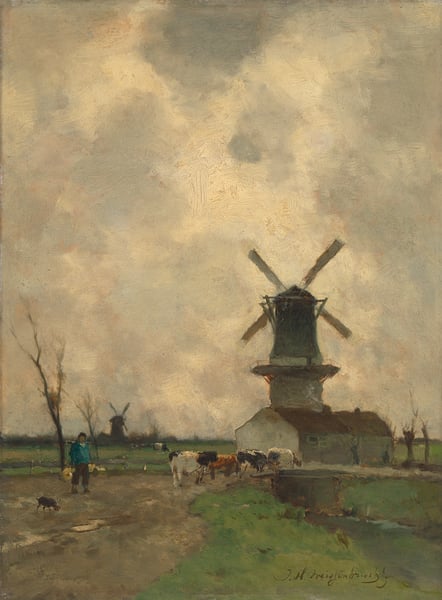
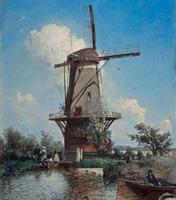
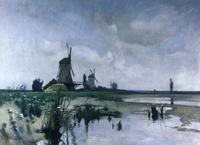
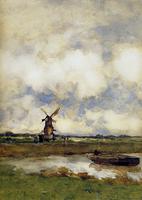
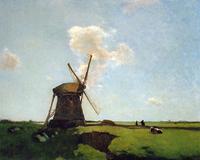
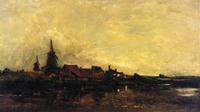
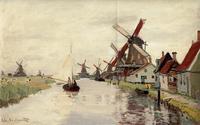
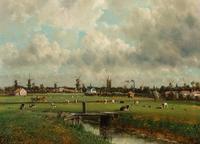
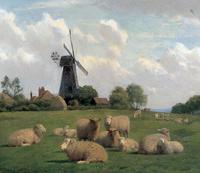
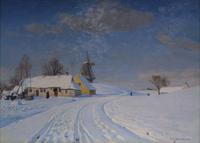
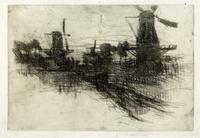
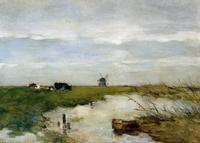
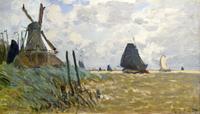
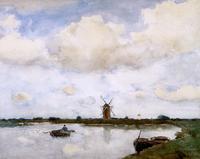
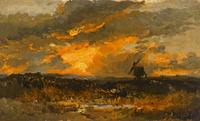
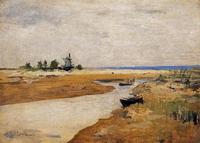
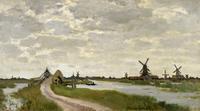
Johan Hendrik Weissenbruch’s The Mill is a quintessential example of Dutch Realism, a movement that sought to depict everyday life and landscapes with unembellished fidelity. Within this context, the painting stands out for its masterful treatment of atmosphere and light—hallmarks of the artist’s work and of the Hague School tradition to which he belonged. The windmill, a humble yet iconic symbol of the Netherlands, is not idealized; instead, Weissenbruch captures its solid, weathered presence against a vast, softly luminous sky. The significance lies in his ability to transform a mundane rural scene into a study of transient, natural light—the clouds, the damp air, the subtle reflections—while maintaining a rigorous commitment to observable reality. This approach elevates The Mill beyond mere documentation, making it a quiet meditation on the Dutch landscape that resonates with the broader Realist goal of finding profound beauty in the ordinary.