Expertenanalyse zu Philip Gustons Days Work
Stil: Neo-Expressionism · Genre: figurative
Expert Analysis of "Days Work" by Philip Guston
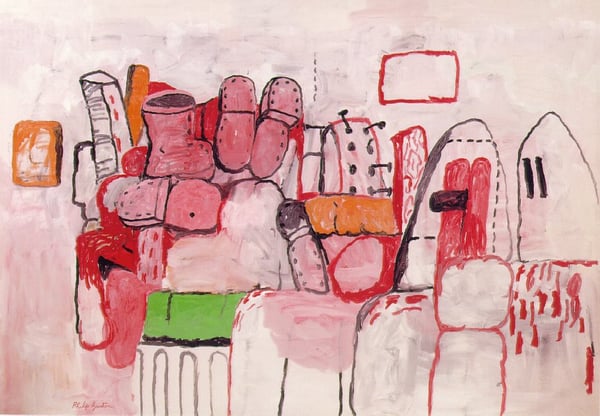
Philip Guston's "Days Work" is a commanding example of his late-career shift into Neo-Expressionism, a movement that rejected the cool detachment of Minimalism and Conceptual art in favor of raw emotion, gestural energy, and a return to figurative imagery. Painted in the 1970s—a pivotal decade for Guston—this work embodies his signature style: a coarse, cartoon-like figuration that is simultaneously absurd, personal, and politically charged.
Significance within Neo-Expressionism:
Guston’s transition from Abstract Expressionism to a deliberately “clumsy” figurative mode was controversial but profoundly influential. In "Days Work," he employs a muted, earthy palette, thick impasto, and crude outlines to depict everyday objects—perhaps a painter’s studio detritus, tools, or household items. The title suggests the mundane rituals of labor, yet Guston transforms them into monumental, enigmatic presences. The rough, almost childlike handling of form and the ambiguous space between representation and abstraction are hallmarks of Neo-Expressionism’s insistence on subjective, often uncomfortable truth-telling.
Thematic Depth:
Guston’s figurative work is haunted by themes of failure, banality, and the weight of history—especially the Holocaust and political disillusionment. In "Days Work," the accumulation of ordinary objects can be read as a meditation on the artist’s own daily grind, but also as an ironic commentary on the futility of creative or manual labor. The work’s significance lies in its refusal to be heroic: Guston embraces the messy, unfinished, and inelegant as a form of honest expression. This anti-aesthetic directly paved the way for younger Neo-Expressionists (like Julian Schnabel or Georg Baselitz) who championed aggressive mark-making and figurative subject matter.
Legacy:
"Days Work" is significant because it encapsulates Guston’s radical redefinition of painting in the late 20th century. By merging the emotional intensity of Abstract Expressionism with the narrative immediacy of comics and everyday life, he argued—against prevailing critical trends—that painting could still grapple with profound moral and existential questions. The work remains a touchstone for understanding how Neo-Expressionism revitalized figurative art as a vehicle for contemporary angst and autobiography.
Visuell ähnlich
20 Werke mit ähnlicher Komposition und Farbpalette
Le soleil rouge
Corneille
Butterfly House
Henryk Streng
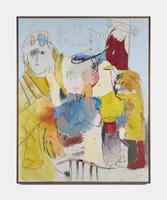
"He's interested in spiritual matters."
Marc Horowitz
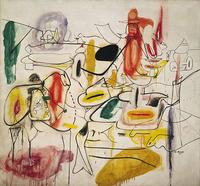
Untitled
Arshile Gorky
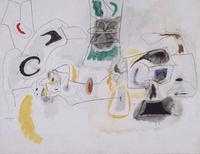
Good Hope Road
Arshile Gorky
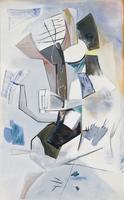
Mondo e uomo
Antonio Sanfilippo
A palette of imagery
Adolph Gottlieb
The Limit
Arshile Gorky
Armageddon
Artin Demirci
Composition
Jankel Adler
Untitled
Conrad Marca-Relli
Mask
Gary Wragg
Murmuring Ban
David Michael Hinnebusch
Composizione arancione
Afro
By the Sea
Peter Busa
Composition Cubiste
Leopold Survage
Desert Landscape
John Ferren
Untitled
Richard Diebenkorn
Untitled
Louis Schanker
Las musas inconformes
Alice Rahon