Expertenanalyse zu Maurice Quentin de La Tours Jean-Jacques Rousseau
Stil: Rococo · Genre: portrait
This analysis focuses on the significance of Maurice Quentin de La Tour’s portrait of Jean-Jacques Rousseau within the Rococo period and the portrait genre.
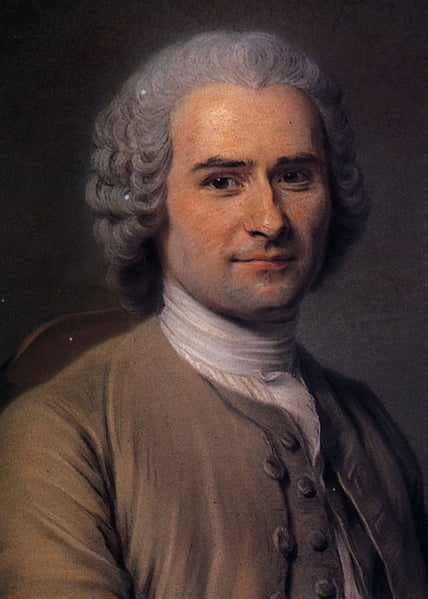
Maurice Quentin de La Tour’s pastel portrait of Jean-Jacques Rousseau is a masterwork that transcends the typical decorative elegance of Rococo portraiture. Painted in 1753, it captures the philosopher not as a powdered aristocrat but as the stark, penetrating embodiment of Enlightenment thought.
Significance within the Rococo Style: La Tour was the undisputed master of pastel, a medium synonymous with Rococo’s fondness for light, softness, and immediacy. Here, he uses the medium’s velvety texture to render Rousseau’s face with astonishing naturalism—the flushed cheeks, the slightly disheveled wig, the intense, questioning gaze. This is a portrait that eschews the frivolity often associated with Rococo (e.g., Fragonard’s swinging lovers) in favor of a serious, almost confrontational realism. The background is kept deliberately plain, allowing Rousseau’s psychological presence to dominate. In doing so, La Tour adapts Rococo’s technical finesse to serve the new intellectual currents of the Siècle des Lumières—a bridge between aristocratic pleasure and bourgeois conviction.
Significance as a Portrait: The work’s greatness lies in its psychological immediacy. Rousseau, the author of The Social Contract and Émile, is shown not in idealized contemplation but mid-thought, as if about to speak. His eyes, sharply focused, meet the viewer with a mix of defiance and vulnerability. La Tour captures the paradox of Rousseau’s character: the champion of natural man who was himself deeply anxious and socially alienated. The slight asymmetry of the face and the tension around the mouth convey intellectual struggle rather than serene wisdom.
Artistic and Historical Legacy: This portrait became the definitive image of Rousseau, reprinted in countless engravings and defining how posterity envisioned the philosopher. La Tour’s decision to portray such a controversial figure (Rousseau’s works were often censured) with dignity and intensity marks a turning point: the portrait no longer merely flatters social status but probes individual character and ideas. It is a quintessential example of how Rococo could be harnessed for serious, modern expression—making it a landmark in the history of psychological portraiture.
Visuell ähnlich
20 Werke mit ähnlicher Komposition und Farbpalette
Portrait of Jean-Jacques Rousseau
Maurice Quentin de La Tour
Simon Fanshawe (1716–1777)
William Hoare
Portrait of a Gentleman
Joseph Wright
John Campbell, 4th Earl of Loudoun
Allan Ramsay
Thomas Holme, Mayor of Kendal (1741–1742 & 1755–1756)
George Romney
Charles Pinot Duclos, novelist and historian
Maurice Quentin de La Tour
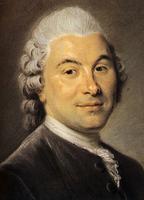
Francois Louis Veron Forbonnais of Duverger, economist
Maurice Quentin de La Tour
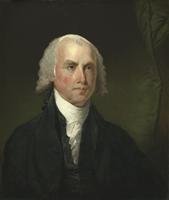
James Madison
Gilbert Stuart
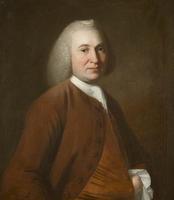
Hugh Holme, Deputy Recorder of Kendal
George Romney
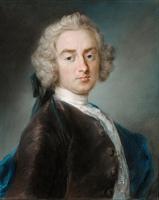
Sir James Gray, Second Baronet
Rosalba Carriera
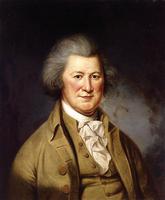
Portrait of Colonel John Cox
Charles Willson Peale
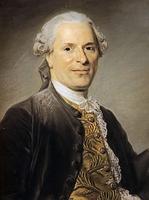
Jean Monnet, Director of the Opera Comique in Paris
Maurice Quentin de La Tour
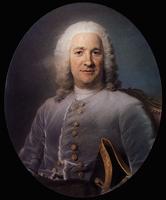
Jean Paris de Montmartel
Maurice Quentin de La Tour
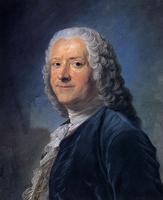
Portrait of Alexandre-Jean-Joseph Le Riche de La Pouplinière
Maurice Quentin de La Tour
Percivall Pott (1713–1788)
George Romney
Autoportrait
Joseph Duplessis
Alderman Thomas Wilson, Mayor of Kendal (1763–1764)
George Romney
Charles Maron, a lawyer in parliament
Maurice Quentin de La Tour
Portrait of an Unknown Young Gentleman in a Grey Coat and Light Blue Waistcoat
Henry Pickering
Self-Portrait
Charles Willson Peale