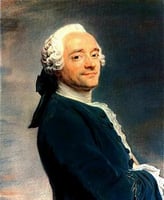
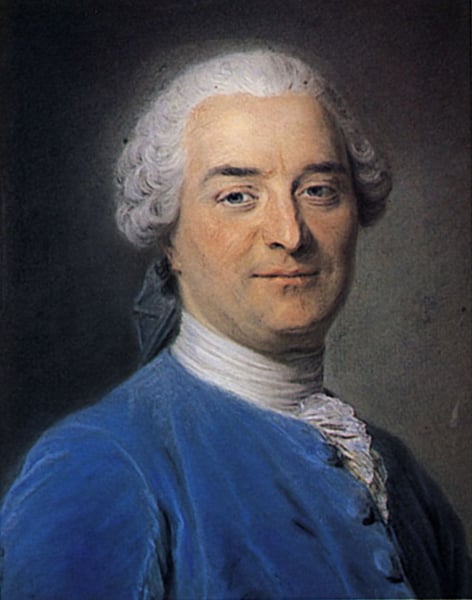
Expert analysis of Maurice Quentin de La Tour’s Charles Pinot Duclos, novelist and historian
Style: Rococo · Genre: portrait
Expert Analysis: Charles Pinot Duclos, novelist and historian by Maurice Quentin de La Tour
This portrait embodies the quintessence of Rococo portraiture while elevating the genre through masterful psychological nuance. Maurice Quentin de La Tour was renowned for his pastel portraits of Enlightenment intellectuals, and this work is a prime example of his ability to capture both the social grace and intellectual depth of his sitters.
Significance within Rococo Style and Genre
Rococo portraiture prized elegance, informality, and a sense of fleeting expression over the stiff grandeur of earlier Baroque state portraits. La Tour’s depiction of Charles Pinot Duclos—a novelist and historian—reflects these ideals. The subject is presented not as a remote dignitary, but as a living, thinking individual. La Tour’s soft, luminous pastel technique (his preferred medium) creates a delicate play of light across the face and hair, lending an air of refined sensitivity. The subtle smile and direct gaze engage the viewer in an intimate, almost conversational manner, characteristic of Rococo’s turn toward private, domestic charm.
What Makes This Work Exceptional
-
Psychological intimacy: La Tour was a master of capturing the “fugitive expression”—the momentary thought or emotion that reveals character. Here, Duclos appears both thoughtful and amiable, his eyes slightly averted as if mid‑reflection. This aligns with the Rococo fascination with wit and the inner life of the subject, particularly appropriate for a historian and novelist known for his sharp social observations.
-
Technical virtuosity in pastel: Within the Rococo period, La Tour elevated pastel from a preparatory medium to a finished art form. The velvety texture of the skin, the shimmer of the fabric, and the soft halo of powdered hair all demonstrate his unrivaled skill. The work stands as a testament to Rococo’s decorative lightness while proving that such lightness could convey serious intellectual identity.
-
Representation of the Enlightenment figure: By choosing to immortalize a writer and historian—not a monarch or noble—La Tour aligns Rococo portraiture with the growing cult of the intellectual. Duclos’s status as a novelist and historian (he was a member of the Académie française) makes this portrait a document of the era’s shift toward valuing intellect over birthright, a theme that Rococo art often explored through genre scenes but less frequently through formal portraiture.
In sum, this work is significant for its seamless fusion of Rococo elegance and Enlightenment intellect. It demonstrates how La Tour used the portrait genre to elevate pastel painting to new heights, capturing not just a likeness but the spirit of an age.
Visually similar
20 works with related composition and palette
Jean Monnet
Maurice Quentin de La Tour
Francois Louis Veron Forbonnais of Duverger, economist
Maurice Quentin de La Tour
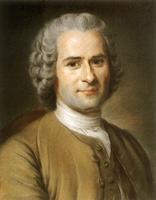
Portrait of Jean-Jacques Rousseau
Maurice Quentin de La Tour
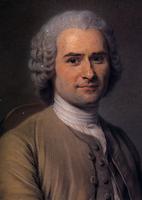
Jean-Jacques Rousseau
Maurice Quentin de La Tour
Portrait of a Gentleman
Joseph Wright
Portrait of director of Capella Mark Fedorovich Poltoratsky
Dmitry Levitzky
Study for portrait of unknown man
Maurice Quentin de La Tour
Alexander Khrapovitsky
Dmitry Levitzky
Sir James Gray, Second Baronet
Rosalba Carriera
Simon Fanshawe (1716–1777)
William Hoare
Portrait of Louis XV of France
Maurice Quentin de La Tour
Self-Portrait with lace jabot
Maurice Quentin de La Tour
Self-portrait
Johann Friedrich August Tischbein
Charles Maron, a lawyer in parliament
Maurice Quentin de La Tour
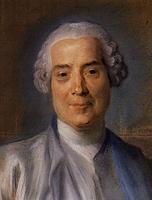
Study for portrait of unknown man
Maurice Quentin de La Tour
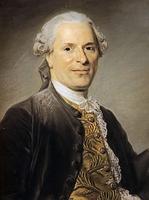
Jean Monnet, Director of the Opera Comique in Paris
Maurice Quentin de La Tour
Percivall Pott (1713–1788)
George Romney
George Washington (Vaughan portrait)
Gilbert Stuart
Jean Charles Garnier d'Isle
Maurice Quentin de La Tour
Anthony Todd, Postmaster General
George Romney