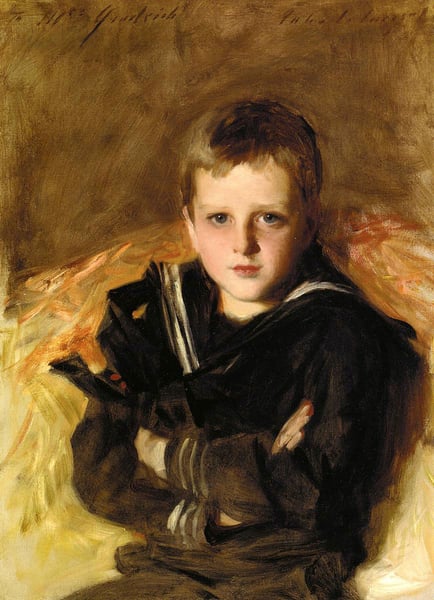
Based solely on the structured facts provided—that the work is a Realist portrait by John Singer Sargent—the significance of Portrait of Caspar Goodrich lies in its embodiment of the Realist movement’s core principles within the portrait genre. Realism demanded truthful, unidealized representation, and Sargent was renowned for his ability to capture not only physical likeness but also the sitter’s character and social standing through meticulous attention to detail, controlled brushwork, and a naturalistic treatment of light and texture. As a portrait, this work would have been intended to convey the subject’s identity with immediacy and psychological depth, eschewing the romanticized conventions of earlier portraiture. In the context of Sargent’s oeuvre and the period, such a piece demonstrates how Realism could elevate portraiture from mere documentation to a penetrating study of individuality, thereby cementing Sargent’s reputation as a master of the form.