
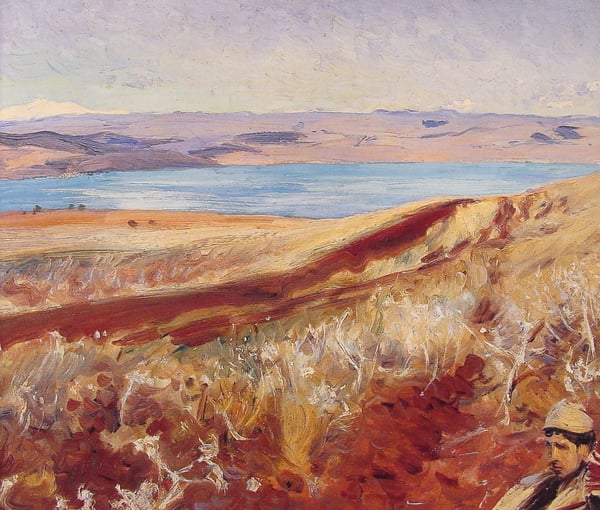
Analyse experte de The Dead Sea de John Singer Sargent
Style : Impressionism · Genre : landscape
Expert Analysis: The Dead Sea by John Singer Sargent
John Singer Sargent, widely celebrated for his virtuosic portrait work, also produced a remarkable body of landscape paintings that demonstrate his deep engagement with Impressionist principles. The Dead Sea stands as a compelling example of his ability to translate the raw, inhospitable beauty of a unique geological site into a luminous, atmospheric composition.
Within the context of Impressionism, this work is significant for several reasons:
1. Unconventional Subject and Atmospheric Challenge
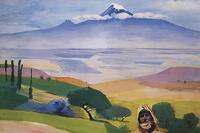
The Dead Sea—a hypersaline, lifeless body of water in a desert landscape—posed a radical departure from the idyllic rivers, meadows, and coastal scenes favored by many Impressionists. Sargent confronts the viewer with a stark, almost alien environment. His handling of light here is critical: he captures the intense, shimmering heat that rises from the salt-encrusted shores, using broken brushwork and a high-key, sun-bleached palette. The water’s surface is not blue but a reflective, milky turquoise tinged with white, evoking the dense salinity and the way light hovers over the inland sea.
2. Mastery of Color and Light in an Arid Palette
While many Impressionists relied on lush greens and cool blues, Sargent restricts himself to a narrow spectrum of ochres, pale yellows, dusty lavenders, and steely grays—colors that accurately convey the parched terrain and the heavy, dry atmosphere. Yet he avoids monotony by infusing the shadows with subtle cool tones (violet, cerulean) that suggest the refraction of sky upon the saline flats. This disciplined yet painterly approach demonstrates Impressionism’s flexibility beyond verdant landscapes, proving that the movement’s core tenets—recording transient light and atmosphere—could be applied equally to desolate, monochromatic scenes.
3. Fusion of Topographical Specificity and Subjective Vision
Sargent painted The Dead Sea during his extensive travels in the Middle East (circa 1905–1906). He was not merely documenting a tourist site; he was interpreting the immense silence and geological weight of the place. The composition often emphasizes the horizontal layers—sky, distant mountains, water, shoreline—with minimal foreground detail. This stark horizontality, combined with soft, hazy edges, conveys a sense of timelessness and isolation. The brushstrokes are fluid yet measured, allowing the viewer to sense the physical heat and vastness without losing the impression of specific location. In doing so, Sargent bridges the documentary tradition of Orientalist painting with the perceptual, sketch-like freedom of Impressionism.
4. Significance Within Sargent’s Oeuvre
While Sargent’s Impressionist explorations are sometimes overshadowed by his commissioned portraits, The Dead Sea reveals his sophisticated understanding of plein-air practice and his willingness to tackle landscapes of extreme character. It demonstrates that his talent was not confined to capturing social elegance; he could render the sublime harshness of nature with equal sensitivity. The work is therefore key to understanding Sargent as a complete artist—one who absorbed Impressionist lessons about light, color, and direct observation, and applied them to subjects that resisted easy prettiness.
In summary, The Dead Sea is significant because it expands the Impressionist purview from the picturesque to the formidable, showcasing Sargent’s technical mastery in rendering a uniquely challenging environment through the lens of atmospheric color and transient light. It stands as a testament to the movement’s capacity for versatility and its ability to find beauty—and wonder—in the most extreme landscapes.
Museum / Gallery
Visuellement similaire
20 œuvres à la composition et à la palette proches
Persians Lunching on the Grass, Mt. Ararat in the Distance
Edwin Lord Weeks
Dnieper
Arkhyp Kuindzhi
Autumn
Mikhail Olennikov
Early Morning by Lake Urumiyah, Persia
Edwin Lord Weeks
Yenisey near Krasnoyarsk
Vasily Surikov
On a Peak
Nicolae Grigorescu
Palestine
John Singer Sargent
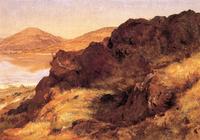
Peñascos del cerro de Atzacoalco
Jose Maria Velasco
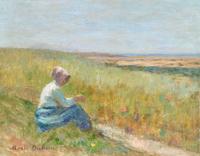
Jeune femme en paysage
Marie Duhem
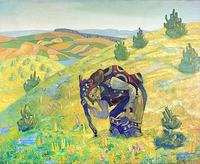
Sage
Nicholas Roerich
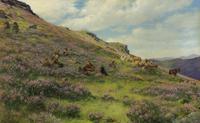
The Howard Townsed Family Taking a Break from a Highland Shoot
Francis Davis Millet
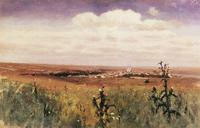
Steppe
Arkhyp Kuindzhi
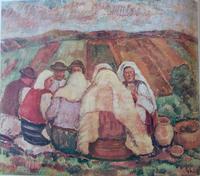
At the Edge of the Field
Dumitru Ghiatza
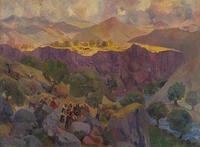
Landscape
Sedrak Arakelyan
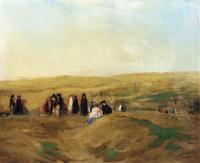
Procession in Spain (also known as Spanish Landscape with Figures)
Robert Henri
Near the beach, Shinnecock
William Merritt Chase
Russian Camp in Turkestan
Vasily Vereshchagin
Little Shepherd
Constantin Artachino
Ayunkara
George Washington Lambert
Ararat valley
Martiros Sarian