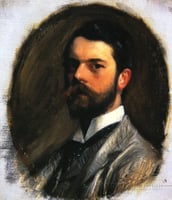
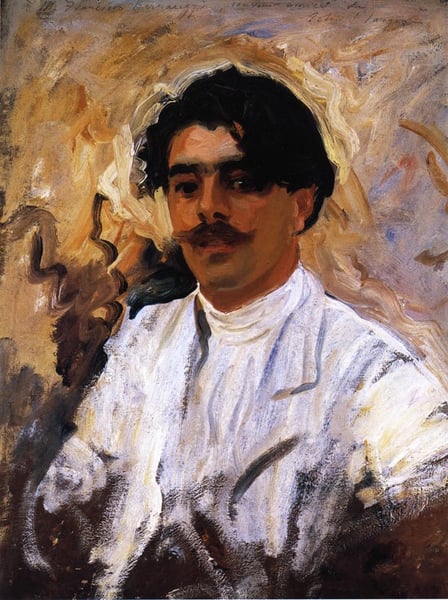
Analisi esperta di Francisco Bernareggi di John Singer Sargent
Stile: Impressionism · Genere: portrait
The portrait "Francisco Bernareggi" by John Singer Sargent stands as a compelling fusion of Impressionism with the formal demands of the portrait genre, highlighting Sargent’s unique position as a bridge between avant-garde technique and traditional portraiture.
Significance within Impressionism and Portraiture:
- Mastery of Loose Brushwork: Sargent employs the hallmark Impressionist broken brushstroke—visible, energetic, and seemingly spontaneous—to render the sitter’s features and clothing. This technique, rather than dissolving form as in pure Impressionism, is calibrated to define the sitter’s character and status. The result is a portrait that feels both immediate and meticulously observed.
- Psychological Depth Through Light and Shadow: Sargent uses Impressionist light effects to model Bernareggi’s face, casting subtle highlights and deep shadows that convey introspection. The sitter’s direct gaze and slight tension in the pose suggest a man of substance and complexity, demonstrating Sargent’s skill in capturing personality without sacrificing painterly spontaneity.
- Synthesis of Styles: While working within the portrait tradition—commissioned works that demanded likeness and dignity—Sargent infuses it with the vibrancy of Impressionist color (e.g., rich blacks warmed with blues and greens) and a focus on atmosphere. This artwork exemplifies how Sargent adapted Impressionist principles to elevate portraiture, making it relevant to modern audiences while retaining the prestige of the genre.
- Cultural and Artistic Context: Francisco Bernareggi was likely a member of the cosmopolitan elite Sargent often portrayed. The painting’s significance lies in its demonstration of how Impressionism could serve not just landscape and leisure scenes, but also the nuanced representation of individual identity—a key contribution to the evolution of modern portraiture.
In summary, "Francisco Bernareggi" is significant because it showcases Sargent’s virtuosic ability to apply an Impressionist vocabulary to the psychology of human representation, achieving a balance between fleeting visual sensation and timeless character study.
Visivamente simili
20 opere con composizione e palette affini
Self Portrait
Samuel Peploe
Portrait of the painter Antonino Leto
Vincenzo Irolli
Chauvel
Marcel Duchamp
My Friend Chadwick
John Singer Sargent
Portrait of the Pianist Conrad Ansorge
Lovis Corinth
Portrait of A. I. Surikov
Vasily Surikov
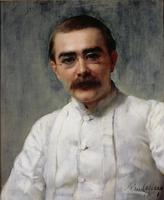
Rudyard Kipling
John Collier
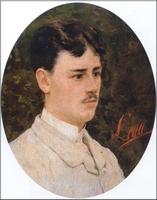
Portrait of Ludovico Tommasi
Silvestro Lega
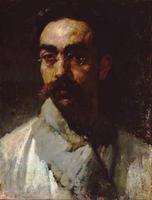
Portrait of a man
Michele Cammarano
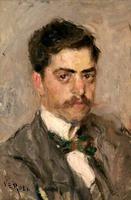
Portrait of the painter Guido Grimani
Umberto Veruda
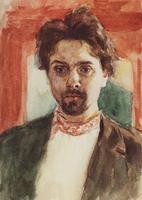
Self-Portrait
Vasily Surikov
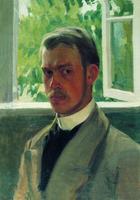
Self Portrait near the Window
Boris Kustodiev
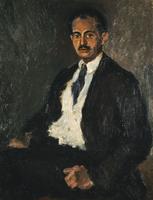
Self-Portrait
George Bouzianis
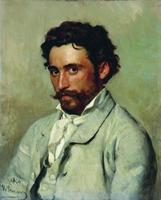
Portrait of Yurkevich
Ilya Repin
Professor Marshall-Hall
Tom Roberts
Self portrait
Theo van Doesburg
Self-portrait
Martiros Sarian
Portrait of Angelo Dall’Oca Bianca
Giacomo Favretto
Portrait of Jan Toorop
Isaac Israels
Self-portrait
Vilhelm Hammershoi