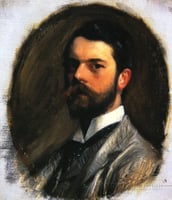
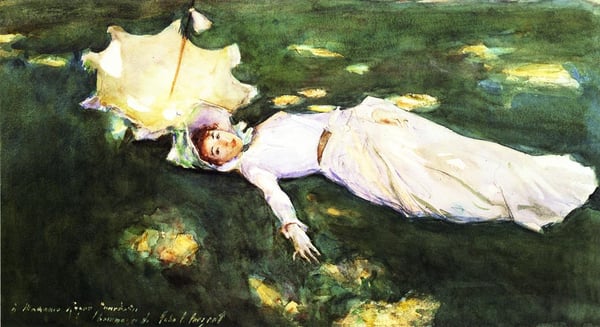
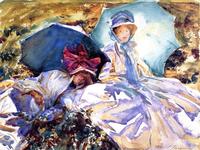
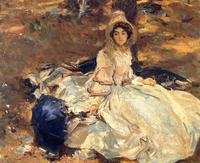
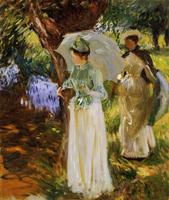
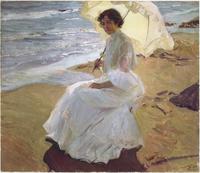
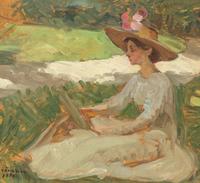
As an expert art historian, I will analyze Madame Roger Jourdain by John Singer Sargent based solely on the provided structured facts: the artwork is an Impressionist portrait.
The significance of this work within its style and period lies in its synthesis of two distinct artistic traditions. As an Impressionist portrait, it merges the movement’s hallmark concerns—fleeting moments, atmospheric light, and vibrant, broken brushwork—with the timeless genre of formal portraiture. This combination was transformative: Sargent applies Impressionism’s spontaneity and optical brilliance to the traditional portrait’s demand for likeness and social presence. The result is a depiction that feels both immediate and refined, capturing not only the sitter’s appearance but also a sense of living, shifting light characteristic of the Impressionist gaze. By doing so, the artwork challenges the conventional stillness of earlier portraiture, infusing it with a modern vitality that reflects the period’s embrace of sensory experience and natural observation. This bridging of genres marks a key moment in the evolution of late 19th-century painting, where the boundaries between high art and modern life dissolve.