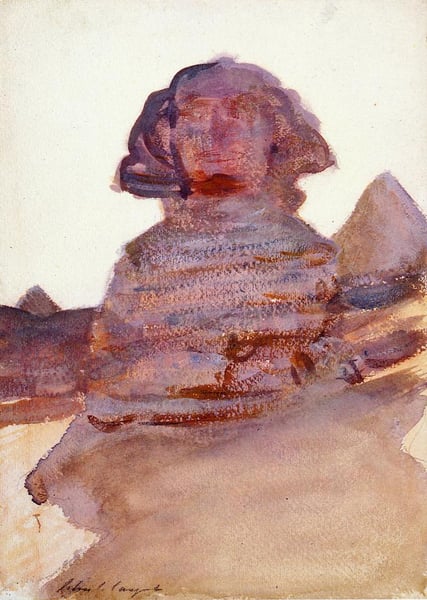
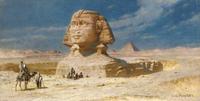
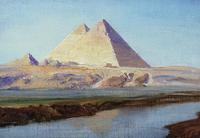
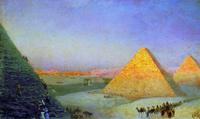
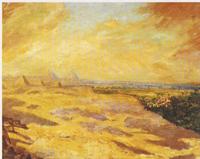
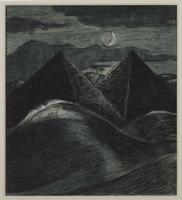
As an Impressionist landscape painting, John Singer Sargent's The Sphinx is significant for its fusion of the movement's signature concerns with a monumental, ancient subject. While Impressionism often focused on the fleeting effects of light and atmosphere on everyday scenes, here it is applied to a timeless and iconic form. The work demonstrates how Impressionist techniques—such as broken brushwork and an emphasis on natural illumination—can be used to capture the raw, sun-drenched environment surrounding the Sphinx. This choice elevates the landscape beyond mere topography, transforming the ancient sculpture into a study of light, shadow, and atmospheric perspective. The painting is thus notable as a modernist reimagining of a classical subject, showcasing the breadth of Impressionist practice beyond its more typical urban or pastoral scenes.