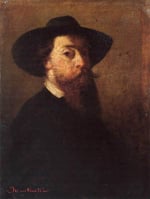
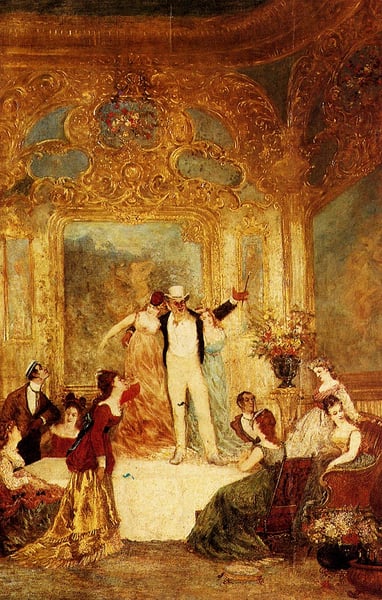
Expert analysis of Adolphe Joseph Thomas Monticelli’s An evening at the Paiva
Style: Romanticism · Genre: genre painting
Expert Art Historical Analysis: "An evening at the Paiva" by Adolphe Joseph Thomas Monticelli
As a genre painting executed within the Romantic style, "An evening at the Paiva" exemplifies the period’s shift away from strict neoclassical formalism and toward the evocation of mood, individuality, and subjective experience. The work’s significance lies in how it applies Romanticism’s core tenets—emotional intensity, a fascination with the intimate or the everyday, and a rich, atmospheric use of color—to a social scene.
Monticelli’s choice of genre (a depiction of contemporary life, here an evening gathering) aligns with Romanticism’s interest in the personal and the private, celebrating not historical or mythological grandeur but the fleeting, lived moments of human interaction. The very title, referencing a specific evening, signals the Romantic obsession with capturing a particular fleeting sensation. Within the context of the style, this painting stands out for its emphasis on the ambiance of the scene—the interplay of light, shadow, and texture to create a sense of warmth, conviviality, or perhaps melancholic reverie. This approach places Monticelli as a crucial bridge between the intense subjectivity of Romanticism and the later preoccupations with light and color found in Impressionism and Post-Impressionism. His work in this genre demonstrates that Romanticism’s legacy was not merely dramatic landscapes or exotic subjects, but also the elevation of the commonplace scene to a vehicle for profound emotional and sensory expression.
Museum / Gallery
Visually similar
20 works with related composition and palette
Himno Nacional Argentino
Pedro Subercaseaux
Personnages
Jean Béraud
Fiesta elegante
Francisco Miralles
Presentation of a Prospective Suitor
Angelo Zoffoli
Chopin Playing the Piano in Prince Radziwill's Salon
Henryk Siemiradzki
The photographer's visit
Edouard Frederic Wilhelm Richter
The Hunt Supper
Julius LeBlanc Stewart
Napoleon & Josephine
Arthur David McCormick
Chess Players
Giulio Rosati
Lhommage
Giuseppe Tivoli
The dance lesson
Gerolamo Induno
The game of chess
Francesco Beda
Concert
Wladyslaw Czachorski
The Dinner at the Ball
Adolph Menzel
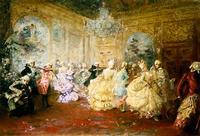
A rococo ball
Salvador Sánchez Barbudo
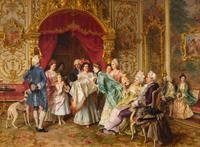
The First Visit
Arturo Ricci
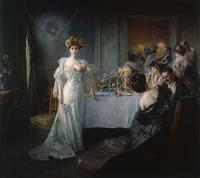
Redemption
Julius LeBlanc Stewart
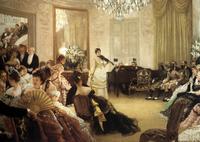
Hush! (The Concert)
James Tissot
Napoleon's Farewell To Josephine
Laslett John Pott
The young suitor
Francesco Beda