Analisi esperta di Portrait of Cosimo I de' Medici as Orpheus di Agnolo Bronzino
Stile: Mannerism (Late Renaissance) · Genere: portrait
Expert Analysis: "Portrait of Cosimo I de' Medici as Orpheus" by Agnolo Bronzino
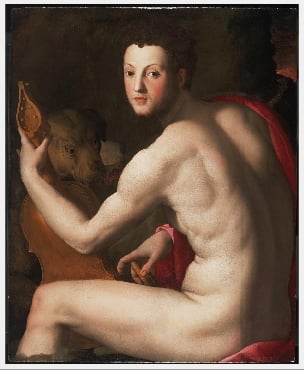
As a defining example of Mannerist portraiture, this work transcends mere likeness to become a layered political and intellectual allegory. Bronzino, court painter to Cosimo I, casts the powerful duke not as a ruler in armor but as the mythical musician Orpheus—a figure renowned for his ability to charm all of nature with his lyre. This choice is significant for several reasons:
Mannerist Elegance and Artificiality
The painting exemplifies Mannerism’s deliberate departure from High Renaissance naturalism. Cosimo’s elongated proportions, the smooth, almost porcelain finish of his skin, and the cool, refined palette create an air of aristocratic detachment. His pose is elegantly twisted (a contrapposto pushed to Mannerist extremes), and the lyre is held with studied grace, emphasizing artifice over spontaneity. The background, often reduced to a dark, non-descriptive void in Bronzino’s portraits, forces all attention onto the figure’s polished surfaces and symbolic accessories.
Allegory as Political Propaganda
By portraying Cosimo as Orpheus, Bronzino makes a sophisticated claim about Medici rule. In classical myth, Orpheus tamed wild beasts and even moved the underworld with his music—a metaphor for the duke’s ability to bring order, culture, and harmony to Florence after a period of political turmoil. The lyre itself becomes an emblem of civilizing power, linking artistic patronage (a key Medici tool) to statecraft. This blend of portraiture and mythology was a hallmark of court Mannerism, used to elevate rulers to semi-divine status while showcasing the artist’s intellectual depth.
Significance within Style and Period
The work epitomizes Mannerism’s core traits: sophistication, artificiality, and a self-conscious display of learning. Unlike the more naturalistic portraits of the High Renaissance (e.g., Raphael or Leonardo), Bronzino prioritizes surface perfection and conceptual meaning over psychological depth. The result is an image of power that is both remote and alluring—a polished icon designed to impress viewers with the duke’s refined taste and godlike authority. It remains a masterful fusion of portrait and allegory, and a key document of Medici self-fashioning in the sixteenth century.
Museum / Gallery
Visivamente simili
20 opere con composizione e palette affini
Saint John the Baptist
Agnolo Bronzino
Patroclus
Jacques-Louis David
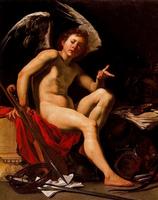
Amor Victorioso
Orazio Riminaldi
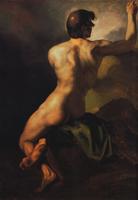
Male 'académie' Seated and Seen from Behind
Théodore Géricault
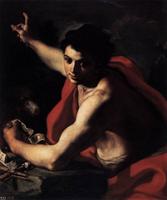
St. John the Baptist
Francesco Solimena
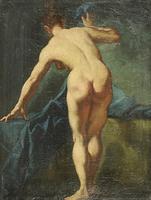
Nudo femminile
Giulia Lama
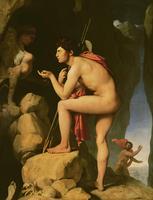
Oedipus and the Sphinx
Jean Auguste Dominique Ingres
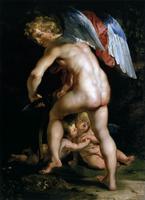
Cupid Making His Bow
Peter Paul Rubens
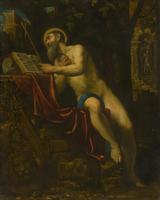
Saint Jerome
Domenico Tintoretto
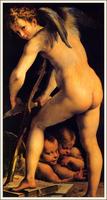
Amor Carving His Bow
Parmigianino
Crowned love and profane Love
Guido Reni
Saint John the Baptist in the Desert
Anton Raphael Mengs
Apollo and Marsyas
Palma il Giovane
Tarquin and Lucretia
Luca Giordano
David with the Head of Goliath
Gian Lorenzo Bernini
Apollo and Marsyas
Palma il Giovane
Dead Christ with Angels
Rosso Fiorentino
Venus in Vulcan's Forge
Bartholomeus Spranger
Education of Jupiter
Jacob Jordaens
Allegory of Fortune
Bartholomeus Spranger