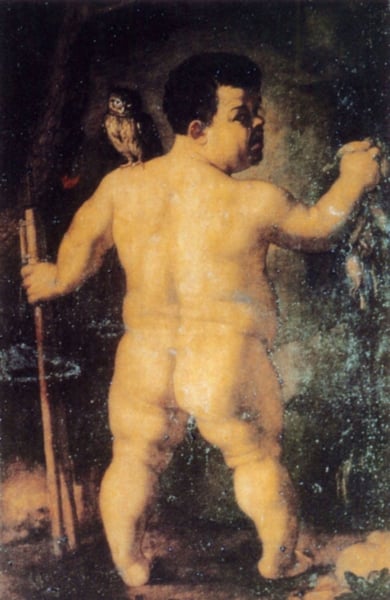
The Portrait of Nano Morgante is a significant example of Mannerist portraiture from the Late Renaissance. As a work within the Mannerist style, it likely exhibits the period’s characteristic artificial elegance, elongated proportions, and a sophisticated, intellectual approach to composition. The genre of the portrait is transformed here: by depicting a court dwarf (Nano Morgante), Bronzino subverts the traditional conventions of aristocratic portraiture, which typically emphasized idealization and noble bearing. Instead, the painting’s significance lies in its Mannerist tension between refined technique—such as polished surfaces and cool, refined color—and the unconventional subject matter, challenging the viewer’s expectations of dignity and realism within the portrait genre.