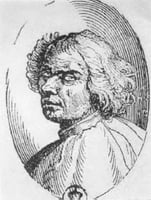
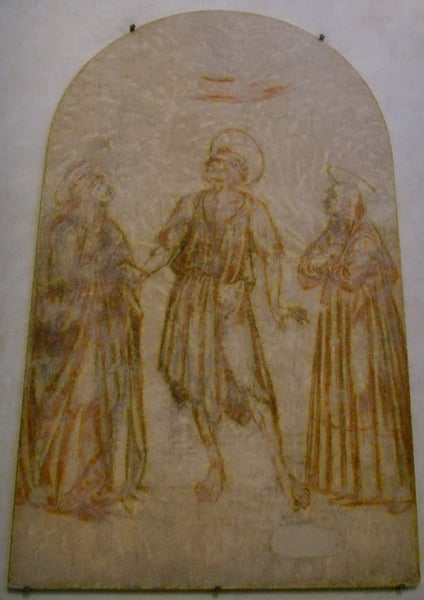
Analisi esperta di St. Jerome di Andrea del Castagno
Stile: Early Renaissance · Genere: religious painting
Expert Analysis of "St. Jerome" by Andrea del Castagno
Style & Period Context
As an Early Renaissance religious painting, this work embodies the era's fundamental shift from the flat, symbolic forms of Gothic art toward naturalism, volumetric modeling, and emotional directness. Andrea del Castagno was a key Florentine exponent of this transition, known for his vigorous, sculptural figures and intense psychological expression.
Significance within Early Renaissance Religious Painting
- Humanized Sainthood: Castagno’s St. Jerome moves away from the static, iconic holy figure of the Middle Ages. Instead, the saint is presented with palpable physicality—a muscular, aging hermit whose ascetic struggle is readable in his tense posture and weathered features. This reflects the Renaissance humanist interest in depicting sacred figures as relatable, suffering individuals.
- Dramatic Realism: Castagno’s signature use of strong chiaroscuro and foreshortening (hallmarks of the period’s experimentation with perspective) amplifies the drama of Jerome’s desert penance. The treatment of light and shadow not only models the form but also underscores the saint’s inner turmoil and spiritual endurance.
- Narrative Intensity: Unlike decorative late-Gothic panels, this work concentrates on a single, psychologically charged moment—likely Jerome’s penitence or his visionary encounter with Christ. The compressed composition and the saint’s piercing gaze engage the viewer directly, a common Early Renaissance strategy to provoke spiritual contemplation.
- Pioneering Naturalism: Castagno’s attention to anatomical detail (the sinews of the hand, the sag of aged skin) aligns with the period’s revival of classical prototypes. This was not mere technical bravado but a theological choice: making the divine accessible through convincingly human form.
Why It Matters
“St. Jerome” by Andrea del Castagno is significant because it exemplifies how Early Renaissance religious painting fused devotional purpose with scientific observation. It marks a moment when sacred art began to prioritize empathy over ornament, setting the stage for the High Renaissance masters who would fully realize this synthesis. Castagno’s ability to convey both the saint’s vulnerability and resilience makes this work a powerful testament to the period’s new, human-centered piety.
Visivamente simili
20 opere con composizione e palette affini
Pietà
Andrea del Castagno
Verso of the first Sketch King Cambyses
Gerard David
Martyrdom of St. John and St. Paul
Alberto Sotio
Stories of Christ's Passion
Andrea del Castagno
The Visitation of the Virgin to Saint Elizabeth; King Solomon in a Niche at Left
Carlo Urbino
Fresco for the decoration of the Pantheon: saints
Pierre Puvis de Chavannes

Study
Domenico Ghirlandaio
The Flood
Paolo Uccello
Church of San Lorenzo (San Giovanni Valdarno), Toscana, Italy
Lo Scheggia
Christ Carrying the Cross
Hieronymus Bosch
Painted Limestone Funerary Slab with a Soldier and Two Girls
Ancient Greek Painting and Sculpture
Fresco from the Tomb of Judgment in Ancient Mieza, Greece (Hermes)
Ancient Greek Painting and Sculpture
Military Armor, Arms, and Gear from the Tomb of Lyson and Kallikles in Ancient Mieza, Greece
Ancient Greek Painting and Sculpture
Venus and the Graces offering gifts to a young girl
Sandro Botticelli
Angel
Sandro Botticelli
Fresco for the decoration of the Pantheon: saints
Pierre Puvis de Chavannes
Martyrdom of St. Thomas
Andrea del Castagno
Painted Limestone Funerary Slab with a Soldier Standing at Ease
Ancient Greek Painting and Sculpture
A Stele of Dioskourides
Ancient Greek Painting and Sculpture
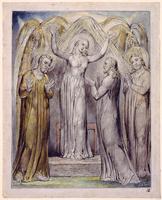
Illustration to Milton`s Paradise Regained
William Blake