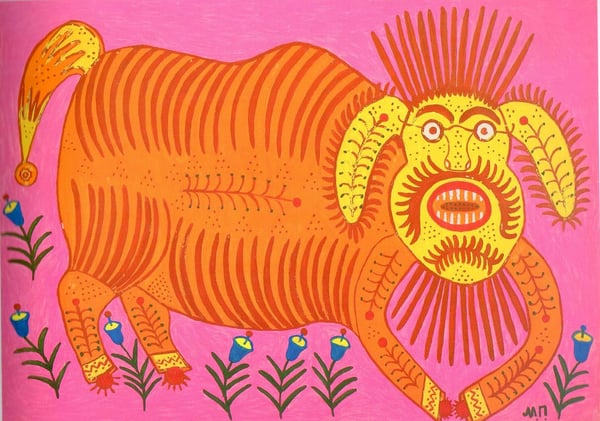
Expertenanalyse zu Maria Primachenkos This Beast Went A-Cacthing Sparrows
Stil: Naïve Art (Primitivism) · Genre: animal painting
Expert Analysis: "This Beast Went A-Cacthing Sparrows" by Maria Primachenko
Maria Primachenko’s “This Beast Went A-Cacthing Sparrows” stands as a quintessential example of Naïve Art (Primitivism) in the animal-painting genre, but its significance extends far beyond its charming surface. Within the context of Primachenko’s oeuvre and the broader Naïve tradition, this work is notable for three key reasons:
-
Fusion of Folkloric Narrative and Surreal Imagination
The title itself signals a playful, almost folk-tale quality—a beast deliberately “cacthing” (a deliberate misspelling or onomatopoeic invention) sparrows. In Naïve Art, such whimsical subject matter is not mere childlike fancy; it reflects a deep-rooted connection to rural Ukrainian folk culture, where animals often embody moral or symbolic roles. Primachenko transforms a simple hunting scene into a fantastical tableau, blurring the line between reality and myth. The beast is likely an invented hybrid (a trademark of her style), combining features of cats, bears, or mythical creatures, thereby elevating the animal painting from naturalistic study to a celebration of untamed creativity. -
Mastery of Naïve Aesthetic Principles
Naïve Art is defined by deliberate flatness, bold outlines, and vibrant, often unnatural color palettes—all hallmarks of Primachenko’s work. In this painting, the beast and sparrows would be depicted with simplified, almost geometric forms, yet imbued with a surprising sense of movement and character. The background likely employs floral or geometric motifs (drawn from Ukrainian embroidery and pottery), anchoring the composition in the artist’s cultural heritage. This synthesis of personal vision and folk tradition is what makes Primachenko a giant of the Naïve movement: she is not an “untutored” amateur but a sophisticated artist who consciously used Primitivism to assert Ukrainian identity during periods of political suppression. -
Significance within Primitivism and 20th-Century Art
While Western Naïve artists (like Henri Rousseau) sought to escape industrial modernity, Primachenko’s work also served as a quiet act of resistance. She created her fantastical animals during the Soviet era, when Ukrainian folk expression was often marginalized. “This Beast Went A-Cacthing Sparrows” thus carries a dual significance: it is both a joyous, anarchic escape into imagination and a subtle affirmation of cultural resilience. The beast—caught in a moment of playful predation—mirrors the artist’s own refusal to be tamed by artistic conventions or political dogma.
In summary, this painting is not merely a charming animal scene; it is a masterwork of Naïve Art that embodies folkloric storytelling, formal daring, and cultural defiance. Primachenko’s beasts, including this one, have become icons of Ukrainian primitivism, influencing subsequent generations of artists who value raw emotional power over academic polish.
Visuell ähnlich
20 Werke mit ähnlicher Komposition und Farbpalette
This Beast is Making Magic
Maria Primachenko
Wild Cat
Maria Primachenko
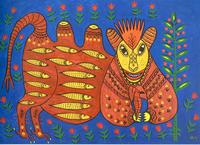
A Fish King Has Caught a Hoopoe and Is Full of Joy
Maria Primachenko
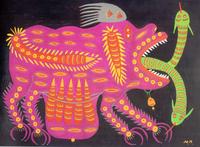
May That Nuclear War Be Cursed!
Maria Primachenko
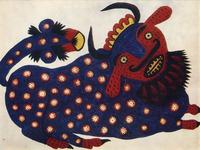
Blue Ox
Maria Primachenko
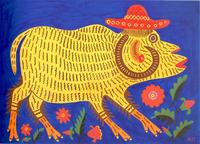
This Ukrainian Ram Did Not Gather His Crop
Maria Primachenko
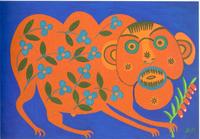
Wild and Big-Eared
Maria Primachenko
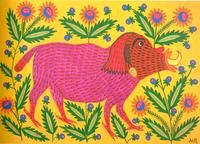
Another Beast Has Run Into Flowers
Maria Primachenko
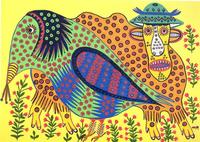
Wild Bull and Raven Are Friends
Maria Primachenko
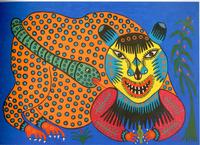
While This Beast Drinks Poison, a Snake Sucks His Blood
Maria Primachenko
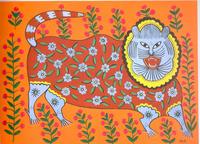
Tiger Laughs
Maria Primachenko
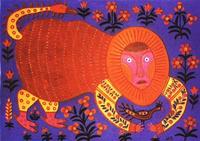
Wild Otter Caught Bird
Maria Primachenko
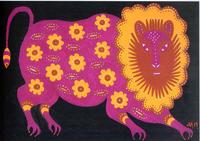
Young Lion
Maria Primachenko
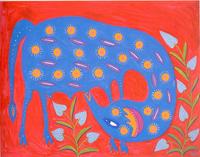
Long-Necked and Itching
Maria Primachenko
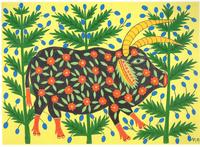
Ukrainian Bull, Three Years Old, Went Walking Through the Woods and Garners Strength
Maria Primachenko
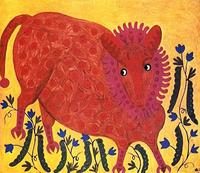
Pea beast
Maria Primachenko
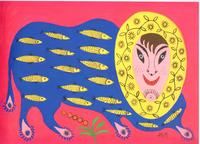
Beaver
Maria Primachenko
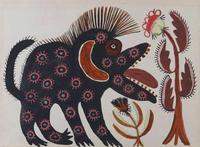
Black Beast
Maria Primachenko
Two-Headed Chicken
Maria Primachenko
Gros Plan Fixe D'Une Metamorphose
Victor Brauner