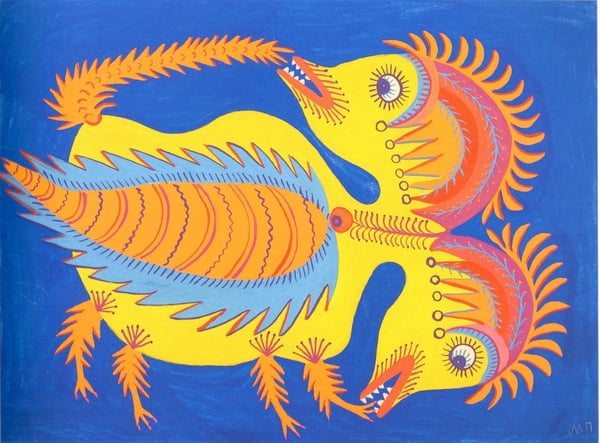
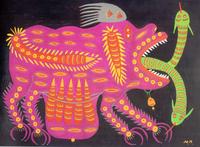
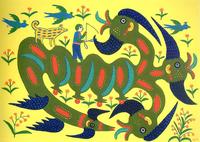
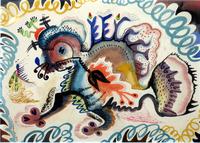
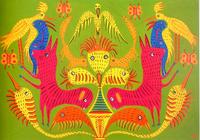
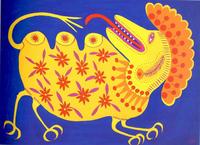
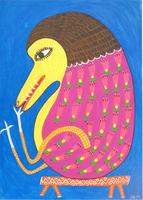
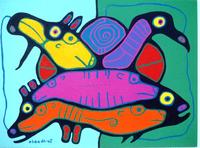
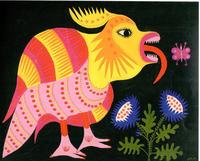
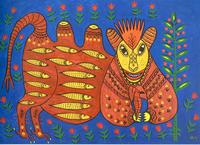
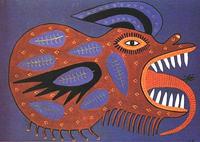
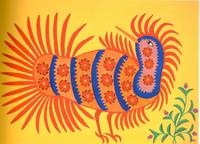
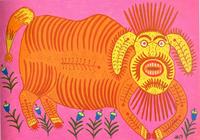
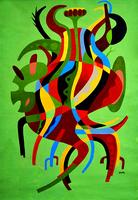
Maria Primachenko’s “Two-Headed Chicken” is a striking example of Naïve Art (Primitivism) that elevates folk imagination into the realm of mythological painting. What makes this work significant is its fearless departure from academic realism: Primachenko employs a flattened perspective, bold outlines, and vibrant, unmodulated colors to create a world where the fantastical feels utterly natural. The two-headed chicken is not mere deformity but a deliberate mythological hybrid—a symbol drawn from Ukrainian folk lore and personal vision, merging the familiar (a chicken) with the surreal (two heads). Within the Naïve tradition, such works reject conventional anatomy and perspective in favor of direct, intuitive expression. Primachenko’s pieces are celebrated for preserving and transforming folk motifs into a unique, cosmic bestiary, and “Two-Headed Chicken” encapsulates her ability to make the strange both charming and deeply symbolic, bridging vernacular art and avant-garde sensibility.