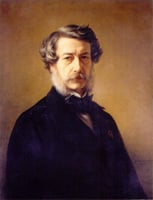
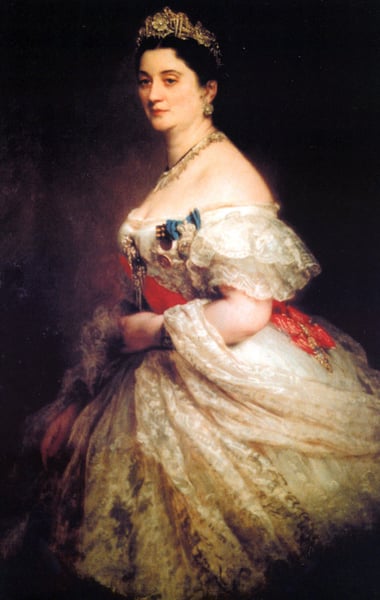
Princess Catherine Dadiani
Expert analysis of Franz Xaver Winterhalter’s Princess Catherine Dadiani
Style: Neoclassicism · Genre: portrait
Expert Analysis of "Princess Catherine Dadiani" by Franz Xaver Winterhalter
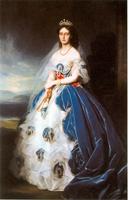
As an artwork firmly rooted in the Neoclassical tradition, Winterhalter’s Princess Catherine Dadiani exemplifies the period’s core tenets: clarity of form, idealized grace, and a restrained grandeur that elevates the sitter to a timeless, almost mythological status. While Winterhalter is often celebrated for his romanticized royal portraiture, this particular work stands out for its seamless synthesis of Neoclassical structure with a nuanced, individualizing sensitivity—a balance that marks its significance within both the artist’s oeuvre and the broader style.
Composition and Idealized Form
Winterhalter adheres to Neoclassical principles by presenting the princess with impeccable poise and symmetry. Her posture is dignified yet relaxed, a hallmark of the era’s portraiture that sought to convey moral virtue through physical composure. The use of clear, crisp outlines and smooth modeling—typical of Winterhalter’s technique—imbues the figure with a sculptural quality reminiscent of ancient marble busts. The drapery of her gown falls in controlled, flowing folds that avoid excessive ornamentation, prioritizing classical harmony over Rococo frivolity.
Psychological Depth within Neoclassical Restraint
What makes this portrait especially significant is how Winterhalter infuses Neoclassical ideals with a subtle psychological presence. Princess Catherine Dadiani, a member of the princely Dadiani family of Mingrelia (modern-day Georgia), is depicted not merely as an aristocratic archetype but as an individual with quiet intelligence and composure. Her direct yet soft gaze engages the viewer without vanity, a feat that aligns with Neoclassicism’s emphasis on rational self-possession. This balance between universal idealism and specific character was a hallmark of Winterhalter’s best work, allowing him to transcend formulaic court portraiture.
Historical and Cultural Context
The portrait’s significance is heightened by its historical moment. Painted in the mid-19th century, it reflects the intersection of Western Neoclassical conventions with an Eastern European aristocratic subject. Winterhalter, a German-born artist working primarily in France and England, brought a cosmopolitan lens to the sitter’s identity. Princess Dadiani’s inclusion in his roster of royal clients—alongside Empress Eugénie and Queen Victoria—underscores the period’s interconnected European elite and the role of portraiture in projecting power and cultural diplomacy. The work thus serves as a document of cross-cultural exchange, where Neoclassical ideals were adapted to convey the dignity of a Georgian prince’s daughter.
Significance Within Neoclassicism
While Winterhalter is often labeled a practitioner of the Academic or Romantic style, Princess Catherine Dadiani anchors itself firmly in Neoclassicism through its emphasis on order, idealized beauty, and moral edification. Unlike the more dramatic, emotionally charged Romantic portraits of his contemporaries, Winterhalter’s composition remains serene and rational—a choice that elevates the sitter as a paragon of enlightenment virtue. This painting stands as a testament to Neoclassicism’s enduring appeal in the 19th century, proving that the style could still deliver profound individual characterization without abandoning its classical foundations. In doing so, it bridges the gap between historical idealism and modern subjectivity, securing its place as a significant work within Winterhalter’s celebrated career.
Visually similar
20 works with related composition and palette
Empress Eugenie
Franz Xaver Winterhalter
Isabel II of United Kingdom
Franz Xaver Winterhalter
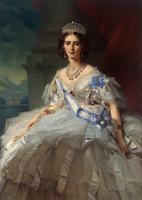
Portrait of Princess Tatiana Alexanrovna Yusupova
Franz Xaver Winterhalter
Marie Alexandrina of Saxe-Altenburg, Queen of Hanover (1818-1907)
Karl Ferdinand Sohn

Portrait of Charlotte of Belgium
Franz Xaver Winterhalter
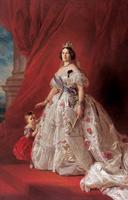
Portrait of Queen Isabella II of Spain and her daughter Isabella
Franz Xaver Winterhalter
Isabel Ii De España
Luis de Madrazo y Kuntz

Portrait of Victoria of the United Kingdom
Franz Xaver Winterhalter
The Princess Victoria, Princess Royal as Crown Princess of Prussia in 1867
Franz Xaver Winterhalter
Alexandra, Princess of Wales
Franz Xaver Winterhalter
Princess Tatiana Yussupova
Franz Xaver Winterhalter
H.R.H. the Duchess of Connaught and Strathearn (Princess Louisa Margaret Alexandra Victoria Agnes of Prussia)
John Singer Sargent
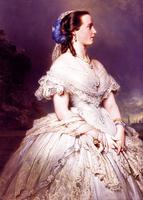
Marie Henriette of Austria
Franz Xaver Winterhalter

Portrait of Maria Eulalia of Spain
Giovanni Boldini
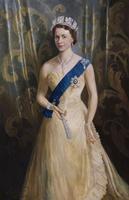
Elizabeth II
Arthur Pan

Portrait of Countess Maria Mikhailovna Volkonskaya
Konstantin Makovsky

Portrait of Louise of Hesse-Kassel (1817-1898), Queen of Denmark
Elisabeth Jerichau-Baumann
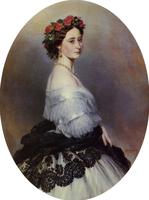
Princes Alice of England
Franz Xaver Winterhalter
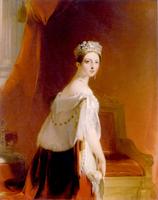
Queen Victoria
Thomas Sully
Portrait of the Queen Olga of Württemberg
Franz Xaver Winterhalter