Franz Xaver Winterhalter sanatçısının The Princess Victoria, Princess Royal as Crown Princess of Prussia in 1867 eseri hakkında uzman analizi
Tarz: Neo-Rococo · Tür: portrait
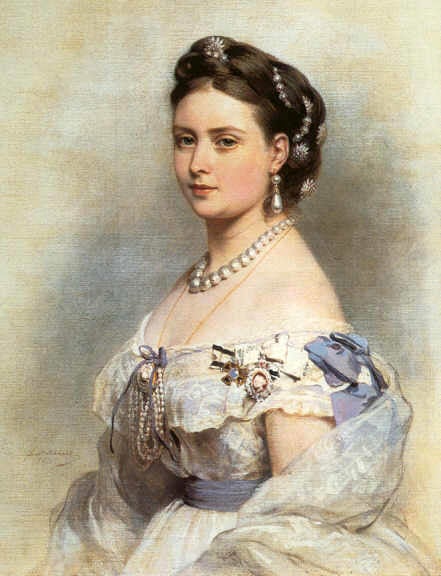
Expert Art Historical Analysis: "The Princess Victoria, Princess Royal as Crown Princess of Prussia in 1867" by Franz Xaver Winterhalter
This portrait is a quintessential example of Neo-Rococo, a 19th-century revival of the lightness, elegance, and decorative richness of the 18th-century Rococo style. Winterhalter, the preeminent court portraitist of his era, masterfully adapts Rococo conventions—soft pastel palettes, shimmering silks, and intricate lace—to convey both the grace and the political stature of his subject. The significance of this work lies in how it fuses historical revivalism with contemporary royal portraiture, embodying the ideals of aristocratic femininity and dynastic prestige in the mid-19th century.
The portrait depicts Princess Victoria, Princess Royal (eldest daughter of Queen Victoria) as Crown Princess of Prussia, a role she assumed upon her marriage in 1858. By 1867, she was a key figure in European politics, known for her liberal views and cultural influence. Winterhalter captures this through a delicate balance of regal formality and personal refinement. The Neo-Rococo style allows him to lavish attention on the sitter's attire—a luxurious gown with intricate trimmings, likely rendered in soft whites, pale blues, or roses—and to frame her face with an idealized, porcelain-like complexion. The composition emphasizes her poise and intelligence, while the flowing drapery and gentle lighting echo Rococo artists like Boucher and Fragonard.
What makes this portrait significant within its style and period is its role in cementing Neo-Rococo as a vehicle for dynastic imagery. Winterhalter does not merely copy 18th-century motifs; he updates them with a Victorian sense of naturalism and psychological depth. The princess is both a symbol of her dynasty and an individual of substance. This fusion of historical revival with modern portraiture made Winterhalter’s Neo-Rococo portraits the definitive representation of European royalty in the mid-19th century—elegant, authoritative, and deeply rooted in a nostalgic vision of courtly grace. The work thus stands as a key document of both artistic revival and political identity, capturing a moment when the old visual language of Rococo was repurposed to serve the grandeur of a newly united German Empire.
Görsel olarak benzer
İlişkili kompozisyon ve renk paletine sahip 20 eser
Portrait of Charlotte of Belgium
Franz Xaver Winterhalter
Princes Alice of England
Franz Xaver Winterhalter
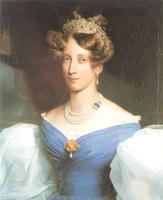
Markgräfin Sophie von Baden
Franz Xaver Winterhalter
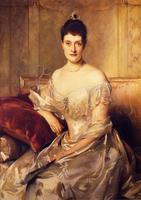
Mrs. Mahlon Day Sands (Mary Hartpeace)
John Singer Sargent
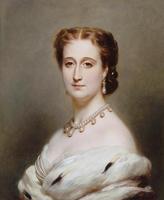
Eugénie, Empress Consort of the French
Franz Xaver Winterhalter

Alice Wernher born Alice Sedgwick Mankiewicz
John Singer Sargent
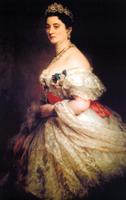
Princess Catherine Dadiani
Franz Xaver Winterhalter

Queen Olga of Greece
Elisabeth Jerichau-Baumann
Portrait of Princess of Baden
Franz Xaver Winterhalter
Marie Henriette of Austria
Franz Xaver Winterhalter
Portrait of a Woman
Ivan Kramskoy

Portrait of Maria Eulalia of Spain
Giovanni Boldini

Portrait of Pauline Astor
John Singer Sargent
Portrait of Victoria, Princess Royal
Franz Xaver Winterhalter
Portrait of Empress Maria Fiodorovna in a Head Dress Decorated with Pearls
Ivan Kramskoy
Mrs. David Curtis Deforest (Julia Wooster)
Samuel Morse
Mrs. Philip Leslie Agnew
John Singer Sargent
Alexandra, Princess of Wales
Franz Xaver Winterhalter
Queen Mary
Solomon Joseph Solomon
Young Woman in Blue Silk Dress
Miklos Barabas