Expert analysis of Franz Xaver Winterhalter’s Spring
Style: Neoclassicism · Genre: portrait
Expert Analysis: "Spring" by Franz Xaver Winterhalter
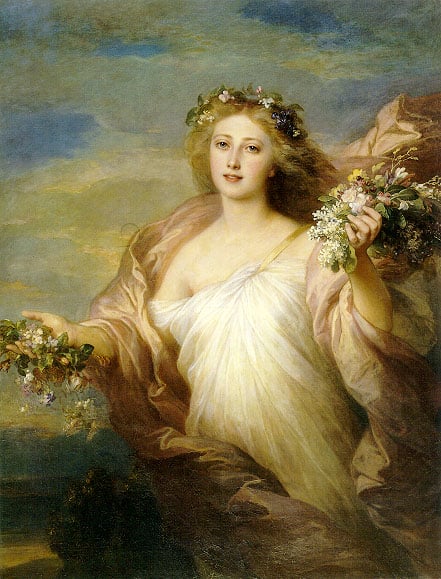
Within the framework of Neoclassicism and the portrait genre, Franz Xaver Winterhalter’s "Spring" achieves a refined synthesis of allegorical idealism and intimate likeness. The work is significant for its embodiment of Neoclassical principles—clarity of form, balanced composition, and a restrained emotional tenor—applied to the portrait genre, which traditionally prioritizes individual character. Here, Winterhalter elevates the portrait into a universal symbol of renewal and grace.
The sitter is presented as a personification of Spring itself, yet remains a recognizable individual—a subtle tension that defines the artist’s mastery. The composition is structured with classical symmetry: the figure is centrally placed, the drapery falling in controlled, vertical folds reminiscent of ancient Greek sculpture, while the slender, elongated proportions echo the Neoclassical reverence for antique ideals. Winterhalter’s handling of light and texture, however, introduces a soft, almost Rococo delicacy that tempers the severity often associated with contemporary Neoclassicism—a hallmark of his portraiture that allowed him to bridge formal classicism with the fashionable grace demanded by his aristocratic patrons.
The work’s significance also lies in its allegorical layering. The inclusion of flowers, the gentle tilt of the head, and the flow of the dress all suggest fertility and rebirth, aligning with the Neoclassical penchant for timeless, moral narratives. Yet by confining these elements to a portrait, Winterhalter personalizes the allegory, making the sitter not just a symbol but a participant in the eternal cycle of nature. This fusion of portrait and allegory demonstrates how Neoclassicism could serve both the public ideals of the age and the private desires of elite patrons—a duality that marks "Spring" as a key example of the style’s adaptability within the portrait genre.
Visually similar
20 works with related composition and palette
The Spring
Franz Xaver Winterhalter
Spring
Rosalba Carriera
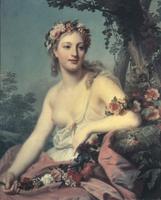
Flora
Louise Elisabeth Vigee Le Brun
Peace brings abundance
Louise Elisabeth Vigee Le Brun
Girl with a Rose
Delphin Enjolras
Portrait of a Woman at Her Toilet
Angelica Kauffman
Nymph followed by Apollo
Maurice Quentin de La Tour
Jeune Fille Au Papillon
Guillaume Seignac
Miranda
John Hoppner
Pandora
Alexandre Cabanel
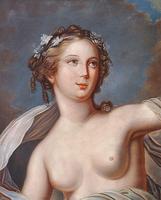
Young woman in a light dress and with flowers in her hair
Gustaf Lundberg
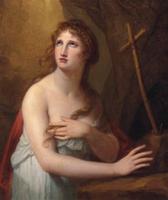
Saint Mary of Egypt
Angelica Kauffman
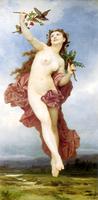
Day
William-Adolphe Bouguereau
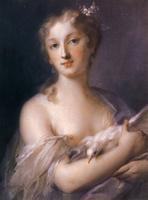
Nymph followed by Apollo
Maurice Quentin de La Tour
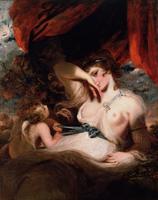
Cupid Unfastening the Girdle of Venus
Joshua Reynolds
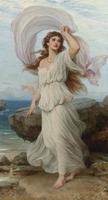
Miranda
Thomas Francis Dicksee
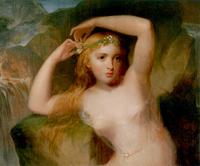
A Sea Nymph
Thomas Sully
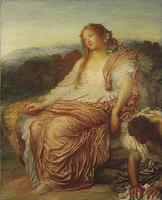
Ariadne
George Frederick Watts
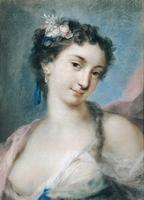
Personification of Spring
Rosalba Carriera
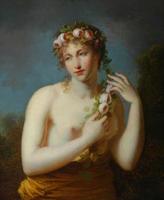
Half-Length Figure of a Bacchante
Jacques Antoine Vallin