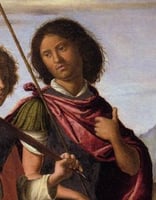
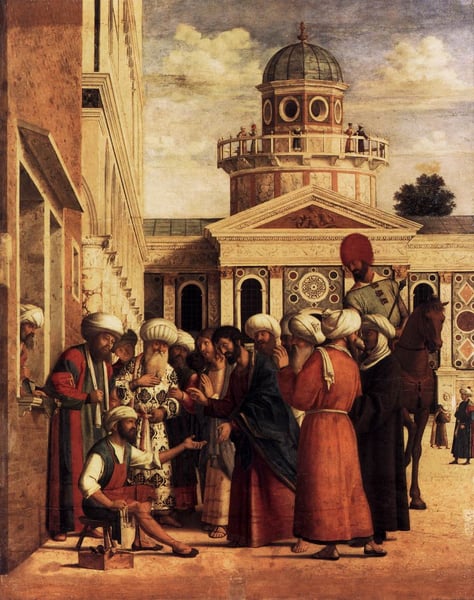
The Healing of Anianus
Dettagli
Analisi esperta di The Healing of Anianus di Cima da Conegliano
Stile: High Renaissance · Genere: religious painting
Expert Analysis: "The Healing of Anianus" by Cima da Conegliano
Style & Period Context
As a work of the High Renaissance, this painting exemplifies the era’s pursuit of harmony, clarity, and naturalism. Cima da Conegliano, a Venetian master active in the late 15th and early 16th centuries, was renowned for his ability to fuse devotional gravity with the luminous, atmospheric qualities characteristic of the Venetian school.
Thematic Significance
The religious genre is central to the High Renaissance, where biblical narratives were treated with humanistic depth. The Healing of Anianus depicts the moment Saint Mark restores sight to the cobbler Anianus—a subject that allowed Cima to explore two key Renaissance ideals: divine intervention rendered through naturalistic human form and the integration of sacred action with an accessible, earthly setting. The scene is not staged as a distant miracle but as a quiet, dignified encounter, emphasizing the accessibility of grace.
Compositional & Stylistic Hallmarks
Cima’s composition reflects the High Renaissance preference for balanced, pyramidal groupings and clear spatial organization. The figures are likely arranged with a calming symmetry, their gestures and gazes directing the viewer’s eye toward the focal miracle. The landscape—a signature of Cima’s work—functions as both a serene backdrop and a symbolic element, often imbued with soft, atmospheric light that unifies the scene. This treatment of light and color, typical of Venetian painters, lends the work a lyrical, contemplative quality that distinguishes it from the more dramatic linearity of Florentine contemporaries.
Significance within Cima’s Oeuvre
While not as widely known as works by Giovanni Bellini or Titian, The Healing of Anianus represents Cima’s mastery of sacred narrative infused with quiet naturalism. His ability to convey theological weight through gentle, human interaction and luminous landscape aligns perfectly with the High Renaissance’s goal of making the divine feel both majestic and approachable. The painting thus stands as a testament to Cima’s role in bridging the devotional intensity of the early Renaissance with the serene, polished naturalism that defines the High Renaissance at its peak.
Museum / Gallery
Visivamente simili
20 opere con composizione e palette affini
The Flagellation of Christ (detail)
Piero della Francesca
Baptism of St Zenobius and His Appointment as Bishop
Sandro Botticelli
Debate of St. Stephen
Vittore Carpaccio
Presentation of the Virgin at the Temple
Cima da Conegliano
The Flagellation of Christ
Piero della Francesca
Three Miracles of St Zenobius
Sandro Botticelli
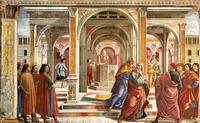
Expulsion of Joachim
Domenico Ghirlandaio
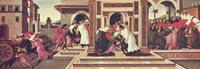
Scenes from the Life of Saint Zenobius
Sandro Botticelli
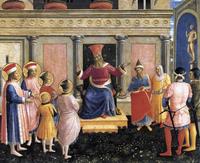
Saint Cosmas and Saint Damian before Lisius
Fra Angelico
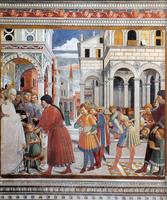
The School of Tagaste
Benozzo Gozzoli
St. George Baptising the Gentile
Vittore Carpaccio
Annunciation
Gentile Bellini
St. Stephen is Consecrated Deacon
Vittore Carpaccio
The School of Tagaste
Benozzo Gozzoli
Annunciation with Saint Emidius
Carlo Crivelli
The Marriage of the Virgin
Raphael
The Story of St. Nicholas
Fra Angelico
St. Mark Preaching in Alexandria (detail)
Gentile Bellini
The Miracle of St. Tryphonius
Vittore Carpaccio
The Circumcision
Luca Signorelli