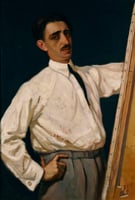
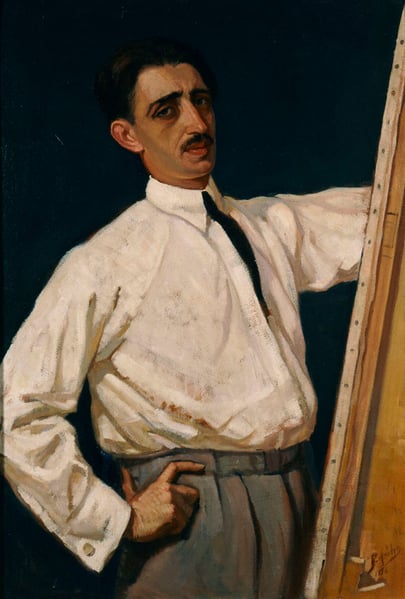
Expert analysis of Periklis Vyzantios’s Self-Portrait
Style: Post-Impressionism · Genre: self-portrait
Based solely on the provided structured facts, the significance of Periklis Vyzantios’s Self-Portrait can be assessed through its relationship to Post-Impressionism as a style and the self-portrait genre.
Analysis:
-
Post-Impressionist Context: As a Post-Impressionist work, this self-portrait likely diverges from the naturalism of Impressionism, favoring instead an emphasis on emotional resonance, structure, or symbolic color. Post-Impressionism is characterized by artists like van Gogh, Gauguin, and Cézanne, who prioritized subjective expression over optical accuracy. Vyzantios’s self-portrait would therefore be significant as a Greek artist’s contribution to this international movement—melding the raw, expressive brushwork and intensified palette typical of the style with a personal, introspective subject. The genre of self-portraiture in Post-Impressionism often served as a vehicle for psychological depth, making this work a potential document of the artist’s inner state.
-
Genre Considerations: The self-portrait genre inherently holds significance as a direct engagement between artist and viewer. By choosing himself as subject, Vyzantios asserts a reflexive, modernist identity. In the Post-Impressionist period, self-portraits frequently challenged conventional representation, using distortion or vibrant color to convey personality and artistic philosophy. This work’s significance lies in its likely departure from academic ideals, embracing a more personal, stylized truth—a hallmark of the era’s break toward individual expression.
-
Art Historical Significance: Without visual details, the key significance is contextual: Vyzantios worked within a major, transformative style (Post-Impressionism) that laid groundwork for 20th-century modernism. A self-portrait in this vein would demonstrate how non-French artists engaged with avant-garde ideas, expanding the movement’s geographic and cultural reach. It stands as a testament to the artist’s self-reflection within a stylistic framework that prized personal vision over objective reality.
Visually similar
20 works with related composition and palette
Self Portrait
Adalbert Erdeli
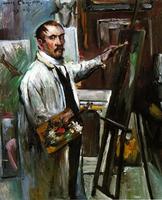
Self-Portrait in the Studio
Lovis Corinth
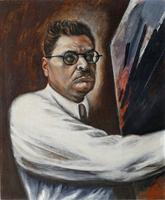
Self-portrait
Jose Clemente Orozco
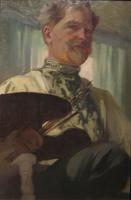
Self-portrait
Alphonse Mucha
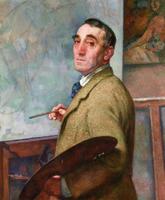
Self Portrait with Palette
Theo van Rysselberghe
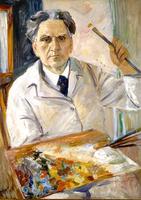
Self-portrait
Martiros Sarian
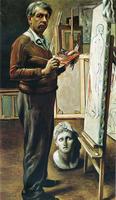
Self Portrait in the Studio
Giorgio de Chirico
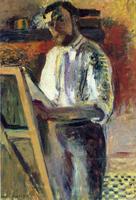
Self-Portrait in Shirtsleeves
Henri Matisse
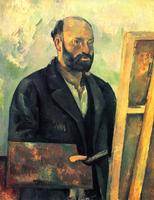
Self-Portrait with Palette
Paul Cezanne
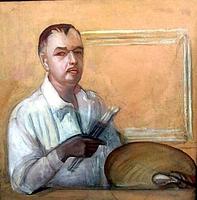
Self-portrait
Serge Sudeikin
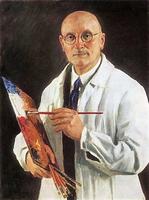
Self-Portrait with Palette
Igor Grabar
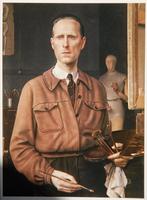
Self-Portrait
Carel Willink
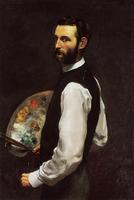
Self-Portrait
Frederic Bazille
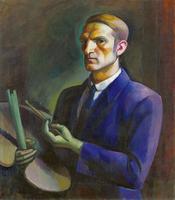
Self-Portrait with Palette
Kmetty János
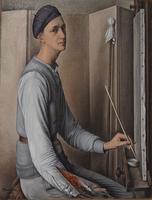
Self-Portrait
François Barraud
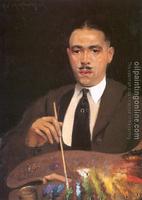
Self Portrait
Archibald Motley
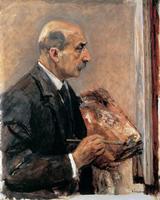
Self-Portrait with Palette
Max Liebermann
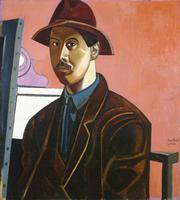
Portrait of the Artist as the Painter Raphael
Wyndham Lewis
Self Portrait
Thomas Hart Benton
Lovis Corinth in the Berlin Atelier
Aura Hertwig