Expert Analysis of "At the Well" by Ivan Vladimirov
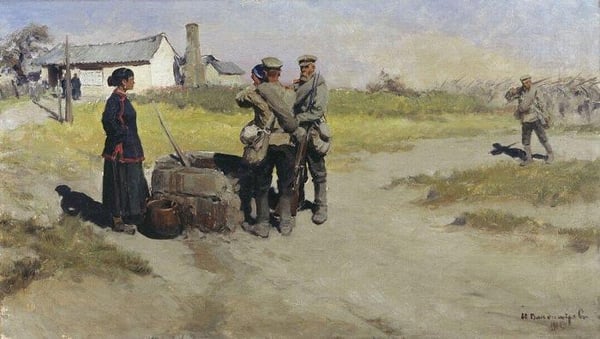
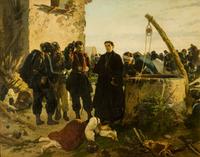
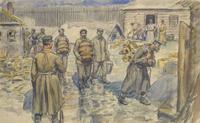
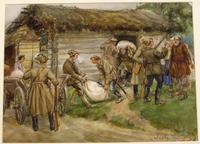
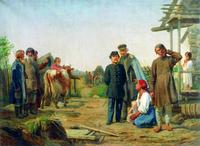
Ivan Vladimirov (1869–1947) belongs to the later generation of Russian realist painters influenced by the Peredvizhniki (the Wanderers), a movement that championed truthful, often socially engaged depictions of everyday life. At the Well is a classic genre painting executed in the Realist style. Its significance lies not in dramatic narrative or idealization, but in its quiet, unadorned portrayal of a common rural ritual—women gathering water.
The work embodies the core Realist tenet: elevate the ordinary without sentimentalism. Vladimirov focuses on the simple, repetitive act of drawing water, the figures’ worn clothing and weathered faces, and the utilitarian setting. Compared to earlier peasant scenes (e.g., by Venetsianov or even the early Peredvizhniki), Vladimirov’s approach is more documentary, reflecting a shift toward observing daily labor as its own subject of dignity. The well itself becomes a social nexus—a space for brief interaction, shared hardship, and quiet resilience.
Art historically, At the Well is significant for capturing a transitional moment in Russian realism: the late-19th-century move from overt social criticism (as in Repin’s Barge Haulers) toward a more ethnographic, almost photographic objectivity. Vladimirov’s careful attention to light, texture (wood, metal, fabric), and bodily posture grounds the scene in authentic, non-heroic experience. This work thus stands as a testament to Realism’s enduring power to find profound meaning in life’s most unglamorous routines.