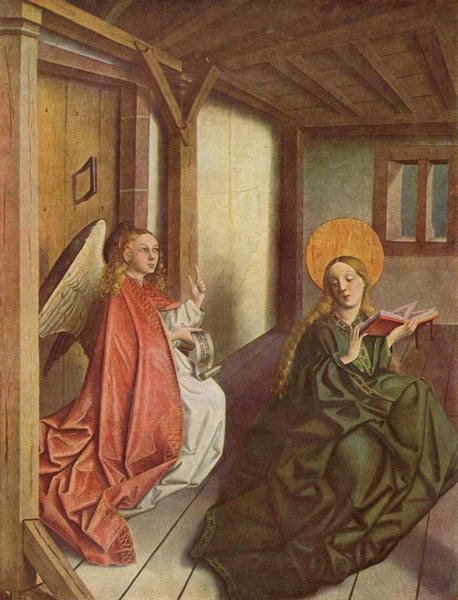
Analisi esperta di Annunciation di Konrad Witz
Stile: Northern Renaissance · Genere: religious painting
Expert Analysis: "Annunciation" by Konrad Witz
This religious painting belongs to the Northern Renaissance, a period known for its meticulous attention to naturalistic detail, symbolic depth, and innovative handling of light and space. Konrad Witz, a pioneering German-Swiss painter active in the early 15th century, is celebrated for integrating these qualities with a remarkable sense of tangible reality.
Significance within the Northern Renaissance:
-
Radical Naturalism and Spatial Clarity: Witz’s Annunciation pushes beyond the decorative gold grounds and stylized figures of the International Gothic. He grounds the sacred event in a believable, three-dimensional interior—often with a view into a landscape—using precise perspective and chiaroscuro. The angel Gabriel and the Virgin Mary appear as solid, volumetric figures, their drapery cast in deep folds that define form realistically.
-
Symbolism Embedded in the Everyday: True to Northern Renaissance practice, Witz imbues ordinary objects with theological meaning. A lily in a vase, a beam of light, or a book can carry layered references to Mary’s purity, the Incarnation, or the fulfillment of prophecy. These details invite close viewing, rewarding the faithful with hidden spiritual messages.
-
Innovative Treatment of Light: Witz employs soft, diffuse light that models surfaces and creates atmospheric depth, a hallmark of his style. In an Annunciation, this light often takes on supernatural importance—symbolizing the Holy Spirit—while also making the scene feel physically present and immediate.
-
Emotional Restraint and Human Dignity: Unlike later Baroque dramatizations, Witz’s figures exhibit a quiet, contemplative intensity. Mary’s posture and expression combine humility with solemn understanding, while Gabriel’s gesture is measured and reverent. This psychological subtlety aligns with the Northern Renaissance focus on inward devotion.
In summary, Konrad Witz’s Annunciation is significant for its early and masterful fusion of naturalistic observation with sacred narrative. It exemplifies how Northern Renaissance artists transformed religious iconography into scenes of compelling realism, while retaining profound symbolic richness.
Museum / Gallery
Visivamente simili
20 opere con composizione e palette affini
The Adoration of the Magi
Konrad Witz
The Annunciation
Robert Campin
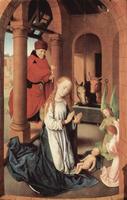
The Nativity, left wing of a triptych of the Adoration of the Magi
Hans Memling
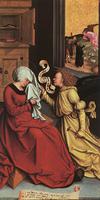
The Announcement to Anne and Joachim
Bernhard Strigel
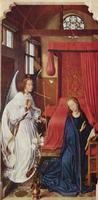
The Annunciation
Rogier van der Weyden
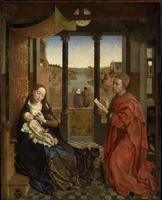
St. Luke Drawing a Portrait of the Virgin Mary
Rogier van der Weyden
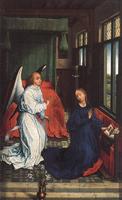
The Annunciation
Rogier van der Weyden
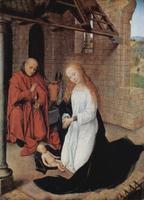
Nativity
Hans Memling
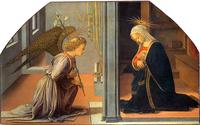
Annunciation
Filippo Lippi
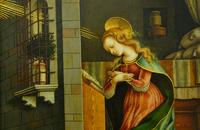
Annunciation
Carlo Crivelli
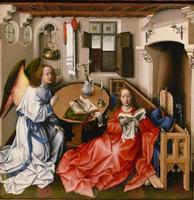
The Mérode Altarpiece - The Annunciation
Robert Campin
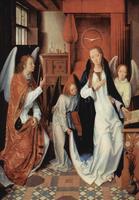
The Annunciation
Hans Memling
Saints Margaret and Apollonia
Rogier van der Weyden
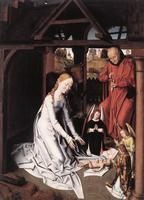
Nativity
Hans Memling
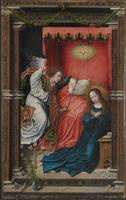
The Annunciation
Bernard Van Orley
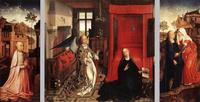
The Annunciation
Rogier van der Weyden
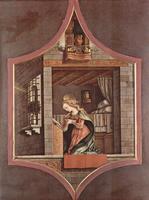
Virgin proclamation
Carlo Crivelli
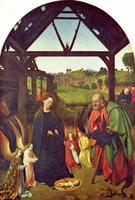
Nativity
Petrus Christus
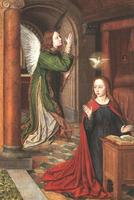
The Annunciation
Jean Hey
Madonna with Angels and Saints
Gerard David