Venus of the ports
Expert analysis of Mario Sironi’s Venus of the ports
Style: Futurism · Genre: figurative
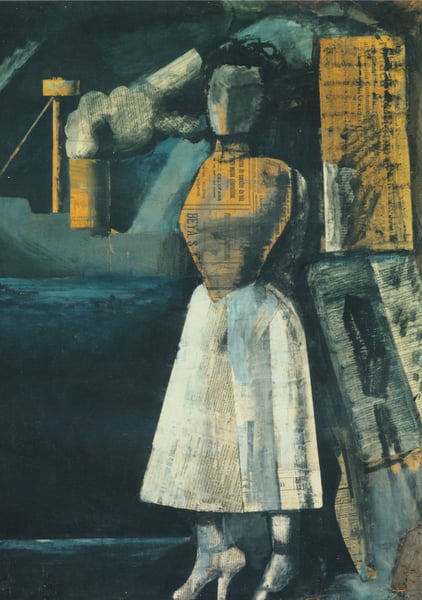
The artwork Venus of the Ports by Mario Sironi is a striking example of how Italian Futurism, despite its relentless celebration of speed, machinery, and the break with the past, could also reimagine classical iconography through a modern, industrial lens. Painted in a figurative style, Sironi transforms the archetypal goddess of love and beauty into a monumental, almost architectural presence rooted in the harsh, dynamic environment of a contemporary port.
Sironi’s significance within Futurism lies in his distinct departure from the purely dynamic, fragmented forms of artists like Boccioni. In Venus of the Ports, the figure retains a solid, geometric solidity, her body constructed from broad, simplified planes and heavy outlines. This creates a sense of immobile strength rather than rapid motion, yet the work is undeniably Futurist in its choice of subject: the modern port—a hub of commerce, industry, and raw power—becomes the setting for beauty. The Venus is not a delicate, idealized marble statue, but a robust, almost monumental being fused with the stacked cargo, heavy cranes, and angular docks that surround her.
The painting's significance lies in this very tension: it bridges Futurism's aggressive modernity with an enduring classical tradition, suggesting that the new age does not erase mythology but recasts it. Sironi strips Venus of softness and sensuality, replacing it with a stern, statuesque dignity that echoes the functional strength of the industrial landscape. This work thus expands the scope of Futurist figurative art—proving that the movement’s revolutionary energy could be channeled not only into pure abstraction or kinematic dynamism, but into a bold redefinition of the human figure itself, made weighty, permanent, and at home in the gritty poetry of the ports.
Visually similar
20 works with related composition and palette
Youth
Rene Magritte
Sjöman
Gosta Adrian-Nilsson
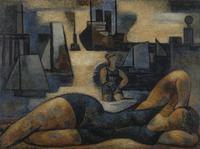
Blue beach
Marcel Gromaire
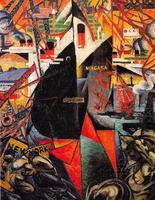
The Port
Félix Del Marle
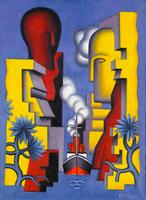
L'Isthme de Corinthe
Jean Metzinger
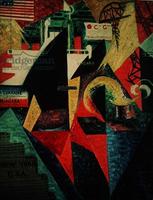
The Port
Félix Del Marle
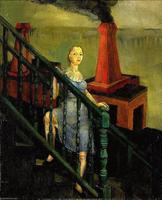
Commotion
Philip Evergood
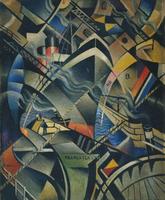
The Arrival
C. R. W. Nevinson
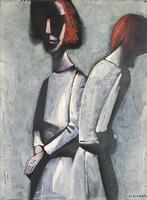
Two Figures
Charles Blackman
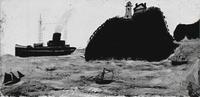
Large and Small Steamboats
Alfred Wallis
Large and Small Steamboats
Alfred Wallis
Lützowufer (Banks of the Canal) at the Mornig
Ernst Ludwig Kirchner
Rhythm
Bice Lazzari
Port of Bilbao
Arturo Souto
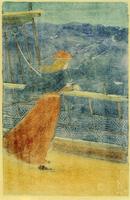
Woman on Ship Deck, Looking out to Sea (also known as Girl at Ship s Rail)
Maurice Prendergast
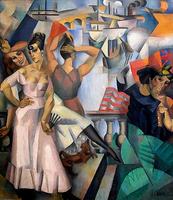
L'escale
André Lhote
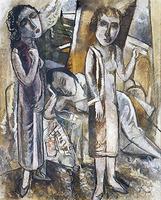
As Erradias
Lasar Segall
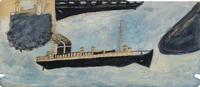
Motor Vessel with Four Men
Alfred Wallis
Motor Vessel with Four Men
Alfred Wallis
The Ballerina
Mario Sironi